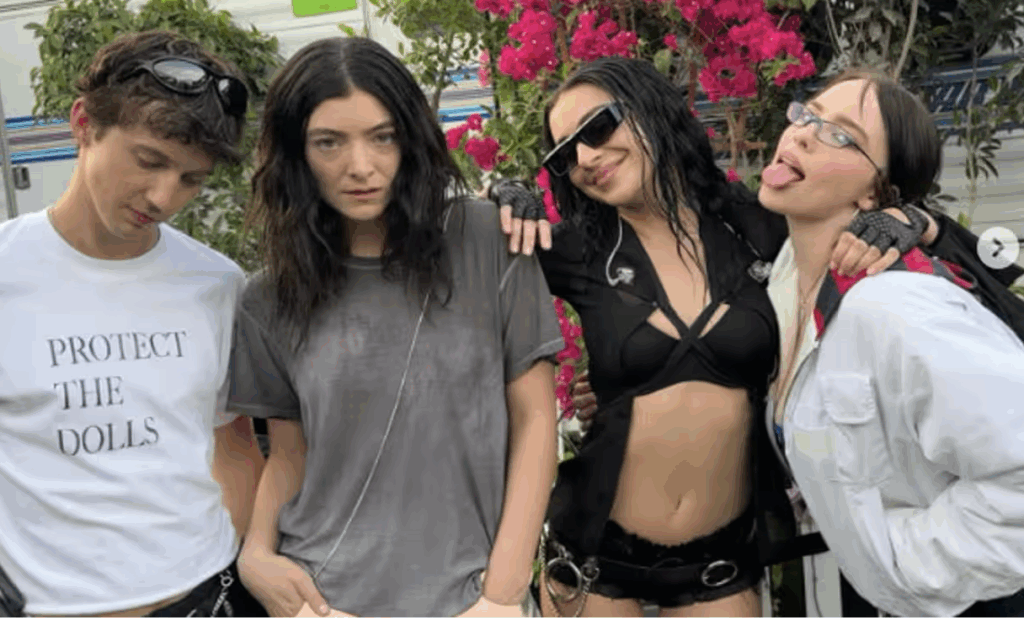
When American designer Conner Ives sent the “Protect The Dolls” T-shirt down the runway at London Fashion Week in February 2025, he likely knew he was doing more than launching a trend. He was making a statement — one that quickly traveled far beyond the fashion world.
With its bold serif letters and striking message, “Protect The Dolls” has become an emblem of solidarity with trans women, rooted in the language of LGBTQIA+ and ballroom culture. In this context, “dolls” is an affectionate, affirming term for trans women — a celebration of their beauty, strength, and survival.

The message gained international visibility when actors Pedro Pascal, his sister Lux Pascal, Tilda Swinton, Troye Sivan, and Addison Rae wore the shirt in public appearances. For Pedro, the gesture was especially personal. His sister Lux, a trans actress and activist, has often spoken about the power of family support. In a world where trans rights are increasingly under attack, such public affirmations matter.
The T-shirt also arrived at a critical political moment: shortly after a controversial UK Supreme Court ruling defined “woman” based solely on biological sex, stripping trans women of key legal protections. Wearing “Protect The Dolls” is a direct response — a soft fabric banner against hardening legal restrictions.
More than symbolic, the initiative has real-world impact: sales of the shirt have already raised over $300,000 for Trans Lifeline, a nonprofit that supports trans people in crisis.
In Brussels, as across Europe, trans communities — especially migrants and people of color — still face structural violence and barriers. Visibility campaigns like “Protect The Dolls” remind us of the urgent need for both cultural recognition and concrete action.
Solidarity doesn’t always start with protest. Sometimes, it begins with the simple, radical act of wearing your heart — and your politics — proudly on your sleeve.
Vous aimerez aussi
-

Queens of the South: When Nice Turns Carnival into Queer Celebration
On 27 February 2026, Place Masséna in Nice will shimmer a little brighter. Lou Queernaval,
-

Cœur de pirate at AB: the runaway pop of a queer icon lands in Brussels
A major figure in Francophone pop and an outspoken voice in the queer community, Cœur de pirate
-

Safer on Paper, Not in Reality”: ILGA Warns of Rising Anti-LGBTQIA+ Violence in Belgium
Belgium still ranks among Europe’s most protective countries for LGBTQIA+ people on paper – yet
-

Six Charming Princes for Three Castles: LGBT Couples Rebuilding France’s Fairy‑Tale Landscape
First, there were princesses in towers waiting for some vaguely straight prince on a horse.
-

Why You Absolutely Must Watch This Documentary “Mister Nobody Against Putin” on ARTE
In ARTE’s documentary Mister Nobody Against Putin, a school worker in a polluted Russian town turns
 Français de Belgique
  English
  Nederlands (België)