
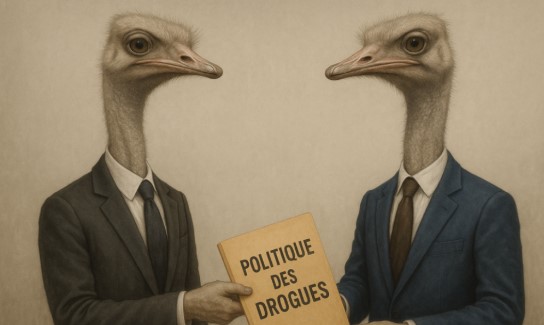
As part of the international campaign Support. Don’t Punish, which calls for the decriminalization of drug use and increased support for users, the Belgian association Ex Aequo joins the movement with two upcoming events highlighting the urgent need for change.
“Stop burying your head in the sand”: A call for a clear-eyed, humane drug policy
For too long, politicians have chosen to ignore the realities of drug use. Pablo Sanz Moreno, President of Ex Aequo, states:
“A drug policy focused on repression is ineffective, unjust, and dangerous for public health. It is time to stop burying our heads in the sand and instead support approaches based on health, dignity, and human rights.”
Ending drug prohibition to protect public health
Faced with mounting evidence that punitive drug policies fail, many experts and advocates urge a paradigm shift. Ending the prohibition of drugs offers a unique opportunity to improve public health, protect the most vulnerable, and enhance the efficiency of healthcare systems.

Harm reduction saves lives
Repressive policies isolate and endanger people, while regulated approaches enable strict control over substances on the market. This means no more contaminated products or preventable overdoses. Providing access to sterile equipment and supervised consumption spaces significantly reduces the transmission of HIV and Hepatitis C. Investing in information, prevention, and harm reduction replaces ignorance — the main driver of risk — with knowledge and safety.
Care, not punishment
Criminalization discourages people from seeking help due to fear of prosecution and stigma. Decriminalizing drug use would allow earlier, humane, and tailored support. It would also pave the way for regulated medical use, as already seen with medical cannabis and opioid substitution treatments.
Benefits for society as a whole
Fewer prosecutions would free up resources for public health initiatives. Ending prohibition would redirect funds towards prevention, support, and treatment programs, while breaking the vicious cycle of arrest and incarceration. This would reduce prison overcrowding in Belgium, largely driven by non-violent drug offenses, lessen the burden on police and courts, and weaken criminal networks that fuel street violence over control of the illegal market.
Successful international examples
Countries such as Portugal, Switzerland, Canada, and Uruguay have implemented alternative approaches with clear positive outcomes: fewer overdoses, lower infection rates, better access to care, and improved overall health for users. Their experiences demonstrate that another path is not only possible but effective.
A global issue demanding responsibility
Prohibitionist policies have caused tragic consequences worldwide. In many producer countries, especially in Latin America, cartels thrive on prohibition, terrorize local populations, corrupt institutions, and fuel endemic violence. It is urgent to break this deadly cycle and acknowledge that policies here directly impact those there. Cities around the world, including Brussels under Mayor Philippe Close, have signed the Amsterdam Manifesto advocating for fairer, more effective drug policies.
A matter of human rights
Every person has a right to health, dignity, and support. The war on drugs has failed — exacerbating inequality, overwhelming justice systems, and empowering criminal networks. Ending prohibition puts people first and builds a society that cares, informs, and protects.
Warning against repressive rhetoric
Ex Aequo warns against a resurgence of calls from some political right-wing parties for harsher crackdowns on drug users. Such a rollback would ignore international lessons and undermine public health policy. Criminalization only deepens isolation, worsens health outcomes, and strengthens exclusion. We firmly reject this punitive approach and call for a humane policy grounded in evidence and respect for fundamental rights.
A courageous debate for a better future
For all these reasons, we urge policymakers to engage in an open and fact-based debate, drawing on international experiences, to prioritize the health and well-being of drug users rather than treating them as targets of repression.
Vous aimerez aussi
-

Queens of the South: When Nice Turns Carnival into Queer Celebration
On 27 February 2026, Place Masséna in Nice will shimmer a little brighter. Lou Queernaval,
-

Cœur de pirate at AB: the runaway pop of a queer icon lands in Brussels
A major figure in Francophone pop and an outspoken voice in the queer community, Cœur de pirate
-

Safer on Paper, Not in Reality”: ILGA Warns of Rising Anti-LGBTQIA+ Violence in Belgium
Belgium still ranks among Europe’s most protective countries for LGBTQIA+ people on paper – yet
-

“March Is for the Queers”: Why You Should Put Queer March Ghent 2026 on Your Radar
Every March, Queer March turns Ghent into a month-long celebration of queer life, resistance, and
-

Six Charming Princes for Three Castles: LGBT Couples Rebuilding France’s Fairy‑Tale Landscape
First, there were princesses in towers waiting for some vaguely straight prince on a horse.
 Français de Belgique
  English
  Nederlands (België)