Hungary’s LGBTQIA+ community is once again at the centre of a political storm. Hungarian police have proposed charges against Budapest’s mayor, Gergely Karácsony, over his role in organising this year’s Pride march — an event officially banned under a new “child protection” law.
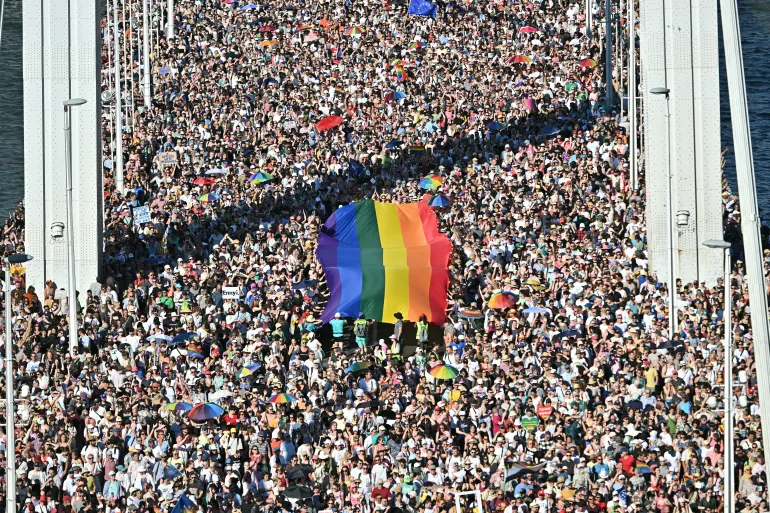
Despite the ban, tens of thousands of people marched through Budapest on June 28 after Karácsony declared Pride a municipal event, arguing it did not require police authorisation. The march remained peaceful and quickly grew into one of the largest public demonstrations Hungary has seen in years, blending queer visibility with broader calls for democratic freedom.

If prosecutors move forward, Karácsony could face up to a year in prison for enabling and encouraging participation in the march. He has responded defiantly, saying he is proud to have taken political risks for the freedom of his city and its people.
Human rights groups, including ILGA-Europe, warn that the case signals a dangerous misuse of assembly laws and a shrinking space for peaceful protest, not only for LGBTQIA+ people, but for anyone who challenges the government. Hungary has dropped further on Europe’s Rainbow Map, reflecting growing legal and social pressure on queer communities.
For LGBTQIA+ people across Europe, the message is clear: Pride remains a powerful act of visibility and, in some places, an act of resistance. What happened in Budapest is not just Hungarian news. It’s a reminder that the right to gather, celebrate, and exist openly can never be taken for granted.
Vous aimerez aussi
-
Queens of the South: When Nice Turns Carnival into Queer Celebration
On 27 February 2026, Place Masséna in Nice will shimmer a little brighter. Lou Queernaval,
-

Cœur de pirate at AB: the runaway pop of a queer icon lands in Brussels
A major figure in Francophone pop and an outspoken voice in the queer community, Cœur de pirate
-
Safer on Paper, Not in Reality”: ILGA Warns of Rising Anti-LGBTQIA+ Violence in Belgium
Belgium still ranks among Europe’s most protective countries for LGBTQIA+ people on paper – yet
-

“March Is for the Queers”: Why You Should Put Queer March Ghent 2026 on Your Radar
Every March, Queer March turns Ghent into a month-long celebration of queer life, resistance, and
-

Six Charming Princes for Three Castles: LGBT Couples Rebuilding France’s Fairy‑Tale Landscape
First, there were princesses in towers waiting for some vaguely straight prince on a horse.
 Français de Belgique
  English
  Nederlands (België)