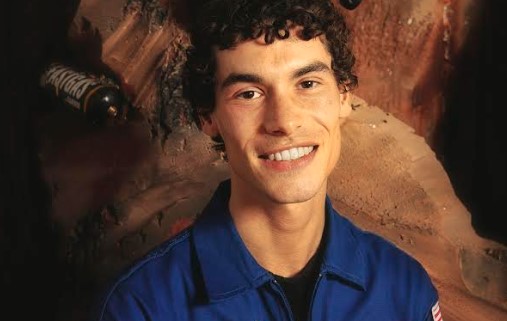
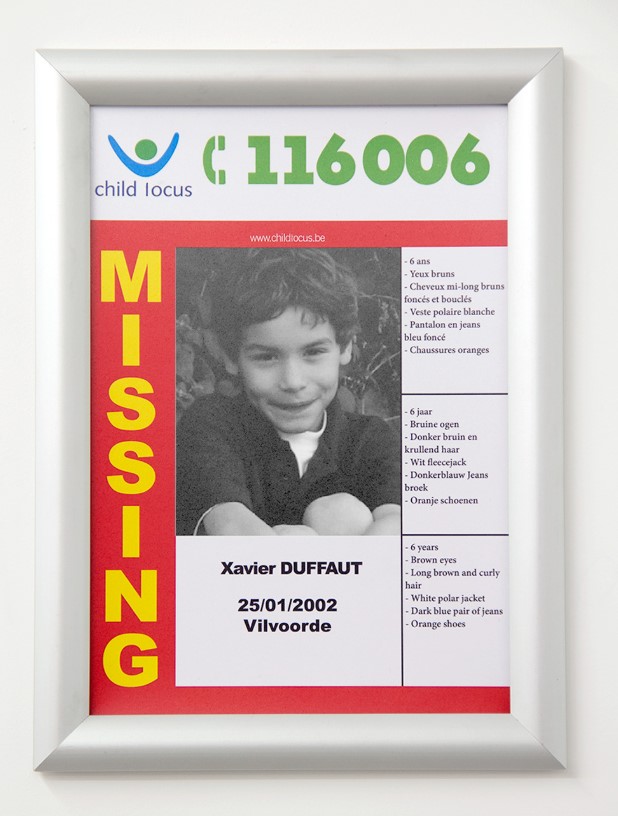
For this portrait, Ket.brussels met Brussels-based visual artist Xavier Duffaut. In this five-question format, he reflects on art, the city, and the little things that make life worth living. A conversation by Nicolas Arquin.
Which art form do you prefer?
For my own practice, I would say drawing, because it is a medium that holds an important place in my work. Preparatory sketches allow me to put ideas and visions for potential future works (2D or 3D) down on paper. Often they remain at the sketch stage, but that’s fine, because I love going back through old sketchbooks.
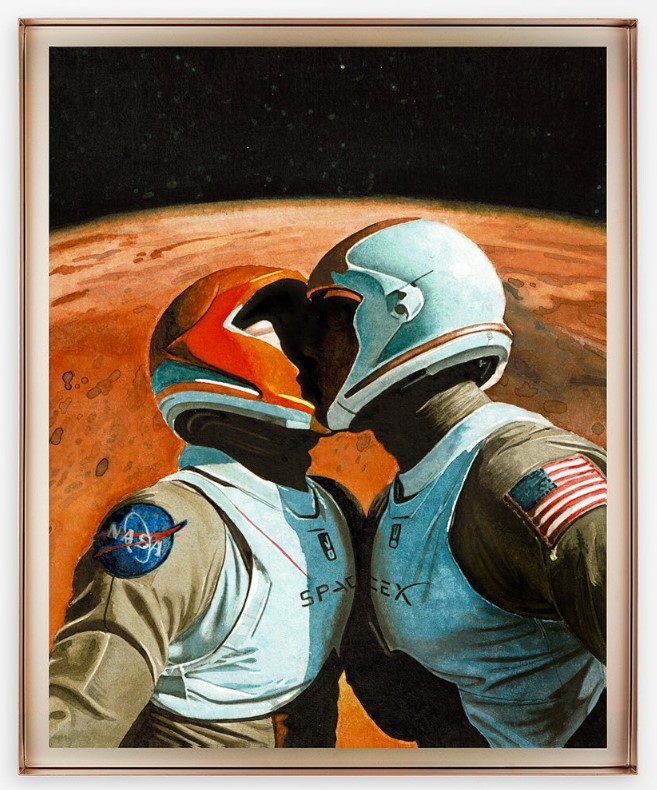
The Kiss (2024), watercolor on Fabriano artistico 300g. Co-designed with @underarrest__ 👾💕
When it comes to what I like to “receive”, I would say sculpture and installation. During my art studies, I loved sneaking into presentations and assessments of students from the Sculpture department. It was very inspiring to see how they managed to convey concepts through objects or environments. I also really like fashion shows. I don’t watch that many, but I love this format because it combines several disciplines (fashion design, scenography, music, performance), like a kind of total work of art.
You have an Instagram account where people can discover your work; can you tell us more?
Yes. My recent posts document my latest solo exhibition, entitled “RED PLANET Experience”. It was an immersive exhibition on the theme of Mars, where I showed drawings of high-tech urban objects presented as cult objects, totems, in a post-apocalyptic setting. The exhibition drew a link between space conquest (as a soft power tool between states) and the privatisation of cities by private public-service companies.
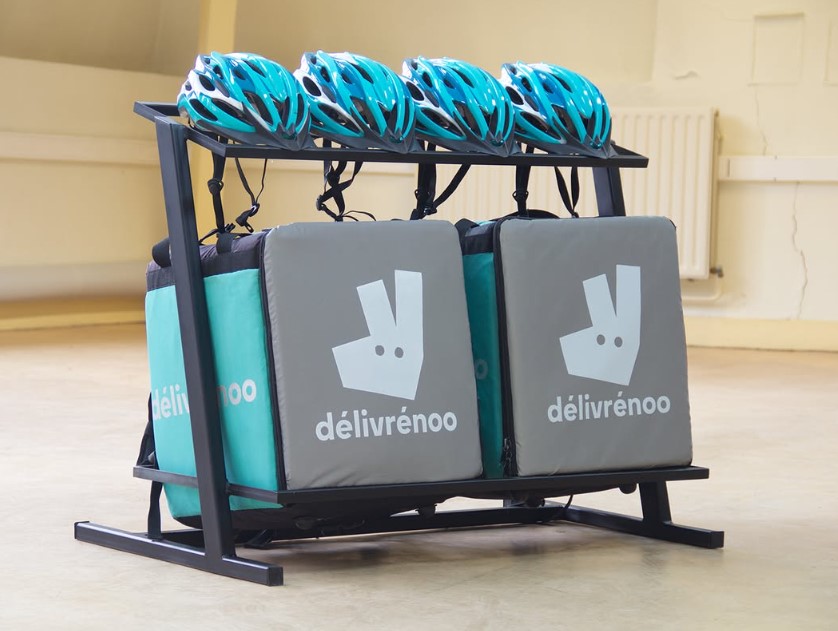
Délivrénoo weight racks 🏋️♂️ Metal work by @noir_metal
But it was also about the relationship between Technology and the Sacred: for example, a triptych composed of a Tesla charging station and two electric scooters (Trinity, 2024) is a nod to Christian iconography and suggests our quasi-religious relationship to new technologies. Finally, by tapping into the aesthetics of ruins and the post-apocalyptic, RED PLANET Experience positioned itself within the sci-fi tradition of speculative works, most of them nourished by biblical culture.
Is life in Brussels active or passive? And what about yours?
It depends on the area, the time of year, and the time of day. The city centre is almost always lively and therefore “active”, with a lot of tourist activity. Personally, I rarely go to the city centre or shopping streets because I quickly feel overstimulated. Or, if I do pass through, it’s in a rush, on my bike.
Even though the city – and Brussels in particular – is a huge source of inspiration for my work, I prefer it when it’s depopulated, for example very early in the morning or in summer, when people are away on holiday.
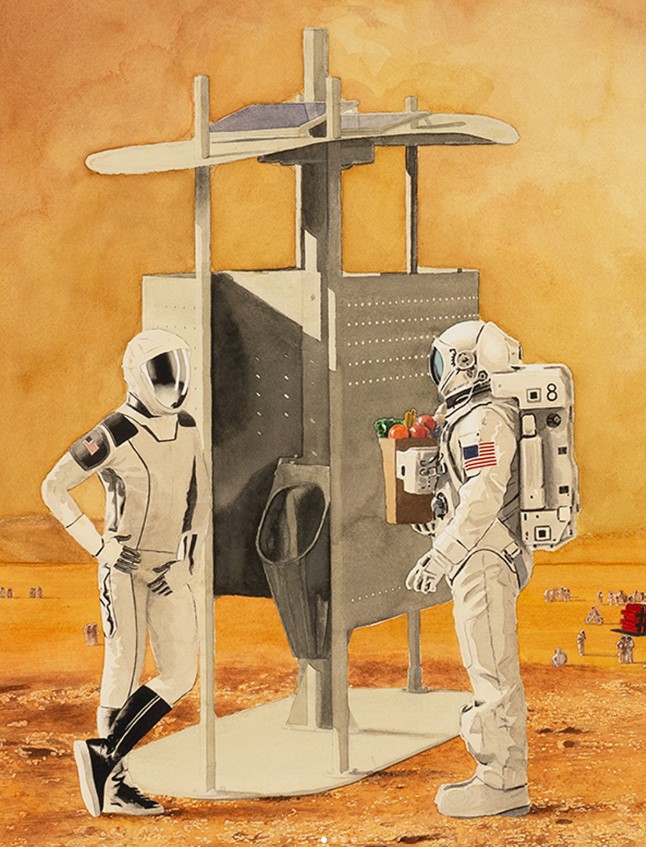
Details of PANORAMARS (2024)-Watercolor on Fabriano artistico 300g, polished copper frame, 110 x 70 x 5 cm
What do you dream of to make yourself happy?
I dream of travelling: going to visit a friend who moved to Mexico, or going back to Lebanon. What makes me happy here is taking part in group exhibitions and meeting new people there, other artists. But also small, simple things like singing at the top of my lungs while cycling and seeing smiles appear on people’s faces. Playing with a cat behind someone’s window.
What is your favourite book, music, and visual artist?
I don’t have a single favourite book, but I do have crushes. One of the most recent was Julie Ackermann’s essay Hyperpop. La pop au temps du capitalisme numérique. Although the author mainly focuses on music, I found her theory on this new aesthetic very interesting, especially its use of appropriation and exaggeration of mainstream pop motifs. I recognised myself in the Hyperpop artists she describes, particularly in their ambiguous / ambivalent position towards the capitalist system: a mix of wonder and disgust, giving birth to an art that blends satire and sincerity, critique and celebration. It’s a style that fully embraces its era and the mercantile culture of entertainment in order to re-engage with the world. That speaks to me…
As for music, I recently discovered Cute Door, a singer based in the US who performs in a trap style that could also be described as Hyperpop. I really like her for her talent, charisma, and self‑irony. In her music videos, she appears as different pop femininities of patriarchal capitalism (college girl, pop star, influencer, hypersexualised bimbo), but each time with a disturbing detail that disrupts the glossy image of perfect feminine beauty: wigs, a black eye, blood running from her nose… In one of her latest videos (Davy Jones), she appears in the back of a pickup truck driving through the night, blindfolded and with her hands tied behind her back, as if she had just been kidnapped. The violence of the narrative contrasts with the softness of the melodies and her voice. It’s very powerful.
And for my favourite visual artists, I’m particularly fond of Elmgreen & Dragset, a duo of Scandinavian gay artists who started with performance and then moved into installation and sculpture, while continuing to explore the concept of the body and keeping a theatrical dimension. They very often use humour (sometimes absurd, mischievous, and irreverent) to question norms and power structures in our societies, especially regarding queer culture and subculture, but also the contemporary art world. All of this within a minimalist aesthetic, which makes their work elegant, seductive, and impactful.
What’s the question you wish I had asked you?
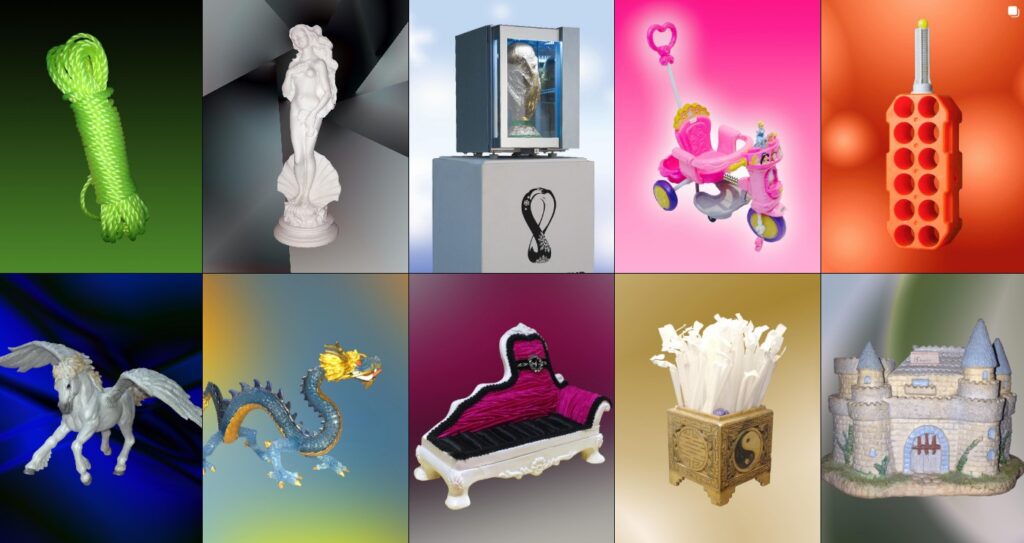
Perhaps a question about my relationship to clothing. Its recurrence in my work, and in particular my fascination/obsession with professional uniforms, which I appropriate by reproducing them, détourning them, or wearing them in public space, or at exhibition openings.
You may also like
-
Niall Horan, Soft-Spoken Pop Star – And Loud LGBTQ+ Ally
From Pride tweets to rainbow flags in the crowd, Irish singer Niall Horan has quietly
-

Angèle x Justice’s “What You Want”: A Queer Night Out We’ve All Dreamed Of
Projected onto the façade of La Monnaie in Brussels and shot at night in Marseille
-
From Medicine Cabinet to Musical: The Existential Life of a Suppository
What if your medicine cabinet suddenly came to life, and a tiny suppository started questioning
-
In 2026, Our Chosen Families Are Writing a Different Belgian Story
Faced with family rejection, still‑closed closets and precarity, LGBT+ people in Belgium keep building their
-
The New KET Is Out: Queer Brussels Keeps Moving
KET Magazine Issue 11 is out now and available in LGBTQIA+ safe spaces across Brussels,
 Français de Belgique
  English
  Nederlands (België)