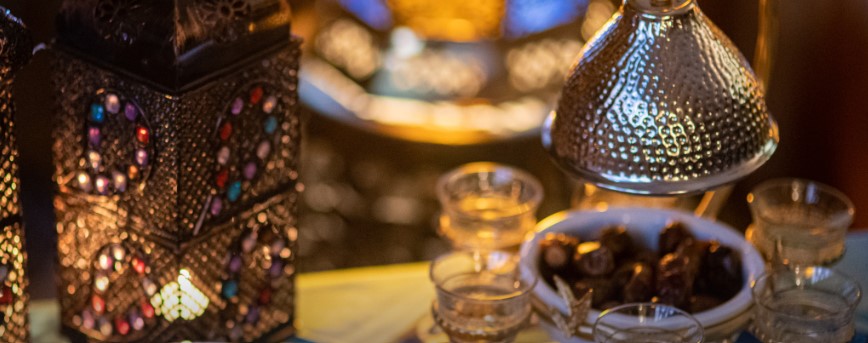
When Ramadan begins, much of the media talks about food, fasting and “community values” – but rarely about queer and trans Muslims who also enter this holy month with their faith, their doubts and their identities. For an LGBT+ audience in Belgium, where Muslim and queer realities often coexist in the same families, schools and night‑life, it’s worth taking a closer look at what Ramadan actually is, and how some people are quietly reinventing it for themselves.
What Ramadan Is Really About
Ramadan is the ninth month of the Islamic lunar calendar and commemorates the first revelation of the Qur’an to the Prophet Muhammad, traditionally associated with the “Night of Power” (Laylat al‑Qadr). During this month, adult Muslims who are able to do so are expected to fast from dawn to sunset: no food, no drink, no smoking, no sex, and an effort to avoid gossip, insults and harmful behaviour.
Beyond the rules, Ramadan is meant to sharpen spiritual awareness. The fast is supposed to cultivate self‑discipline, empathy for those who are hungry, and a renewed commitment to justice and generosity, for example through charity (zakat, sadaqa) and sharing iftar, the evening meal that breaks the fast. The idea of setting aside a month each year to step back from consumption and focus on care, solidarity and reflection is something many queer people can relate to, even if they don’t identify as religious.
Historically, fasting is not unique to Islam. Jewish, Christian and pre‑Islamic communities in the region practised different forms of abstinence long before the Qur’an was revealed, and Muslim tradition reinterpreted these older practices in its own way. Ramadan is therefore part of a much longer story of people using their bodies – hunger, thirst, fatigue – to search for meaning.
Being LGBT+ and Muslim During Ramadan
For queer and trans Muslims, Ramadan can be a deeply ambivalent time. Articles and testimonies from LGBT+ Muslims describe the month as both spiritually powerful and emotionally painful.
On the one hand, many talk about the calm of fasting, the beauty of night prayers, the intimacy of reading the Qur’an alone, or the joy of breaking the fast with friends and family. On the other hand, Ramadan often means spending more time in spaces – family homes, mosques, community gatherings – where homophobic, biphobic or transphobic comments are frequent, sometimes framed as “religious truth”. For some, coming out has led to open conflict or exclusion, which makes returning to these spaces during Ramadan very difficult.
Several queer Muslims interviewed by organisations like The Trevor Project and independent queer media describe a familiar pattern: they still feel connected to Allah, to the Qur’an, to fasting, but not to the way their local mosque or family talks about gender and sexuality. Many navigate this tension by practising partly “on the side”: fasting and praying quietly, avoiding certain gatherings, or celebrating iftar with a chosen family that feels safer.
Queer and Trans Muslims Reclaiming the Month
In recent years, queer and trans Muslims across North America and Europe have started to organise spaces where they can live Ramadan more fully without hiding who they are. In several cities, groups have hosted “queer iftars”: shared meals open to LGBT+ Muslims and their allies, sometimes with a short prayer or reflection, always with an emphasis on safety and consent.
Reports from 2024 and 2025 describe queer and trans Muslims renting community centres, partnering with LGBT+ organisations, or simply gathering in apartments to break the fast together. For many participants, this is the first time they can hear a du’a (supplication) that mentions their names and pronouns, or talk openly about crushes, dysphoria or chosen families without fearing a lecture.
These initiatives are still small, but they matter. One participant quoted in a feature on queer and trans Muslims during Ramadan said: “I spent years thinking I had to choose between my queerness and my Islam. Sharing iftar with people like me showed me that both identities can breathe in the same room.” For Belgian readers, it may resonate with what many experience between Molenbeek and Saint‑Gilles, Schaerbeek and Leuven: moving back and forth between very different worlds.
Networks and Resources in Europe
Several organisations now work specifically with queer Muslims in Europe and can be helpful starting points for anyone in Belgium looking for support or community during Ramadan.
- Maruf – a Dutch‑based platform that runs retreats, workshops and community events for LGBT+ Muslims, and helped launch the European Queer Muslim Network (EQMN). These networks sometimes host online iftars or study circles accessible from anywhere.
- BuraQ ry – a queer Muslim association in Finland that offers spiritual gatherings, discussions and advocacy for inclusive mosques and prayer spaces.
- Several global LGBT+ organisations, including The Trevor Project, publish guides on “celebrating Ramadan as an LGBTQ person”, with mental health advice and reminders that people can adapt their practice to their health and safety.
While these networks are not specific to Belgium, they connect people across borders and can inspire local initiatives in Brussels, Antwerp, Liège or Charleroi – from small iftars hosted by queer‑friendly student groups to collaborations between mosques and LGBT+ associations.
Ideas for a “Queer‑Friendly” Ramadan
If you’re LGBT+ and have some relationship to Islam – devout, questioning, ex‑Muslim but still emotionally attached – Ramadan can be approached in different ways. Testimonies from queer Muslims suggest a few recurring strategies.
- Define your own intentions. Instead of trying to “perform” a perfect Ramadan for others, many choose a small number of goals that make sense for them: fasting a few days, reducing self‑destructive habits, giving to a cause that supports vulnerable people (including queer refugees), or simply taking time each night to reflect.
- Build or join a chosen community. If family or mosque spaces are unsafe, sharing iftar with a couple of trusted friends – Muslim or not – can be a way to honour the social dimension of the month without swallowing abuse.
- Protect your mental health. For some, that means limiting contact with relatives who use religion to attack their identity, skipping certain sermons, or taking breaks from social media that amplifies anti‑LGBT+ rhetoric under religious hashtags.
- Allow complexity. Several queer Muslims stress that it’s okay to feel angry at religion and still miss Ramadan, or to love the Qur’an while disagreeing with the way it’s used against them. Holding these contradictions can itself be a spiritual practice.
None of this requires anyone to be “out” in unsafe contexts; many people live layered lives, being out in queer spaces and closeted in religious ones, and adjust their Ramadan practice to those realities.
Why This Conversation Matters in Belgium
Belgium is home to sizeable Muslim and LGBT+ communities, and of course there is overlap between them. Queer Muslims here navigate not only theological debates but also racism, Islamophobia and the specific politics of Belgian cities and suburbs. An inclusive conversation about Ramadan is therefore not an exotic topic “about others”, but something that touches neighbours, classmates, colleagues and maybe readers themselves.
The core message that comes back in many queer Muslim testimonies is simple: Ramadan is not just about who is allowed to sit at the mosque or whose identity is considered “halal” or “haram”. It is about intention, care and justice – values that many LGBT+ people, religious or not, already live every day.
For some, that might mean reclaiming the fast, for others creating new rituals or simply supporting friends who observe the month. What matters is that queer and trans Muslims are not erased from the picture. As one writer put it in an essay titled “My Queer Ramadan”: “I refuse to let those who hate me own this month. My hunger also belongs to God, and so does my joy.”
Vous aimerez aussi
-

Queens of Joy: Ukrainian Drag, Queer Resistance and Why Our Solidarity Still Matters
As Russia’s full-scale war against Ukraine drags into another year, Ukrainian drag artists and queer
-

Ricky Corazon: Creating Latin Queer Space in Brussels
DJ and event producer Rodrigo Aranda, aka Ricky Corazón, takes us into his journey of
-

Brussels Finally Has a Government. But What Does It Really Mean for Queer Rights?
After months of political deadlock, Brussels finally has a new regional government and a fresh
-
2026 Global & European Pride Calendar: Dates & Destinations
From Brussels to Amsterdam, Madrid and beyond, Pride 2026 is set to be a year
-
🌈 Get Ready, Queers: WorldPride 2026 Is Taking Over Amsterdam!
The countdown is on! WorldPride Amsterdam 2026 is now open for registration — and it’s shaping up
 Français de Belgique
  English
  Nederlands (België)