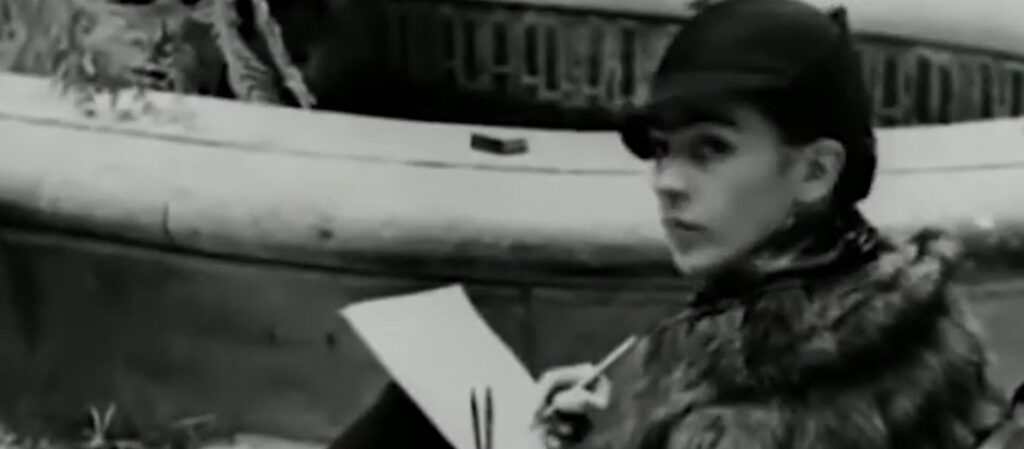
Second chapter in our series “Artists Who Changed How the World Sees Homosexuality”, Frida Kahlo used self‑portraiture, gender play and unapologetically queer desire to revolutionise how we look at bodies, pain and love. Her life and art still resonate powerfully with LGBTQ+ communities today.
Frida Kahlo has become one of the most recognisable faces in global culture: the unibrow, the flowers, the stare that never flinches. But behind the museum merchandising and Instagram aesthetics stands a bisexual, disabled, fiercely political artist who turned her own body and loves – with men and women – into a radical queer statement. For a queer audience, Kahlo is not just an “icon” to print on tote bags; she is a blueprint for living loudly in a world that constantly tried to reduce and erase her.
Born in 1907 in Mexico City, Frida Kahlo grew up between a strict mother, a supportive photographer father and a country undergoing revolution. A near‑fatal bus accident at 18 left her with chronic pain, multiple surgeries and a body that would never conform to normative expectations of health or femininity. From her hospital bed and later her bedroom, she began painting self‑portraits, using the canvas as a mirror to confront disability, desire, gender and national identity all at once.
Kahlo’s bisexuality is documented both in her private life and in the symbolism of her work. While she famously married – divorced, then remarried – muralist Diego Rivera, she also had relationships with women, including figures such as singer Chavela Vargas and, according to several accounts, artists like Georgia O’Keeffe. Rivera himself acknowledged her attraction to women and, despite his jealousy of some male lovers, encouraged her relationships with women in a way that was shockingly open for their time.
In her paintings, Kahlo brought that queer desire into view without ever turning it into mere spectacle. The 1939 work often titled “Two Nudes in a Forest” shows two women, naked and tenderly intertwined, watched over by a small animal in the background, and is widely read as a sapphic exploration of female intimacy. Across her self‑portraits, she blurred masculine and feminine codes: wearing suits, cutting her hair short, emphasising her facial hair, and refusing to “correct” any of it to match conventional beauty standards. This visual play with gender presentation made her, in retrospect, a powerful reference point for non‑binary and gender‑nonconforming viewers, even if those terms did not exist in her time.
What makes Kahlo crucial to a series about changing how the world sees homosexuality is not only that she loved women, but that she refused to separate that from the rest of her identity. Her paintings weave together sexuality, disability, indigeneity, class and politics, insisting that queer desire is not an isolated subplot but part of a wider struggle to live honestly in a hostile world. She did not write manifestos about bisexuality; instead, as curators and biographers point out, she simply lived it, sending love letters to both men and women and integrating that reality into her art without apology.
Kahlo’s lasting impact on LGBTQ+ artists and audiences is enormous. Contemporary queer creatives frequently cite her as a spiritual ancestor, praising the way she turned trauma into beauty without sanitising it and embraced pleasure as something that could coexist with pain. Her unapologetic approach to sexuality, her refusal to hide queer relationships and her insistence on painting herself – brown, disabled, gender‑bending – have made her a touchstone for anyone looking for images of resilience that actually look like them.
For readers of ket.brussels, Frida Kahlo offers a powerful reminder that queer visibility did not begin with Western mainstream coming‑out narratives. She was a brown, disabled, bisexual woman in early 20th‑century Mexico, making art that still feels uncomfortably honest almost a century later. In a world that still polices bodies and desires, Kahlo’s work whispers – and sometimes screams – that our contradictions are not flaws to be hidden, but truths to be painted in vivid colour.
KET Magazine is a community‑driven, non‑profit magazine run by volunteers based in Brussels. Get in touch to share your thoughts or tell us about your activities. You can also promote your events on our website or support our work with a donation. Contact us at Info@ket.brussels.
Vous aimerez aussi
-
Tamara de Lempicka: the bisexual Art Deco icon who gave a queer face to modernity
First hero of our series “Artists Who Changed How the World Sees Homosexuality”, Tamara de
 Français de Belgique
  English
  Nederlands (België)