
Forbidden Colours, un éminent défenseur des droits des personnes LGBTIQ+, a récemment publié son rapport intitulé " Queer your EU ", qui propose une évaluation complète des efforts de l'Union européenne pour sauvegarder les droits des personnes LGBTIQ+ entre 2019 et 2024. Cette analyse se penche sur le comportement de vote des membres du Parlement européen (MEP), mettant en lumière les tendances favorables et opposées dans les différents États membres de l'UE.
Examiner les défis
Au cours des cinq dernières années, l'UE a été confrontée à des défis croissants concernant les droits des personnes LGBTIQ+. La création de "zones sans LGBT" en Pologne, l'adoption de lois controversées en Hongrie et les différends concernant la reconnaissance des familles arc-en-ciel en Roumanie et en Bulgarie ont mis en évidence les obstacles importants à l'égalité des droits pour tous les citoyens. En outre, la montée en puissance des discours et des crimes de haine et la diffusion de fausses informations sur les plateformes de médias sociaux ont exacerbé les vulnérabilités au sein des communautés LGBTIQ+.
Évaluation des institutions de l'UE
Le rapport "Queer your EU" fournit une évaluation nuancée de la performance des institutions de l'UE en ce qui concerne les droits des personnes LGBTIQ+. Si l'adoption par la Commission européenne de la stratégie pour l'égalité des personnes LGBTIQ en 2020 a fait preuve de leadership, des difficultés sont apparues dans sa mise en œuvre, notamment en raison des obstacles rencontrés au sein du Conseil de l'UE. Les initiatives législatives portant sur les discours et les crimes de haine et sur les droits parentaux se sont heurtées à des obstacles, révélant la complexité de la recherche de l'unanimité parmi les États membres. Le fait que le Conseil n'ait pas adopté de conclusions sur les droits des personnes LGBTIQ+ depuis 2016 et l'impasse actuelle sur la directive relative à l'égalité horizontale mettent en évidence les défis institutionnels.
Un député européen sur quatre vote contre les droits des personnes LGBTIQ+
Bien que près de 57% des députés européens aient toujours soutenu les textes clés sur les droits des personnes LGBTIQ+, le rapport dévoile une tendance inquiétante : un député européen sur quatre a voté contre ces droits. Les députés irlandais, luxembourgeois et maltais se sont montrés favorables, tandis que les députés italiens, hongrois et polonais ont affiché des positions moins favorables.
Recommandations pour progresser
En réponse à ces défis, Forbidden Colours émet des recommandations visant à renforcer l'engagement de l'UE à défendre les valeurs fondamentales. Le rapport appelle les citoyens européens à s'engager activement dans les prochaines élections européennes de juin 2024 et à soutenir les groupes politiques alignés sur un plaidoyer robuste en faveur des droits des personnes LGBTIQ+.
En outre, le rapport préconise de modifier les traités de l'UE afin d'inclure explicitement l'identité de genre, l'expression de genre et les caractéristiques sexuelles comme motifs de discrimination au même titre que l'orientation sexuelle. Il souligne la nécessité d'étendre les compétences de l'UE afin de renforcer la protection contre la discrimination à l'égard des personnes LGBTIQ+ et préconise l'adoption de procédures législatives ordinaires pour traiter efficacement les questions relatives aux droits fondamentaux.
Le rapport "Queer your EU" offre un aperçu précieux de l'approche de l'UE en matière de droits des personnes LGBTIQ+, soulignant à la fois les progrès et les défis. En tenant compte des recommandations formulées dans le rapport, les institutions européennes, les États membres et les citoyens peuvent collectivement œuvrer à la création d'un environnement plus inclusif et plus équitable pour tous les individus au sein de l'Union européenne.
Rapport complet sur la Site web de Forbidden Colours
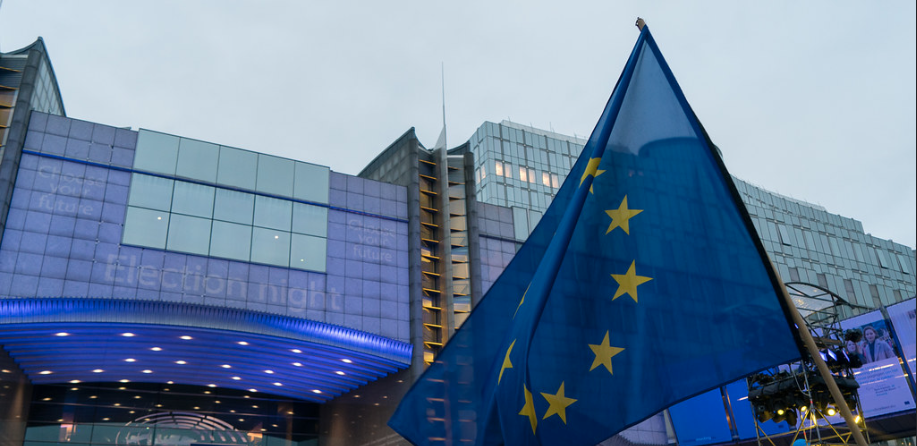
Photo : CC-BY-4.0 : © European Union 2019 - Source : PE
You may also like
-

One Last Warm-Up: Brussels Still Has Time to Join the Biggest LGBTQI+ Choir at ING Arena
Brussels has already been singing queer for weeks, and now one of the most open
-

Lille Pride 2026 is back to claim the city in color
Lille Pride returns on Saturday 30 May 2026 with a full day of community, visibility and celebration,
-

Brussels Stands with Senegal’s LGBTQIA+ Community as Repression Gets Worse
Senegal has sharply intensified its anti-LGBTQIA+ repression in 2026, with a new law that increases
-
Queer Mess Open Air: 16 Hours of Queer Joy at Circle Park
On 30 May 2026, Queer Mess Open Air takes over Circle Park in Anderlecht for
-

Rainbow Kids: A Pride Afternoon for Queer Families in Brussels
Rainbow Kids is a colourful, kid‑friendly event in Brussels that puts queer and rainbow families
 Français de Belgique
  English
  Nederlands (België)