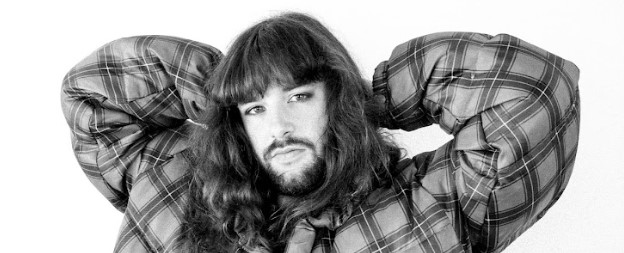
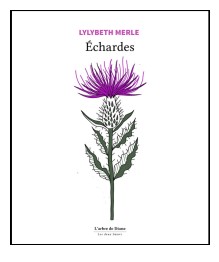
Lylybeth Merle’s new book Échardes (“Splinters”), out in February 2026, is a tender, defiant journey through gender, trauma, and the wild joy of becoming yourself. Written between poems, memories, and ritual-like fragments, it reads like a queer fairy tale rooted in very real violence — and in the stubborn, glittering will to heal.
Five years ago, Merle began to question the “boy” gender identity imposed on her body and started unravelling it, thread by thread. In the middle of that upheaval, something unexpected surfaced: joy. As she moves away from an assigned identity that never fit, she discovers a more expansive version of herself, one that refuses to be contained by binary expectations. Her painted hands become feathers, tools of metamorphosis, portals to another way of inhabiting the world.
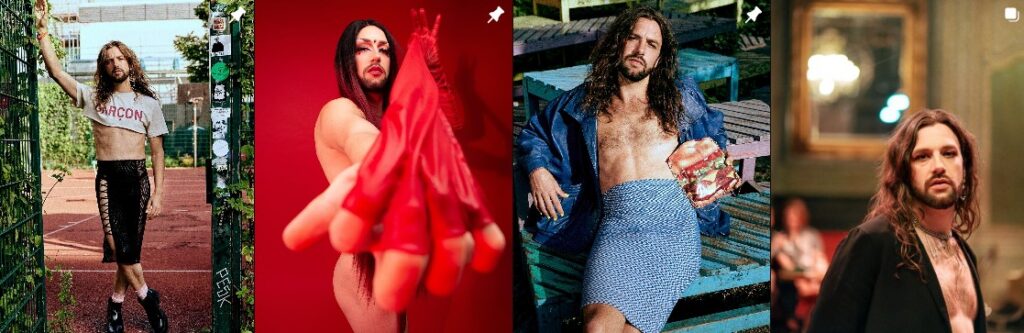
But claiming femininity in a trans body in our societies does not happen without backlash. As Merle steps into her affirmed self, she faces the everyday and structural violences that patriarchy reserves for the feminine: harassment, objectification, erasure, and the exhausting demand to justify her existence. Échardes does not look away from these wounds. Instead, it names them, holds them up to the light, and lets them transform into language. Writing becomes both shield and spell: a way to survive, but also to imagine other futures.
At the edge of the forest — a recurring image in the book — Merle invites us into an eco‑queer space where bodies, plants, seasons, and spirits speak to one another. This is not escapism; it is a political and poetic tactic. By reconnecting with the more‑than‑human world, she challenges the capitalist, cis‑heteronormative logics that place bodies and landscapes under the same regimes of control and extraction. The forest becomes a place of refuge and of reckoning, where gender can be as shifting and alive as moss, water, or wind.
Stylistically, Échardes moves between humour and sharp lucidity. Merle can be bitingly ironic about the absurdity of gender norms, then suddenly intimate and vulnerable, sharing the small daily rituals that keep her afloat: doing her nails, performing on stage, holding space for friends, whispering affirmations to herself in the dark. This constant movement between the intimate and the political is at the heart of her work. She insists that care is not a soft afterthought, but a radical way to reconnect with ourselves and with the world, and that vulnerability is not weakness but a transformative force.
Born in Strasbourg in 1991, Lylybeth Merle is a writer, stage director, drag performer, and queer activist. Trained in drama at INSAS in Brussels, she fell in love with cabaret as a space where performance, community, and resistance intersect. She created LILITH(s) in 2022, Hippocampe in 2023, and has been touring her itinerant Cabaret Poème since 2023, blending spoken word, drag, and live ritual. Across these projects, she weaves intimate stories with poetic visuals and claims the stage as a place of collective care.
Rooted in a queer and underground milieu, Merle also navigates institutional cultural spaces, constantly trying to build bridges between scenes, venues, and audiences. She knows how fragile those connections can be, and Échardes is part of that ongoing work: creating texts that speak directly to those whose paths, scars, and misadventures mirror her own, to counter the suffocating feeling of isolation so many trans and queer people experience. At the same time, she writes for those who “don’t know yet” — those who are curious, willing to learn, and ready to question themselves together.
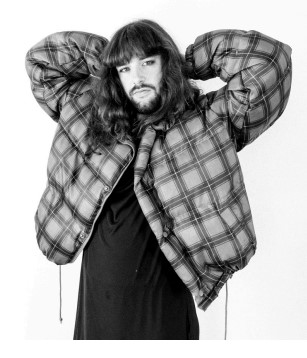
Échardes is a slim book (169 pages, 15 x 18 cm, 15€, ISBN 978‑2‑930822‑41‑9), but it opens onto a vast terrain of queer lives, ecologies, and futures. It is a feminist eco‑queer tale, a love letter to transition, and a guide for anyone who has ever felt out of place in their own body or in this world. For LGBTQ+ readers, it offers recognition and a path towards healing; for allies, it is an invitation to step into the forest, listen, and let yourself be changed.
You may also like
-
Sing It Queer: open your home (and your city) to 4,000 LGBTQI+ voices
From 24 to 28 June 2026, Various Voices Brussels 2026 will turn the capital into
-

A Night for Mylène, A Night for Us: “Au Bout de la Nuit” returns to Brussels
On 28 March 2026, Brussels gets a new all‑night love letter to Mylène Farmer: “Au
-
Every-Body-Knows: dancing with queer memory in Brussels
With Every-Body-Knows-What-Tomorrow-Brings-And-We-All-Know-What-Happened-Yesterday, choreographer Mohamed Toukabri offers an intimate and political solo where every movement asks what
-
Ixelles Museum is back: a new chapter for Brussels art lovers
After years wrapped in scaffolding and anticipation, the Musée d’Ixelles / Ixelles Museum is finally reopening its
-
Killion Huang at EDJI: when Tarot becomes a queer language of intimacy
In Ixelles, EDJI Gallery opens a new chapter with Chinese artist Killion Huang, born in 1999 and
