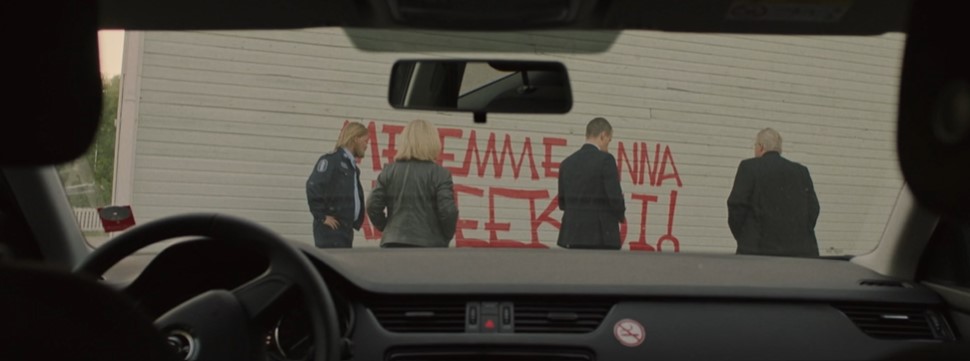
If you’re looking for a winter binge that is both moody and unapologetically queer, ARTE’s new Finnish crime series “Meurtres à Varjakka” (“All the Sins”) should be on your list. Set in a hyper‑conservative religious community in the far north of Finland, the show combines classic Nordic noir vibes with a gay lead character forced to confront the family, faith and small‑town violence he tried to escape.
A gay cop, a rigid church and a town full of secrets
“Meurtres à Varjakka” follows Lauri Räiha, a young criminal inspector who is sent back to Varjakka, the isolated village where he grew up, after two men from an ultra‑religious Læstadian Lutheran community are brutally murdered. Lauri left ten years earlier to live openly with his husband, cutting ties with his family and church; returning means stepping back into a world where queerness is a sin and silence is survival.
He is paired with Sanna Tervo, an older, hedonistic and emotionally messy police officer whose very existence clashes with local puritan norms. Together, they investigate the killings while navigating a community dominated by male authority, strict Christian codes and a long history of buried abuse and hypocrisy.
Why it matters for LGBTQIA+ viewers
Unlike many crime shows that treat queer characters as side notes, “Meurtres à Varjakka” puts Lauri’s sexuality and trauma at the centre of the story. The series explores:
- How a violently conservative religious environment shapes queer shame, anger and self‑destruction.
- What it means to come back as an out gay man to a place that still refuses to recognise you, especially when you’re suddenly in a position of power as an investigator.
- The thin line between “sins” the church wants to erase and crimes it’s willing to ignore if they protect its image.
The show doesn’t offer easy redemption arcs for the community. Instead, it slowly peels back layers of violence – physical, spiritual and psychological – in a way that will feel painfully familiar if you grew up queer in a religious setting, whether in rural Finland or closer to home.
Atmosphere: slow‑burn, icy and intimate
This is classic Nordic noir: wide, flat landscapes, long silences, and a feeling that the cold is not only in the air but between people. Over three seasons set in different time periods, “Meurtres à Varjakka” moves back and forth in time, connecting present‑day murders to older tragedies and secrets inside the Læstadian community.
What makes it stand out is how closely the camera stays with Lauri and Sanna – their bad coping mechanisms, messy relationships, and the ways they both carry violence inside them. It’s less about solving a puzzle and more about living with what the truth does to you when you finally name it.
Where to watch “Meurtres à Varjakka”
- ARTE series page (full overview and episodes, in French and original version):
https://www.arte.tv/fr/videos/RC-027447/meurtres-a-varjakka/ - Season 1 episodes on ARTE.tv (available for streaming for a limited time, depending on your location):
https://www.arte.tv/fr/videos/126036-001-A/meurtres-a-varjakka-saison-1-1-6/ - According to ARTE, the full three‑season arc is available on arte.tv from 12 February 2026 until mid‑August 2026.
If you’re outside ARTE’s rights zone, you may see a geo‑blocking message; in that case, check your local VOD platforms (Apple TV, for example, also lists the series).
Perfect for a queer, Brussels‑style winter binge
For a Brussels LGBTQIA+ audience used to juggling multiple identities – secular and spiritual, migrant and local, out and not‑out – “Meurtres à Varjakka” will feel eerily close despite its remote setting. It is a series about faith used as control, but also about the stubborn, quiet ways queer people keep surviving and loving anyway.
Watch it, then talk about it in your favourite queer bar, at RainbowHouse or in your group chats: which parts mirror your own experience, and where does Nordic noir turn our realities into something more symbolic and cinematic?
KET Magazine is a community‑driven, non‑profit magazine run by volunteers based in Brussels. Get in touch to share your thoughts or tell us about your activities. You can also promote your events on our website or support our work with a donation. Contact us at Info@ket.brussels.
You may also like
-

Queer Writing Group: a nomadic playground for stories that don’t fit
Once a month, the Queer Writing Group turns spaces like literary house Passa Porta into
-

FLB 2026: Brussels’ book festival brings Amélie Nothomb, Sapkowski, Maïa Mazaurette & more to Tour & Taxis
FLB – la Foire du Livre de Bruxelles – is getting ready to turn Tour
-

The Tunnels 2026: Brussels goes fully underground with Listen Festival & Hangar
Brussels is about to turn one of its busiest traffic arteries into a massive rave
-

Portugal set to roll back trans self-determination law: what’s at stake?
Portugal, long seen as a frontrunner on trans rights in Europe, is on the verge
-

My Own Private Idaho: the queer road movie that changed everything (and came with a dream cast)
Long before “mainstream” cinema dared to centre queer hustlers, chosen family and unrequited love between
