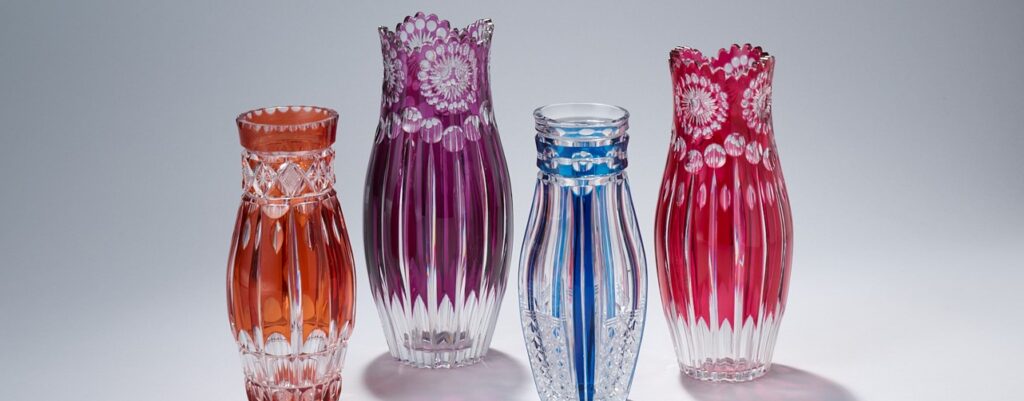
To mark the bicentenary of the Val Saint‑Lambert crystal works, the Glass Museum of Charleroi presents “Art Deco and Modernism at Val Saint‑Lambert (1925–1939)”, a major exhibition tracing how Belgian crystal embraced the aesthetics and innovations of the interwar period.
From 18 April to 27 September, the Museum of Fine Arts of Charleroi turns the spotlight on nearly a century-old modernity. The exhibition “Art Deco and Modernism at Val Saint‑Lambert (1925–1939)” revisits a decisive chapter in the history of Belgium’s most famous crystal works, founded in 1826 and now celebrating its bicentenary. Focusing on the interwar years, the show examines how Val Saint‑Lambert shifted from the sinuous lines of Art Nouveau to the clean, geometric language of Art Deco and early modernist design. In this new context, crystal abandons its purely decorative role to become a fully fledged component of modern interiors, echoing the architecture and lifestyles of the time.
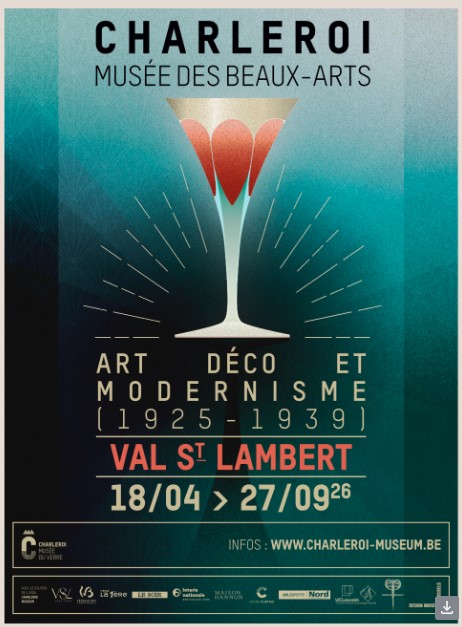
Structured into four thematic sections, the exhibition brings together around 160 pieces and archival documents from prestigious public and private collections. Visitors can discover loans from institutions such as the City of Brussels Archives, the State Archives of Belgium, the Alonso International Glass Collection, Design Museum Gent, the Madeleine 7 Foundation, the Musée de la Vie wallonne, the Grand Curtius and the Museums of the City of Liège, the Horta Museum and the Royal Museums of Art and History, alongside works from private collectors. Major pieces from the Glass Museum’s own holdings round out this rich ensemble, offering a comprehensive panorama of the creative effervescence that marked the factory’s output between the mid‑1920s and the eve of the Second World War.
A key focus of the exhibition is the pioneering role of Val Saint‑Lambert’s in‑house design department. Here, artists such as Modeste Denoël, Joseph Simon, Charles Graffart, René Delvenne and Félix Matagne designed shapes, patterns, catalogues and spectacular stands for international fairs. Long before the word became commonplace, these designers were already practicing what we now call industrial design, navigating constantly between artistic vision and industrial constraints. Their creations reveal how crystal could be adapted to serial production while maintaining a high level of craftsmanship and aesthetic ambition, at the crossroads of art and industry.
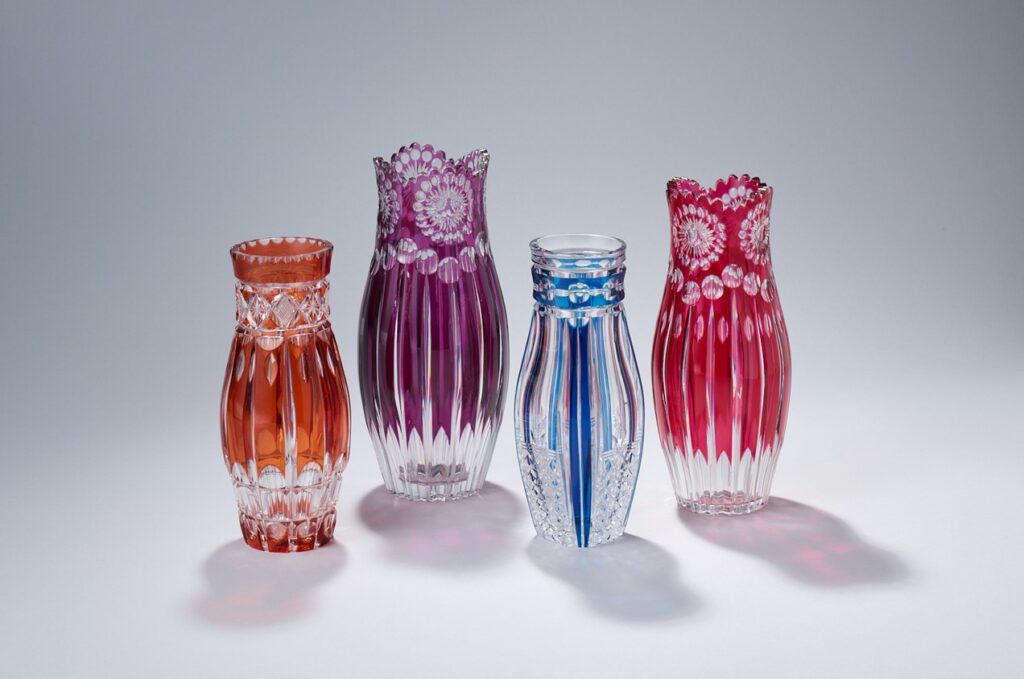
Another strong thread in the exhibition is the presence of Val Saint‑Lambert at major international exhibitions between 1925 and 1939, from Paris to other European showcases. These events acted as a global shop window for the factory and confirmed its modern, forward‑looking identity. The show also explores how the company responded to the economic crisis of 1929 by developing a more utilitarian line of glassware, notably the Luxval range. Designed for new domestic uses and modern architecture, these pieces combined accessible pricing with bold, functional forms, illustrating how the manufacture adapted to a changing world without renouncing its creative signature.
Contemporary creation also finds its place within the exhibition through a work by artist Sandrine Isambert, conceived specifically for the occasion. Her installation probes the often overlooked role of women in and around the crystal works, using a subtle play of transparency, shadow and invisible presence. By weaving together memory, absence and traces of labour, the piece opens a sensitive dialogue between industrial heritage and today’s artistic practices, inviting visitors to reflect on who is seen and who remains in the background of industrial narratives.
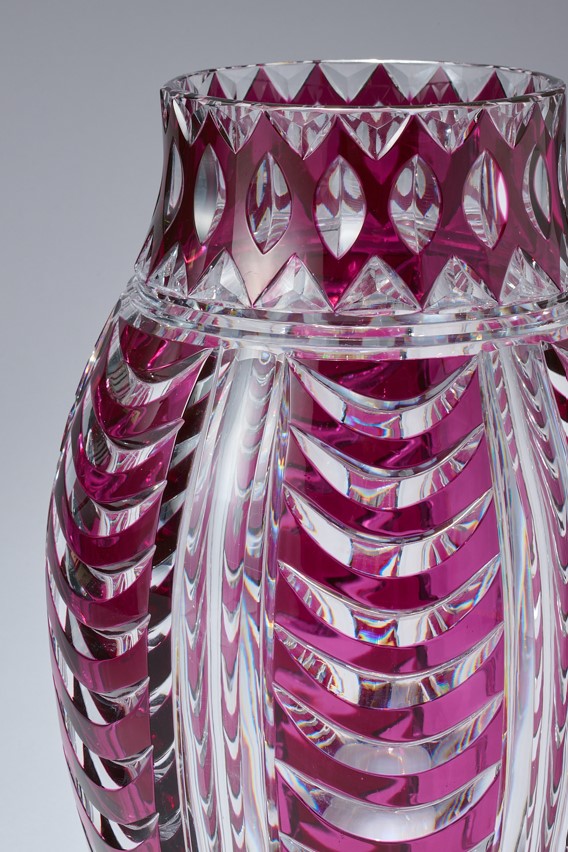
Extending beyond the exhibition itself, the Glass Museum of Charleroi will publish an extensively illustrated book dedicated to Val Saint‑Lambert’s Art Deco period. The volume will juxtapose historical catalogues of “fancy” crystal and the Luxval range (1926, 1933, 1935, 1938 and 1939) with works now preserved in public and private collections, offering readers a deeper understanding of styles, series and uses. With the support of EuropaExpo, the museum is also overseeing a collective book on the broader history of the crystal works, covering topics such as technological innovation, glass slabs and concrete‑embedded stained glass, and the factory’s impact on architectural modernity.
Through this exhibition and its accompanying publications, the Glass Museum of Charleroi asserts itself as a key reference for the study and promotion of glass heritage in Belgium. At the same time, it contributes to the bicentenary celebrations of Val Saint‑Lambert, a flagship of Belgian industry whose creations have illuminated tables and interiors across the world for two centuries. By revisiting the interwar period, the museum not only highlights a moment of stylistic revolution but also invites today’s audience to reconsider the enduring dialogue between craftsmanship, design and industrial production.
Useful links
EuropaExpo: https://www.europaexpo.be
Val Saint‑Lambert official website: https://www.valsaintlambert.com
Glass Museum of Charleroi: https://musee-du-verre.be (check for practical information, opening hours and tickets)
Museum of Fine Arts of Charleroi: https://charleroi-museum.be
KET Magazine is a community‑driven, non‑profit magazine run by volunteers based in Brussels. Get in touch to share your thoughts or tell us about your activities. You can also promote your events on our website or support our work with a donation. Contact us at Info@ket.brussels.
You may also like
-

When the Unseen History: [IN]VISIBLE Festival Turns KBR into an Augmented Reality Lab
From 25 to 27 March 2026, the Royal Library of Belgium (KBR) hosts [IN]VISIBLE Festival:
-
Queer Spirits, Strong Flavours: Brussels Rhum Festival Invites the LGBTQ+ Community to Toast 2026
On 7 and 8 March 2026, Tour & Taxis turns into a temple of rum,
-

Six Charming Princes for Three Castles: LGBT Couples Rebuilding France’s Fairy‑Tale Landscape
First, there were princesses in towers waiting for some vaguely straight prince on a horse.
-
The First Homosexuals: Queer Origins on View at Kunstmuseum Basel
For anyone interested in LGBTQIA+ history, queer art and how our identities were first imagined, “The
-
Brussels Art Pole – Le Studio: A Queer-Friendly Space for Movement, Freedom and Connection
Le Studio at Brussels Art Pole is a multidisciplinary dance studio, body expression centre and safe space for
 English
  Français de Belgique
  Nederlands (België)