
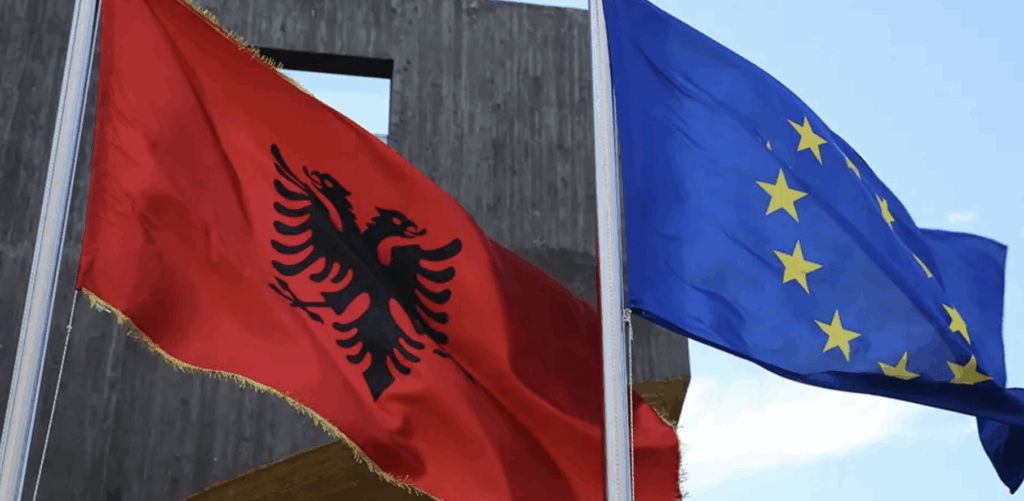
As members of a community that knows too well what it means to fight for recognition, we’re deeply concerned about what’s happening in Albania.
The Albanian government had prepared amendments to the Law on Gender Equality and Society to align with EU standards — a positive step toward inclusion and protection for all. But now, opposition lawmakers have proposed regressive changes that would make legal gender recognition nearly impossible, defining sex as only “biologically immutable” male and female.
This isn’t just a matter of language. Such a definition would open the door to dangerous consequences: harmful medical interventions on intersex people, the erasure of references to diversity and intersectionality, and the reinforcement of outdated gender stereotypes. It would also put Albania in direct conflict with international human rights law and EU standards.
Activists and human rights organizations are sounding the alarm. “We call on the Albanian Parliament to reject these dangerous amendments and protect human rights for everyone,” reads a statement from civil society groups working to defend gender equality in the region.
The proposed changes are not only discriminatory — they are a reminder of how fragile progress can be, even within Europe. Legal recognition, bodily autonomy, and the right to self-determination are not abstract ideals. They are the foundations of dignity, equality, and safety for trans and intersex people everywhere.
The vote is set for Thursday, 30 October. It’s crucial that we, as a wider LGBTQIA+ community, raise awareness about this attempt to enshrine discrimination into law. Solidarity doesn’t stop at borders.
From Brussels to Tirana, our struggles are interconnected — and so is our resistance.
You may also like
-

Pride as mourning and defiance: why Metz needs us to march with them
June is Pride month across the world, a time when marches, parades and festivals celebrate
-

The curtain falls: Cabaret Mademoiselle prepares its last bow
On 20 July 2026, the curtain of Cabaret Mademoiselle on rue du Marché au Charbon will fall
-
When love becomes a crime: Niger’s new anti-LGBT law and what it means for our communities
Niger has just promulgated a new penal code that, for the first time, explicitly criminalises
-

One Last Warm-Up: Brussels Still Has Time to Join the Biggest LGBTQI+ Choir at ING Arena
Brussels has already been singing queer for weeks, and now one of the most open
-

Lille Pride 2026 is back to claim the city in color
Lille Pride returns on Saturday 30 May 2026 with a full day of community, visibility and celebration,
 English
  Français de Belgique
  Nederlands (België)