
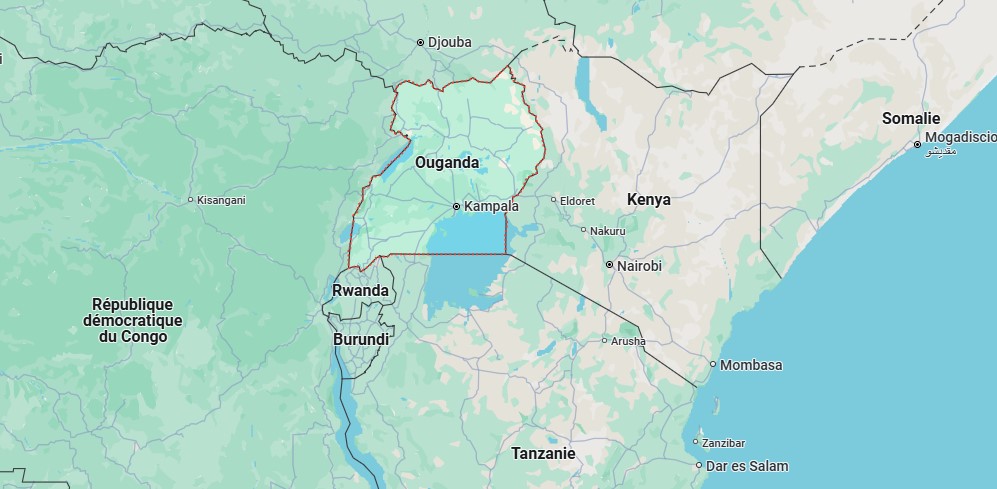
Uganda’s “Anti-Homosexuality Law,” passed in 2023, has become one of the world’s harshest pieces of anti-LGBTQ+ legislation. According to Human Rights Watch (HRW), this law has not only made life more dangerous for LGBTQ+ people in Uganda, but it has also “institutionalized homophobia,” creating a climate of fear and violence that affects thousands—especially young people.
What Does the Law Say?
The law imposes extremely severe penalties for same-sex relationships and for anyone accused of “promoting” homosexuality. It even introduces a charge called “aggravated homosexuality,” which can technically carry the death penalty (though Uganda hasn’t actually executed anyone for years). Even so, the threat is real and terrifying.
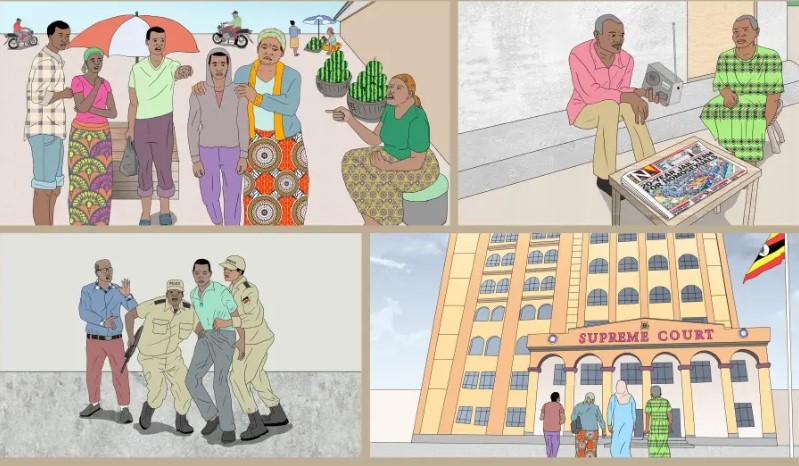
Illustrations © 2025 Dianah Lala Bwengye for Human Rights Watch
How Has Life Changed for LGBTQ+ Ugandans?
Since the law passed, violence, threats, and arrests have increased dramatically. HRW’s report, “They Put Our Lives at Risk: How Uganda’s Anti-LGBT Law Unleashes Abuse,” highlights how the law has made it easier for people—including police and regular citizens—to target LGBTQ+ individuals with little fear of consequences.
Oyem Nyeko, the author of the report, explains:
The law has legitimized attacks on LGBTQ+ people and organizations. Now, people live in a constant state of fear, because there’s a law that basically says it’s okay to hurt them.
There are reports of police officers blackmailing LGBTQ+ people—meeting them online, then threatening arrest unless they pay up. Violence against LGBTQ+ people has increased, but rarely are the attackers brought to justice. In many cases, the authorities simply look the other way.
Why Is This So Dangerous?
This law doesn’t just punish individuals—it encourages society to treat LGBTQ+ people as criminals. It makes it even harder for young queer Ugandans to find support, access healthcare, or simply live openly. Already-marginalized communities are now even more vulnerable to abuse, homelessness, and mental health struggles.
The World Is Watching
HRW reached out to Ugandan government officials, police, and the courts for their side of the story, but got no response. International organizations and activists are calling for the law to be repealed and for the protection of basic human rights for all Ugandans, regardless of sexual orientation or gender identity.
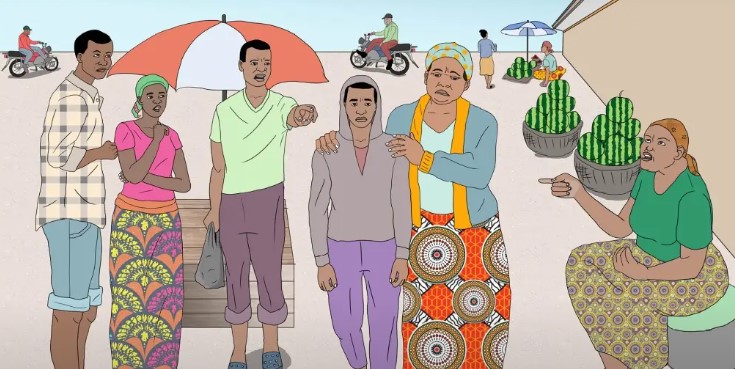
Illustrations © 2025 Dianah Lala Bwengye for Human Rights Watch
What Can You Do?
If you’re reading this and feeling angry, sad, or helpless—know that you’re not alone. Here’s how you can make a difference:
- Stay informed: Follow credible organizations like Human Rights Watch, Amnesty International, and OutRight International.
- Speak up: Use your voice on social media to raise awareness and show solidarity.
- Support: Donate to or volunteer with groups that help LGBTQ+ people in Uganda and other countries facing similar challenges.
- Connect: If you’re part of the LGBTQ+ community or an ally, remember that global solidarity matters. Every voice counts.
Final Thoughts
For young people everywhere, Uganda’s anti-LGBTQ+ law is a stark reminder of how quickly rights can be taken away—and how important it is to stand up for each other. Change takes time, but together, we can keep pushing for a world where everyone can live and love freely, without fear.
You may also like
-

One Last Warm-Up: Brussels Still Has Time to Join the Biggest LGBTQI+ Choir at ING Arena
Brussels has already been singing queer for weeks, and now one of the most open
-

Lille Pride 2026 is back to claim the city in color
Lille Pride returns on Saturday 30 May 2026 with a full day of community, visibility and celebration,
-

Brussels Is About to Sing Queer: Various Voices 2026 Unfolds Across the City
From 24 to 28 June 2026, Brussels will host Various Voices, Europe’s flagship LGBTQI+ choir festival,
-

Brussels Stands with Senegal’s LGBTQIA+ Community as Repression Gets Worse
Senegal has sharply intensified its anti-LGBTQIA+ repression in 2026, with a new law that increases
-
Queer Mess Open Air: 16 Hours of Queer Joy at Circle Park
On 30 May 2026, Queer Mess Open Air takes over Circle Park in Anderlecht for
 Français de Belgique
  English
  Nederlands (België)