
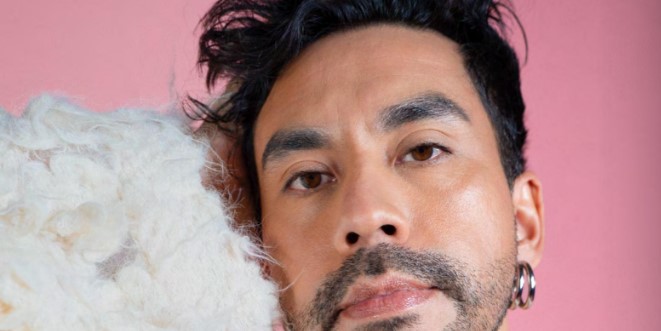
DJ and event producer Rodrigo Aranda, aka Ricky Corazón, takes us into his journey of shaping one of the most significant queer parties in Brussels. Born in Chile and arriving in the city at the age of three, he has since built the universe of Club GELATINA: a space created by and for queer Latinxs and their friends.
Rodrigo’s parents fled Pinochet’s dictatorship and found safety in Belgium, a country that, at the time, offered a future to those escaping political violence. He arrived in Brussels at the early age of three and a half years, carrying two cassette tapes in his bag: one by Luis Miguel and ABBA’s greatest hits in Spanish. Without realising it yet, music was already his companion.

Growing up between cultures was not always easy. “Like many children of immigrants, it took me a while to find balance between my two cultures.” Music became a bridge. At first, it was the music his parents played at home; later, it turned into a personal search for references that felt closer to his own experience. Unexpectedly, it was Shakira who helped him reconnect with Latin music. “Back then, she was a bit like the Alanis Morissette of Latin America, with thoughtful lyrics and a more rock-oriented sound,” he explains, “…especially drawn to her MTV Unplugged era”.
He also found himself drawn to Chilean hip-hop, particularly Makiza. One of the group’s MCs, Anita Tijoux, was also the child of exiles. “Their lyrics resonated deeply with me,” he says. The song Rosas de los vientos became a turning point — a way to make peace with a dual identity shaped by distance, history, and inheritance.
Meanwhile, celebrations were central in his family life. For his parents, gatherings were a way to stay connected to the Chilean and Latin American diaspora in Brussels. They were part of a pastoral group, but for Rodrigo, it felt less about religion than about community. “That’s actually where I DJed for the very first time,” he recalls. “I would play music for the pastoral group and make people dance.” The dance floor was already becoming a space of care.
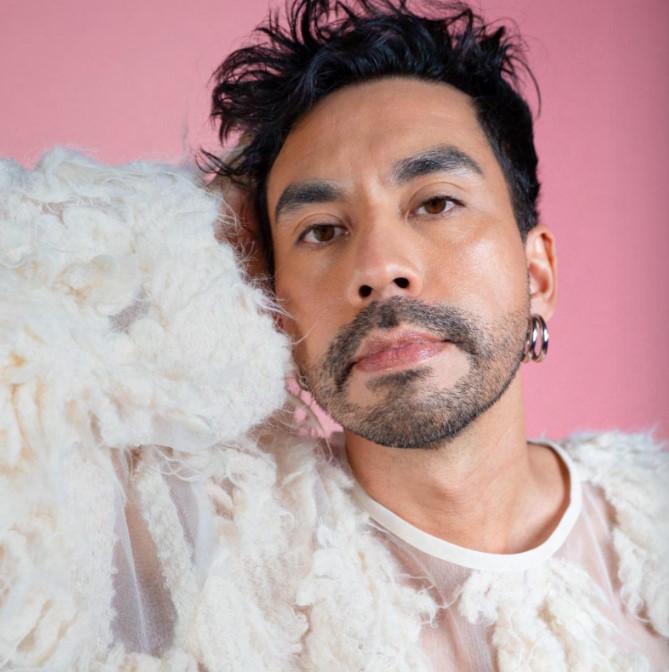
Years later, that instinct took form through GELATINA and VICIOSA, two Latinx collectives with distinct universes. In a few words, Gelatina is a queer party where people dance to reggaeton, neoperreo, dembow, merengue, guaracha, Latin club and more. “It’s a space where everyone can feel safe, express themselves freely, and truly connect through dance.” The softness of the name mirrors its intention: flexible, welcoming, alive. In Spanish, gelatina refers to the wobbly, fruit-flavoured dessert. The project was born from absence.
“There simply wasn’t a space dedicated to the queer Latinx community” in Brussels, he says. In a city known for its diversity, that gap felt striking. Existing Latin nights often reproduced rigid norms and lacked the openness or playful energy of queer spaces. GELATINA emerged as a response: intentional, joyful, and grounded in lived experience.
For Rodrigo, representation is never decorative. GELATINA is “made by and for Latinx people and their friends,” with line-ups that consistently highlight artists from Latin America and its diaspora. “Building bridges and giving greater visibility to alternative Latin American culture” remains essential. As Latinx culture gains visibility across Europe, he stays critical of how it is often consumed. “What I find most problematic is seeing so-called ‘Latino’ events run by Europeans who don’t even showcase Latinx artists,” he says. “They’re simply riding the current wave.”
Beyond the party itself, Rodrigo invites audiences to listen more deeply. “Maybe the general European public still sees this music as something that just evokes sunshine and holidays.” Yet behind the rhythms lie Afro roots, political struggles, and feminist voices. “What I love about our parties is that we can showcase alternative music that carries meaning, with a clear feminist dimension, where women and queer people can feel genuinely empowered.”
At the same time, the reality of independent nightlife in Brussels remains fragile. Venue closures and rising costs continue to threaten alternative spaces. “For an alternative party like ours, finding a venue is already a challenge,” Rodrigo admits. Financial sustainability is a constant balancing act: keeping ticket prices accessible while paying artists fairly. “It’s not always easy to make a living from nightlife.”
Still, moments of collective success offer hope, one of the highlights of 2025 was the collaboration between VICIOSA and GELATINA at Halles de Schaerbeek, which welcomed over 1,700 people. “Thinking back two years ago, we would’ve never imagined gathering such a crowd,” he says. “It felt surreal and incredibly encouraging.” Inspiration also comes from other communities. Rodrigo mentions the queer and Arab collective Corne de Gazelle and their event organised at Vaux Hall: “It was beautiful to see that community take space and bring so many people together”.
Looking ahead to 2026, GELATINA turns 17 in February. “We’re still in our teenage years… so we’re allowed to be a bit wild and unpredictable, right?” Another major collaboration with VICIOSA is already planned for September. Yet the most meaningful moments remain intimate. “When people come up to me in the middle of a party to thank me,” Rodrigo says, “to tell me they’ve found a piece of their roots on the dance floor, it moves me deeply.” One night, a Colombian guy shared that he had always dreamed of a party like this in Brussels. Today, that person, Nico, is part of the collective.
Born from lived experience rather than trends, GELATINA carries Rodrigo Aranda’s story at its core. Guided by memory, migration, and sound, he continues to shape a dance floor where personal histories become collective intersectional movement, and where belonging is not promised, but actively built, together.
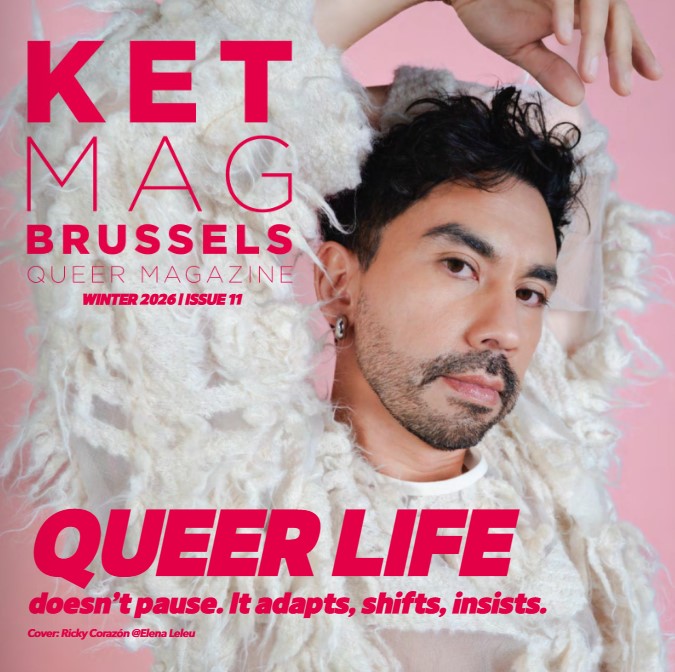
@ricky.corazon / @gelatina_bxl – Pictures by @elena.leleu
You may also like
-

Queer feet, green beats: Paradise City gets your summer moving (softly)
From 26 to 28 June, Paradise City returns to Kasteel de Ribaucourt in Perk with
-

Queer Paris in Your Pocket: A New Guide to the City’s LGBTQIA+ Memory and Momentum
Released on 4 June by First, Queer Paris is a new pocket guide that maps out the French capital through
-

Let Your Heart Be Heard: The Queer Finale Brussels Has Been Warming Up For
After months of rehearsals, teasers and city‑wide build‑up, Various Voices Brussels 2026 is heading towards its big
-

One Last Warm-Up: Brussels Still Has Time to Join the Biggest LGBTQI+ Choir at ING Arena
Brussels has already been singing queer for weeks, and now one of the most open
-

Dress to Bury the Old World: A Queer Funeral for Dictators at AB
On Friday 5 June, Ancienne Belgique turns into a political dancefloor with “DICTATOR’S FUNERAL”, a
 Français de Belgique
  English
  Nederlands (België)