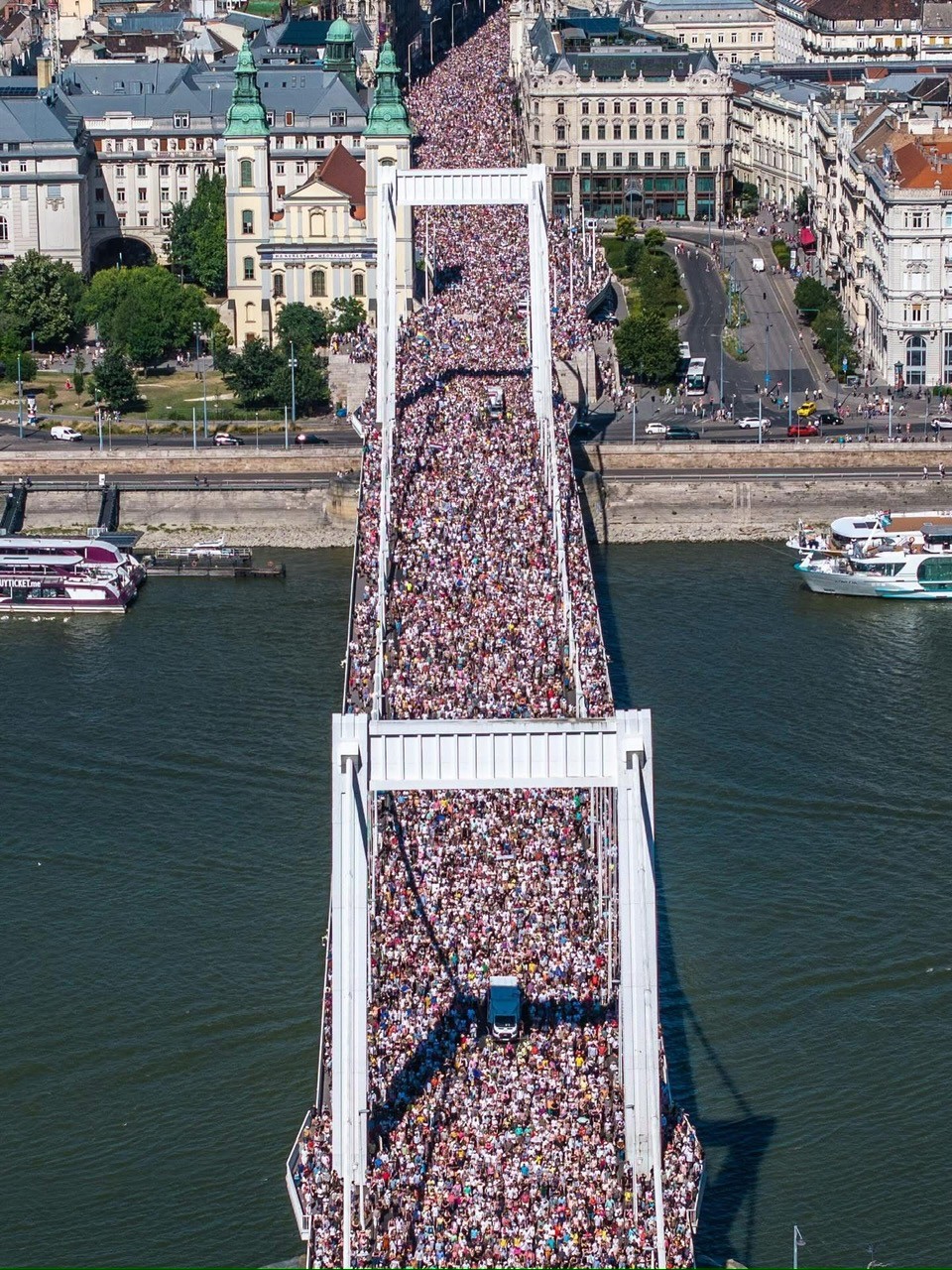
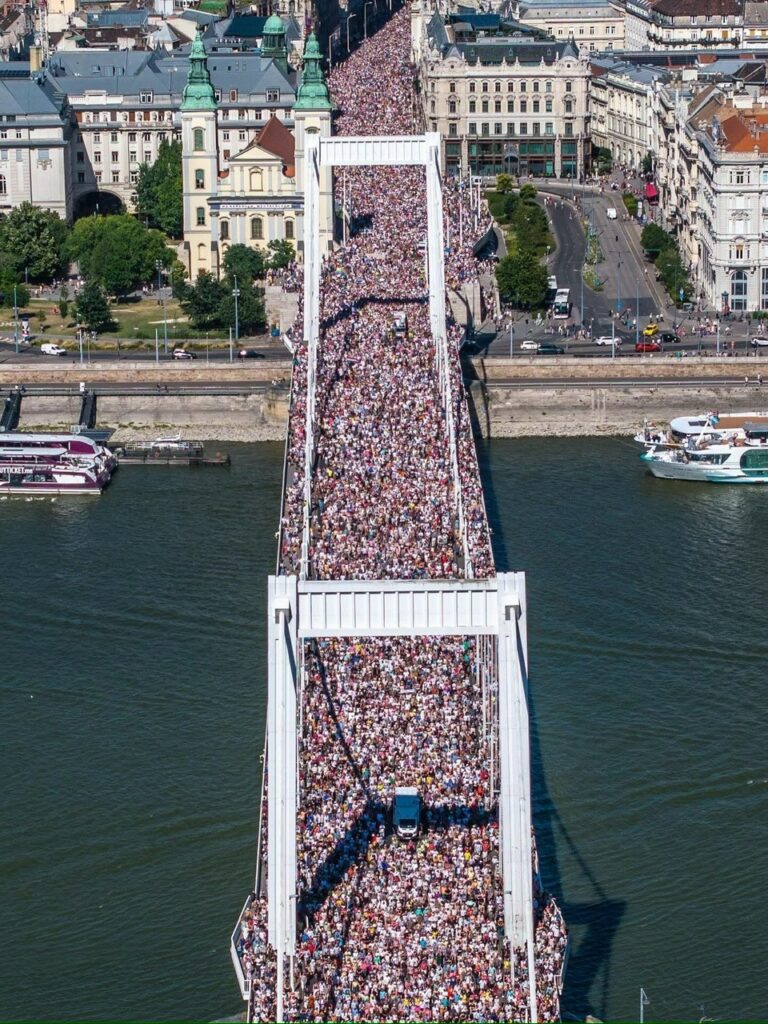
On Saturday, June 28, 2025, the Hungarian capital experienced a historic moment: tens of thousands, with estimates ranging from 100,000 to 200,000 according to organizers, gathered to march in the Budapest Pride parade, defying an official ban imposed by the government of Viktor Orbán. This gathering, marking the 30th anniversary of the march, became a symbol of resistance and solidarity in the face of the rollback of LGBTQ+ rights in the country.
A Tense Context and a Controversial Ban
The nationalist government of Viktor Orbán passed a law last spring aiming to ban the Pride event, justifying the measure as “protecting children” and preventing minors from being exposed to homosexuality or gender identity issues. This ban, accompanied by threats of sanctions (fines up to €500 and a year in prison for organizers), sparked outrage from the international community and European institutions. More than 70 European parliamentarians, commissioners, and mayors from nearly 30 countries traveled to support the march.
Record Crowds and a Festive Atmosphere
Despite the risks, crowds gathered under rainbow flags in an atmosphere that was both festive and determined. Families, young people, seniors, heterosexuals, and members of the LGBTQ+ community marched together, crossing the Elisabeth Bridge and the Danube riverbanks, transforming the city into a colorful mosaic of solidarity. “I’ve never seen so many people,” said Adam Makovecz, a participant for nine years, moved by the massive presence of heterosexual allies.
International Solidarity and Political Tensions
Budapest Pride 2025 took on major political significance. The city’s Green Party mayor, Gergely Karácsony, reaffirmed that the event was organized by the municipality and thus not subject to the new restrictive laws. He also praised international solidarity and called on the police to protect participants from far-right counter-demonstrations, which were permitted by authorities.
The European Commission, through its president Ursula von der Leyen, called on Hungary to guarantee the freedom to demonstrate without fear of reprisals. Viktor Orbán, for his part, accused the European Union of trying to impose its values on Hungary, comparing the situation to Moscow’s attitude toward satellite countries.
A Powerful Message for Freedom and Love
“Freedom and love cannot be banned!”: this message, displayed prominently in Budapest, encapsulates the spirit of the march. Despite police surveillance, facial recognition, and threats of sanctions, Budapest Pride 2025 will be remembered as a moment of resistance, joy, and hope for fundamental rights in Europe.
Misschien wilt u ook
-

Queens of the South: When Nice Turns Carnival into Queer Celebration
On 27 February 2026, Place Masséna in Nice will shimmer a little brighter. Lou Queernaval,
-

Cœur de pirate at AB: the runaway pop of a queer icon lands in Brussels
A major figure in Francophone pop and an outspoken voice in the queer community, Cœur de pirate
-

Safer on Paper, Not in Reality”: ILGA Warns of Rising Anti-LGBTQIA+ Violence in Belgium
Belgium still ranks among Europe’s most protective countries for LGBTQIA+ people on paper – yet
-

“March Is for the Queers”: Why You Should Put Queer March Ghent 2026 on Your Radar
Every March, Queer March turns Ghent into a month-long celebration of queer life, resistance, and
-

Six Charming Princes for Three Castles: LGBT Couples Rebuilding France’s Fairy‑Tale Landscape
First, there were princesses in towers waiting for some vaguely straight prince on a horse.
 Nederlands (België)
  English
  Français de Belgique