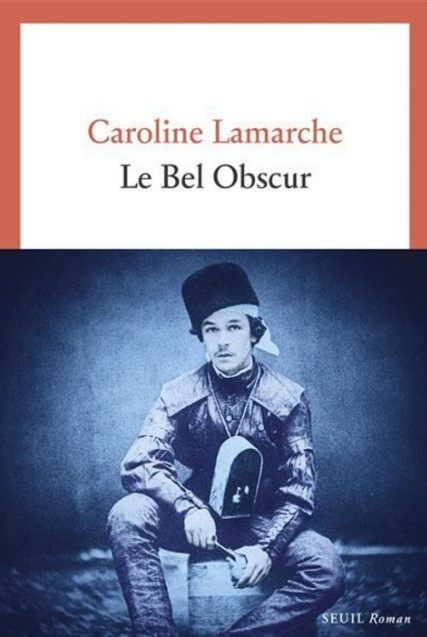
Belgian author Caroline Lamarche is gaining significant attention this literary season with her latest novel, Le Bel Obscur, published by Éditions du Seuil. Celebrated for her profound and lyrical writing, Lamarche, born in 1955 in Liège, Belgium, has established herself as one of the most important contemporary French-speaking writers through a diverse body of work including novels, poetry, short stories, radio plays, and essays. Her work often explores complex emotions, intimate relationships, and social marginalization.
A Literary Career Marked by Distinction and Depth
Lamarche grew up between Spain and the Paris region before settling near Brussels. With a degree in Romance languages, she taught in Liège and Nigeria. Over decades, she has published numerous acclaimed works, receiving prestigious awards such as the Prix Rossel, the Prix Goncourt for short stories in 2019, and multiple honors for her radio and literary creations.
Her literary voice is marked by economy, irony, and emotional intensity, handling delicate subjects such as gender dynamics, solitude, and the human connection to the environment with great sensitivity.
“Le Bel Obscur”: Exploring an Untold Narrative
At the heart of Le Bel Obscur are two intertwined stories: one of an ancestor exiled from her family in the 19th century, and the other of a contemporary woman living in a relationship with a homosexual husband. This latter theme, which Lamarche describes as “a blind spot in literature,” confronts the rarely explored experience of partners of gay men.
As the author explains, homophobia does not only affect individuals but also families and spouses, resulting in a shared sense of invisibility or “being in the closet.” The novel delves into this complex emotional terrain, portraying the woman’s solitude and a love that is often unrequited yet deeply felt.
Complex Love and Resilience
The narrative follows a relationship spanning three decades, described evocatively by Lamarche as akin to a “ship weathering a storm,” with moments that range from tragic to unexpectedly humorous. Self-irony and curiosity empower the protagonist as she navigates her unique situation—living with a husband who is emotionally and romantically distant, yet under the same roof—challenging traditional norms of marriage and partnership.
Lamarche challenges the conventional notion of marriage as a “patriarchal prison” for women, suggesting that non-traditional unions, even when fraught with difficulty, may offer opportunities for freedom and experimentation, but also bring their own pains and frustrations.
Dreams and Guidance
Dreams emerge as a symbolic motif in the novel, representing insight and guidance in moments of difficult decisions—whether to stay or leave a painful situation. Drawing on the ancient Chinese classic Yi Jing, Lamarche presents dreams as a form of inner divination, reflective of the protagonist’s ongoing struggle for clarity and self-understanding.
A Reflection on Identity and Social Margins
Le Bel Obscur resonates beyond its personal story to address broader social themes of marginalization, identity, and resistance to societal norms. Through a poetic narrative blending memory, grief, and hope, Lamarche offers a compelling meditation on what it means to live authentically amidst social pressures and emotional contradictions.
Critical Reception
Early critical reception for Le Bel Obscur has been excellent, praising Lamarche’s elegant prose and the novel’s tender yet unflinching portrayal of difficult emotional realities. The book adds a vital voice to contemporary discussions on sexuality, love, and the invisibilities endured by those who do not fit conventional molds.
Misschien wilt u ook
-

Cœur de pirate at AB: the runaway pop of a queer icon lands in Brussels
A major figure in Francophone pop and an outspoken voice in the queer community, Cœur de pirate
-

When the Unseen History: [IN]VISIBLE Festival Turns KBR into an Augmented Reality Lab
From 25 to 27 March 2026, the Royal Library of Belgium (KBR) hosts [IN]VISIBLE Festival:
-

“March Is for the Queers”: Why You Should Put Queer March Ghent 2026 on Your Radar
Every March, Queer March turns Ghent into a month-long celebration of queer life, resistance, and
-

Women to the front: a radical open stage reclaims La Tricoterie
In Saint-Gilles, La Tricoterie hands over its stage to anyone identifying as a woman – with non-binary
-

CUT-CUT Funding Party: Drag, Community and a Brand-New Chest at The Agenda
On 6 March, Brussels drag artist T’Charly/Charli turns The Agenda into a fundraising runway with
 Nederlands (België)
  English
  Français de Belgique