For anyone interested in LGBTQIA+ history, queer art and how our identities were first imagined, “The First Homosexuals” at Kunstmuseum Basel is a must‑see. The exhibition traces how same‑sex desire and gender diversity became visible in art from the late 19th to the early 20th century, around the moment when the word “homosexual” first appeared in print in 1869.
How a word created a minority
The show starts from the invention of the term homosexual in the German‑speaking world in 1869, then follows how its meaning shifted over the decades. Debates of the time swung between seeing same‑sex love as a universal capacity and framing “the homosexual” as a distinct “third sex”, before the word eventually came to describe a self‑aware minority.
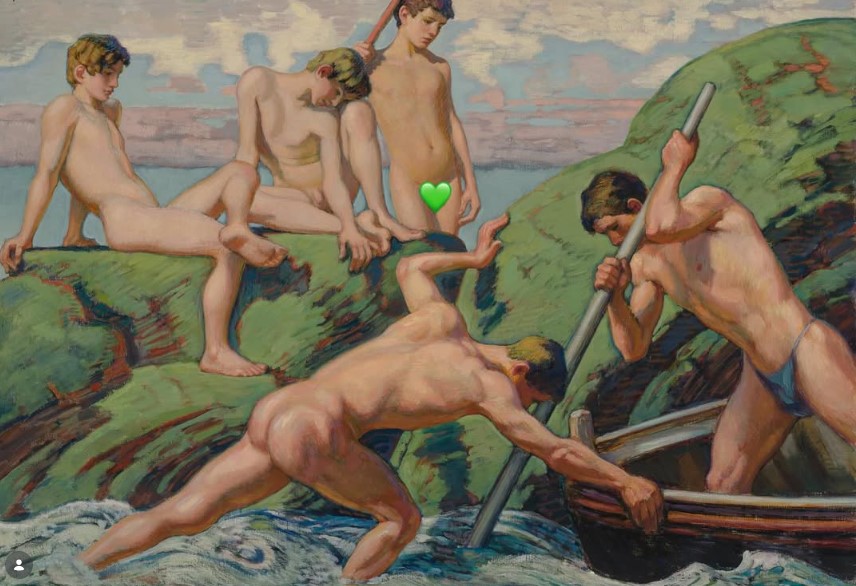
Ludwig von Hofmann, Nackte Schiffer (Fischer) und Knaben am grünen Gestade (Naked Boatmen (Fishermen) and Boys on the Green Shore), c. 1900, Oil on canvas, Museum der Bildenden Künste Leipzig.
Artists responded in ways that were intimate, subversive and often coded. They portrayed friends and lovers, everyday scenes of couples, and playful reversals of gender roles. In an era with few words for queer lives, art became a safe, experimental space to express non‑normative desires and subjectivities.
Inside the exhibition
Bringing together around 100 paintings, photographs, works on paper and sculptures, The First Homosexuals is organised in thematic sections that highlight:
- queer social networks and intimate portraits,
- desire encoded in composition, pose and gaze,
- the evolution of the nude as ideas about sexuality changed,
- friendship, myth and classical motifs used as queer codes.
The exhibition goes beyond Europe, showing how many European artists projected same‑sex desire onto colonised territories – and how artists from other regions resisted or rewrote these narratives. It offers both an art history of queer modernity and a cultural history of early LGBTQIA+ communities.
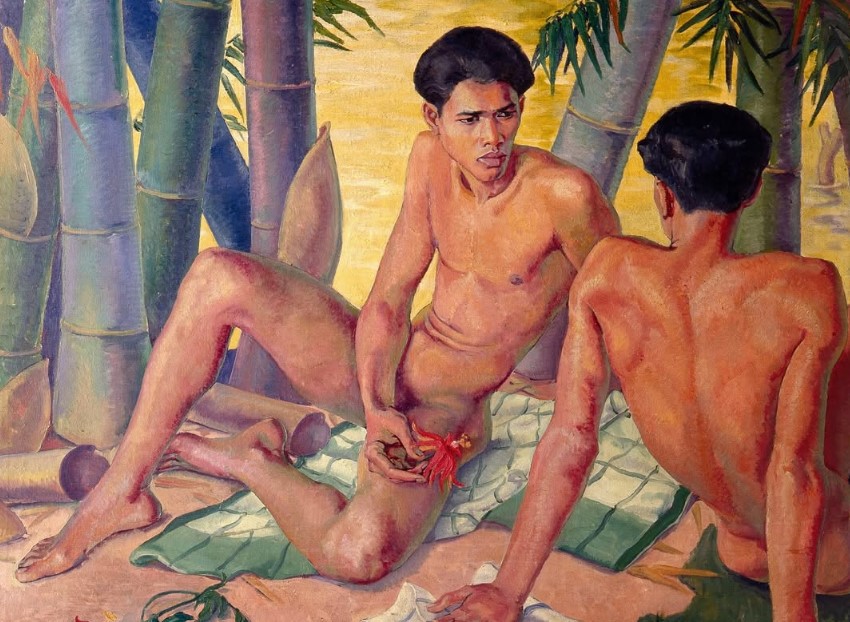
David Paynter, L’Après-midi, c. 1935, Oil on canvas. Brighton & Hove Museums, gift from Colonel R.J.C. Wilkinson, 1965.
Curated by art historian Jonathan D. Katz, the Basel version adapts a project first shown at Wrightwood 659 in Chicago, expanding it with international loans and works from the Kunstmuseum’s own collection. A substantial catalogue published by Monacelli Press features 22 essays, each focused on a different region of the world – from Japan and Australia to Indigenous communities in South America.
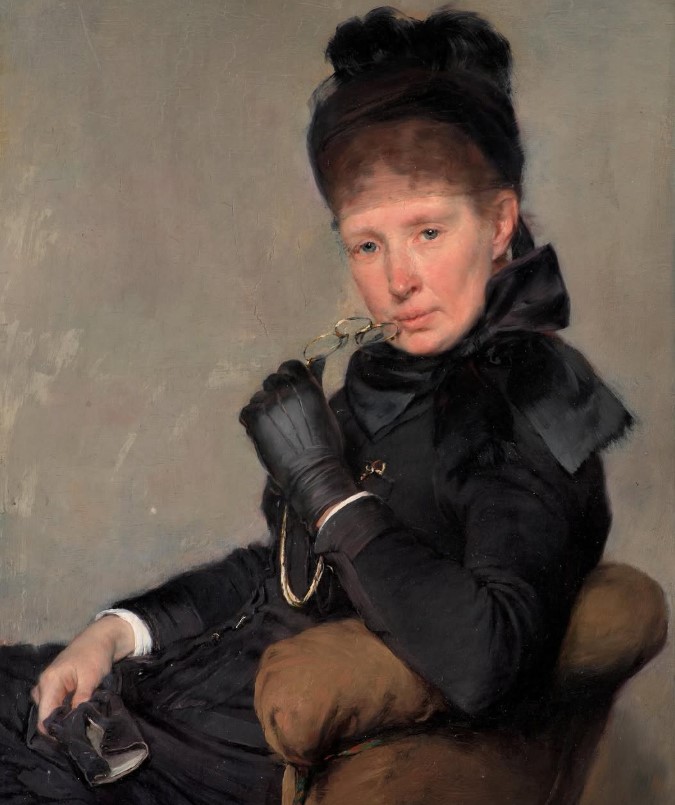
Image: Bertha Wegmann, Portrait of the Swedish Painter Jeanna Bauck, 1887, Oil on panel, 49.2 x 31.5 cm, The Hirschsprung Collection.
Why it matters now
In a time when queer and trans lives are again under attack, The First Homosexuals reminds us that LGBTQIA+ presence has a long, complex visual history. The show makes clear that our identities were not invented in the late 20th century; they were slowly shaped through images, texts and communities long before the acronym existed. For visitors from Brussels and beyond, it is a rare chance to see how queer visibility, colonial histories and modern art intersect on a global scale.
Practical info & links
For up‑to‑date details on dates, tickets and opening hours, check the museum website:
👉 Kunstmuseum Basel – “The First Homosexuals”: https://kunstmuseumbasel.ch/en/exhibitions/2026/the-first-homosexuals
The exhibition is supported by the Alphawood Foundation Chicago, which funds projects for a more just and equitable society.
KET Magazine is a community‑driven, non‑profit magazine run by volunteers based in Brussels. Get in touch to share your thoughts or tell us about your activities. You can also promote your events on our website or support our work with a donation. Contact us at Info@ket.brussels.
Misschien wilt u ook
-
Women to the front: a radical open stage reclaims La Tricoterie
In Saint-Gilles, La Tricoterie hands over its stage to anyone identifying as a woman – with non-binary
-

From Choir Festival to Queer Utopia: Inside Various Voices Brussels 2026
Every four years, one European city turns into a queer musical playground. In 2026, that
-
CUT-CUT Funding Party: Drag, Community and a Brand-New Chest at The Agenda
On 6 March, Brussels drag artist T’Charly/Charli turns The Agenda into a fundraising runway with
-
Kongi: Ancestry in Motion
Born in Kinshasa in a lively multigenerational home, they migrated first to Paris, then to
-
LAST DAYS OF: Borders — A Night of Sound, Vision, and Resistance Electrosexual (DE) feat. Nicky Miller live — In support of Abolish Frontex
On March 14, La Garçonnière Prod. revives its iconic LAST DAYS OF series at Brasserie Illegaal. The night promises a
 Nederlands (België)
  English
  Français de Belgique