In ARTE’s documentary Mister Nobody Against Putin, a school worker in a polluted Russian town turns his camera into a weapon against propaganda and war. His story speaks directly to queer communities in Europe: when authoritarian regimes militarise schools and erase dissent, minorities are always next in line. Watching him resist is a reminder that LGBTQIA+ people, migrants and other minorities cannot afford to be spectators in the battle for democracy.
When you watch Mister Nobody Against Putin, you don’t just see Russia; you see a warning shot for every democracy that thinks “it can’t happen here”. The film follows Pavel “Pacha” Talankin, an unassuming school staff member in Karabash, an industrial town in the Urals labelled one of the most polluted places on Earth, as he documents how his school is turned into a conveyor belt of militarist, nationalist propaganda after the invasion of Ukraine.
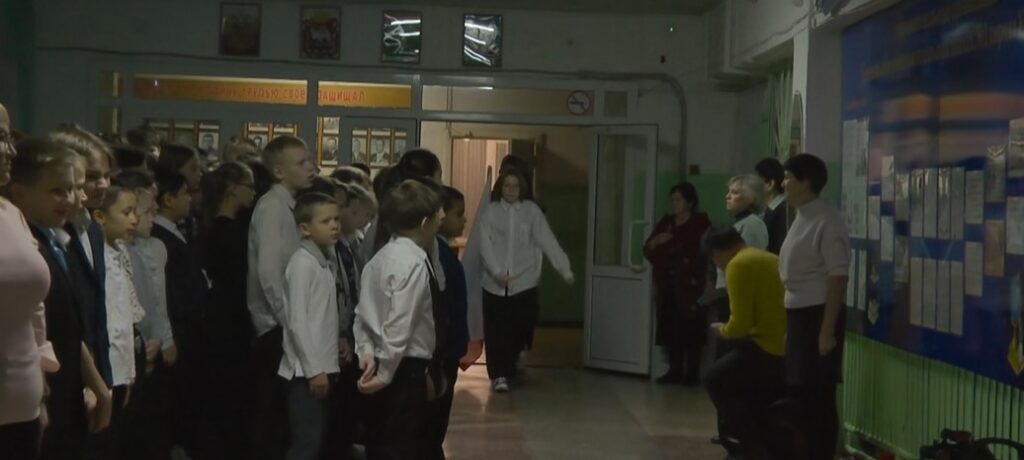
Pacha’s role is simple on paper: he films school events for a government platform. In practice, he becomes the official cameraman of the new war culture: patriotic poems, flag-raising ceremonies, letters to soldiers, youth movements that echo Soviet “pioneers”, and even sessions where Wagner militiamen show children how to handle grenades. What begins as a job morphs into double life; instead of quitting, he decides to keep filming – but this time to reveal, not to serve.
How to watch the documentary
The full documentary Mister Nobody contre Poutine (Mister Nobody Against Putin) is available on ARTE for several years:
- ARTE web page (French/German info, streaming depending on geoblocking and language territory):
https://www.arte.tv/fr/videos/116712-000-A/mister-nobody-contre-poutine/ - ARTE’s YouTube channel (version currently announced as available until 30 April 2030, around 1h30, with French content description):
https://www.youtube.com/watch?v=vlYTv15eFXw
Depending on where you are, you may have to use the ARTE site or the YouTube version; both list the same synopsis and distribution details, and both clearly frame the film as a Danish documentary by David Borenstein and Pavel Talankin, rewarded at Sundance and selected to represent Denmark in the Oscars 2026 international feature race.
Read Also : Queens of Joy: Ukrainian Drag, Queer Resistance and Why Our Solidarity Still Matters
Watching propaganda through a queer lens
Queer people know what it means when a state decides which bodies are “useful” and which are “undesirable”. In Pacha’s school, bodies are sorted early: the boys who will be soldiers, the girls who will write to them, the teachers who will repeat Kremlin talking points about “Nazis” in Ukraine and “traitors” at home. This is not just about war abroad; it is about shaping who counts as a “proper” citizen.
The documentary lingers on small gestures that resonate strongly with queer viewers: Pacha trying to create a safe, creative space in his office for kids who feel different; his discomfort at having to turn them into extras in a state-scripted narrative; his sense of being “trapped in the system” yet refusing to fully align with it. Many LGBTQIA+ people recognise this double consciousness: staying visible enough to survive in hostile institutions (family, school, church), but lucid enough to see the violence underneath the surface.
When Pacha plays the U.S. national anthem sung by Lady Gaga instead of the Russian one during a ceremony, it is a tiny act of sabotage, but also a queer-coded moment: camp, irreverent, knowingly risky. In an environment where dissent is criminalised and “foreign influence” is painted as contamination, inserting Gaga into a patriotic ritual is like smuggling a pride flag into a military parade. It is not just trolling; it is a refusal to let the state monopolise symbols, sound and emotion.
Minorities, democracy and the duty to resist
In the film, you see how quickly “neutral” spaces collapse: a school that once offered some intellectual freedom becomes an extension of the regime, then a pipeline to the front. That is exactly what queer and other minorities fear when democratic safeguards erode: there is no such thing as a safe apolitical zone once an authoritarian project advances.
History shows that minorities often feel the shock first. Long before entire populations lose rights, queer people, Roma communities, migrants, sex workers, people with disabilities and opposition voices are targeted through “morality laws”, “child protection” rhetoric or “foreign agent” labels. In Russia, LGBTQIA+ organisations have been systematically stigmatised and repressed; in the film, queer bodies are not named, but the infrastructure of repression is visibly tightening around any difference.
From a queer perspective, Mister Nobody Against Putin is not just about Russia or Ukraine. It is a case study in how democracies die quietly: lesson after lesson, decree after decree, small compromise after small fear. Pacha’s students are being prepared not just to obey orders, but to internalise that disagreement equals betrayal – the same mechanism used to silence queer kids who grow up hearing that they are “against nature”, “against the nation” or “against God”.
From Karabash to Brussels: what we do with this story
Why should a queer magazine in Brussels care about a school worker in the Urals? Because Pacha’s choice – to document instead of look away, to leave instead of collaborate – is the same choice many queer and allied people will face as democratic backsliding intensifies across Europe.
Watching the film, it is tempting to say: “We would resist sooner.” But queer communities also know how tiring it is to be constantly in resistance mode: defending trans healthcare, defending drag story hours, defending asylum rights, defending sex education. Mister Nobody Against Putin suggests another way of understanding this fatigue: not as a burden reserved for minorities, but as a democratic muscle everyone should build.
So what can we take from Pacha’s story in a Brussels, Belgian or wider European context?
- That visibility matters: filming, archiving, documenting abuses is not passive; it is a form of protection and testimony.
- That everyday jobs inside compromised institutions (schools, administrations, media, churches) can become fault lines where small acts of refusal make a difference.
- That exile – chosen or forced – is sometimes the only way to stay alive and honest, and that host societies (like ours) have a responsibility to welcome those who bring this kind of uncomfortable truth.
For queer people and other minorities, the takeaway is blunt: we cannot wait for “the majority” to realise that democracy is in danger. By the time the majority feels it, the tools used today in Russia – propaganda in classrooms, militarised youth programmes, hate campaigns against “traitors” – may already be normalised elsewhere. Watching Mister Nobody Against Putin is not just consuming a powerful documentary; it is accepting a call: to stay noisy, organised and unapologetically present wherever democracy is being hollowed out.
You can start with one simple act: watch the film on ARTE (via the platform or YouTube), share the link, and talk about it – in your queer spaces, your classrooms, your group chats. Then ask the question the documentary leaves hanging in the air: if “Mister Nobody” can risk everything to show the truth, what are we ready to risk, here and now, to keep our democracies liveable for all our bodies?
KET Magazine is a community‑driven, non‑profit magazine run by volunteers based in Brussels. Get in touch to share your thoughts or tell us about your activities. You can also promote your events on our website or support our work with a donation. Contact us at Info@ket.brussels.
Misschien wilt u ook
-

Six Charming Princes for Three Castles: LGBT Couples Rebuilding France’s Fairy‑Tale Landscape
First, there were princesses in towers waiting for some vaguely straight prince on a horse.
-

Women to the front: a radical open stage reclaims La Tricoterie
In Saint-Gilles, La Tricoterie hands over its stage to anyone identifying as a woman – with non-binary
-

From Choir Festival to Queer Utopia: Inside Various Voices Brussels 2026
Every four years, one European city turns into a queer musical playground. In 2026, that
-

The First Homosexuals: Queer Origins on View at Kunstmuseum Basel
For anyone interested in LGBTQIA+ history, queer art and how our identities were first imagined, “The
-

CUT-CUT Funding Party: Drag, Community and a Brand-New Chest at The Agenda
On 6 March, Brussels drag artist T’Charly/Charli turns The Agenda into a fundraising runway with
 Nederlands (België)
  English
  Français de Belgique