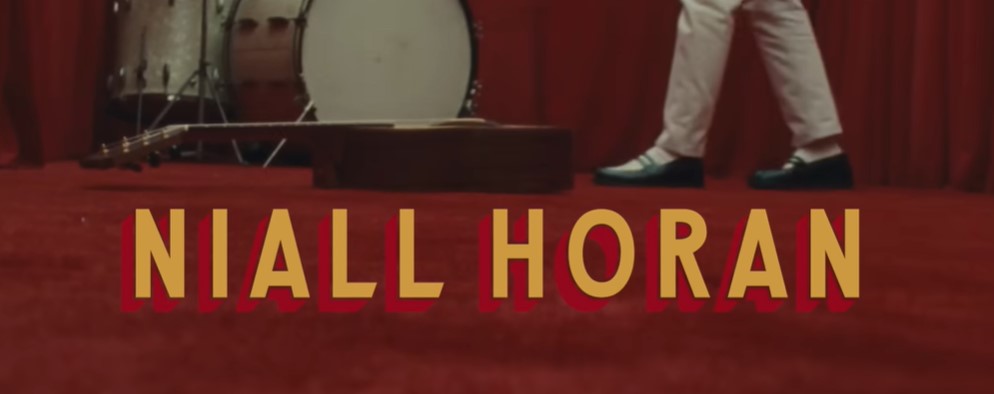
From Pride tweets to rainbow flags in the crowd, Irish singer Niall Horan has quietly become one of mainstream pop’s most consistent straight allies. As he moves on from his One Direction past into a reflective solo career, queer fans are finding in him something rare: a chart-topping artist who doesn’t just tolerate them, but insists they should “love who [they] want to love.”
If you grew up on One Direction, chances are Niall Horan has been on your radar for more than a decade – first as the cheeky Irish one in a record‑breaking boyband, now as a solo artist with a softer, guitar‑driven pop sound and a very online relationship with his fans. What has become increasingly clear over the years is that many of those fans are queer, and that Horan takes that seriously: he talks about LGBTQ+ rights in interviews, amplifies Pride, and regularly acknowledges the rainbow flags that appear in his crowds.
Back in 2017, when a fan asked what link he had to the LGBTQ+ community, Horan gave a simple, disarming answer: he said he had “lots of friends who are gay” and a gay cousin, and that Pride was “extremely important” because it should not matter what sexuality people have. That might sound obvious, but hearing it from a straight male pop star with a massive teenage fanbase – and a background in a boyband constantly targeted by homophobic jokes and speculation – still hits differently. For young fans trying to figure themselves out in small towns from Mullingar to Molenbeek, seeing their idol frame queerness as normal and worth celebrating can be quietly life‑changing.
Horan has never publicly come out as queer, and most reliable sources describe him as straight, with a dating history that includes several women. Yet his allyship has often been read as “too much” by more conservative corners of the internet, to the point that his support for LGBTQ+ causes regularly fuels rumours about his sexuality. The irony is that this reaction underlines exactly why vocal straight allies matter: they challenge the old idea that only queer people should care about queer liberation.
On social media, Horan makes a point of marking Pride Month, not with corporate‑speak, but with short, direct messages. “Happy Pride Month, beautiful people… It’s your life, love who you want to love,” he wrote in 2021, echoing the kind of affirmation many LGBTQ+ fans wish they’d heard from family members. That same year he joined other artists in signing a public letter supporting the US Equality Act, arguing that federal protections for LGBTQ+ people – including trans youth – were “an essential part” of fighting discrimination. For a global pop figure whose fanbase stretches far beyond progressive bubbles, that kind of positioning is neither neutral nor risk‑free.
His allyship also shows up in smaller, more aesthetic gestures: rainbow flags welcomed on stage, gender‑neutral lyrics that leave room for listeners of all orientations to project themselves into his songs, and a general refusal to play the hyper‑masculine frontman. Online, queer fans dissect these details with the same intensity they once reserved for One Direction shipping theories, but for many, the point is less about reading him as secretly queer and more about recognising a straight man making space. In a pop landscape still full of no‑homo jokes and “bro” culture, Horan’s softness, emotional tone and visible comfort around queer people feel quietly radical.
It hasn’t always been perfect. Early in his career, Horan was involved in a clumsy “experimenting with my sexuality” prank on a friend’s Twitter account, which drew criticism from LGBTQ+ observers for treating queerness as a joke. While he never publicly apologised for that moment, his trajectory since then – consistent public support for Pride, signing on to political protections, talking openly about queer friends and family – suggests an evolution from immature banter to something closer to informed allyship. For a generation of fans who are themselves learning and unlearning, that visible growth can be as meaningful as a perfectly worded statement.
For Brussels‑based LGBTQ+ listeners, Niall Horan’s story might not look revolutionary at first glance: a straight Irish guy with a guitar and a golf obsession. Yet the way he uses his platform – to normalise queer love, to back legislative change, to ensure Pride messages reach millions of mainstream pop fans – is part of a wider ecosystem of support that makes queer lives more livable. In a world where our rights are still under attack, sometimes the quietest allies are the ones who shift the centre of gravity the most.
Useful links
Background on Niall Horan and LGBTQ+ allyship, including Pride quotes: https://mimik.s3.sbg.io.cloud.ovh.net/2024-07-11/is-niall-horan-gay-singer-s-allyship-with-the-lgbt-community-sparks-speculation
Niall Horan official website (tour dates, music, merch): https://www.niallhoran.com/
Niall Horan on Instagram (behind the scenes, fan interactions): https://www.instagram.com/niallhoran/
Niall Horan Pride Month message to LGBTQ fans (article): https://www.cheatsheet.com/entertainment/niall-horan-one-direction-pride-month-message-lgbtq-fans.html
Artist letter in support of the Equality Act (includes Niall Horan): https://theallycoalition.org/equality-act/
KET Magazine is a community‑driven, non‑profit magazine run by volunteers based in Brussels. Get in touch to share your thoughts or tell us about your activities. You can also promote your events on our website or support our work with a donation. Contact us at Info@ket.brussels.
Misschien wilt u ook
-

Angèle x Justice’s “What You Want”: A Queer Night Out We’ve All Dreamed Of
Projected onto the façade of La Monnaie in Brussels and shot at night in Marseille
-
Ten Years of Balkan LGBTQIA: A Decade of Fighting Borders, Discrimination and Silence
Created in Brussels by volunteers from across the Balkans, Balkan LGBTQIA has spent ten years
-

Cœur de pirate at AB: the runaway pop of a queer icon lands in Brussels
A major figure in Francophone pop and an outspoken voice in the queer community, Cœur de pirate
-

When the Unseen History: [IN]VISIBLE Festival Turns KBR into an Augmented Reality Lab
From 25 to 27 March 2026, the Royal Library of Belgium (KBR) hosts [IN]VISIBLE Festival:
-
“March Is for the Queers”: Why You Should Put Queer March Ghent 2026 on Your Radar
Every March, Queer March turns Ghent into a month-long celebration of queer life, resistance, and
 Nederlands (België)
  English
  Français de Belgique