
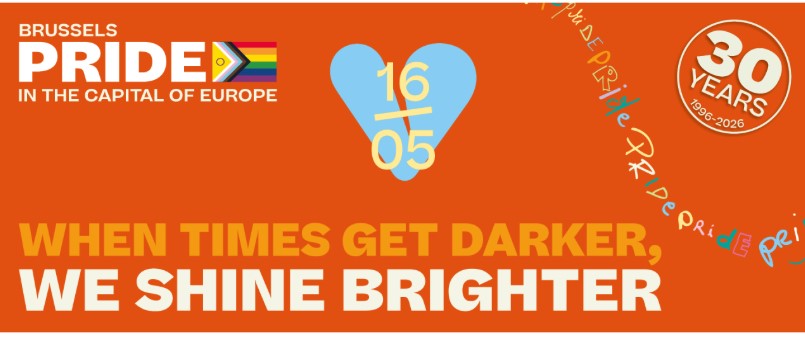
Brussels Pride is built around visibility, protest and celebration, but it also depends on something less visible and just as essential: care. That is the role of Safer Pride, the safety and support system deployed throughout the day to help everyone experience the Pride in the best possible conditions.
At the heart of the system is a Safer Zone installed at the Kunstberg, a calm space where trained volunteers and professionals offer listening, psycho-social support and medical help when needed. Moving alongside it is a mobile Care Team that circulates across the Pride area so help can reach people quickly if a problem arises.
A Pride built on care
The Brussels Pride site describes Safer Pride as a partnership designed to protect participants at LGBTQIA+ events, with the support of the city’s emergency and community networks. That framing matters because safety is not treated as an add-on here; it is part of the event’s structure, just like the march, the Pride Village and the concerts.
The Safer Zone’s presence at Mont des Arts also links directly to the practical accessibility measures already announced for the Pride, including the PMR zone and support volunteers on site. In other words, the event is trying to make sure that joy, protest and access all exist together rather than in competition.

The partners behind it
This system is being built with the support of Solidaris and in collaboration with several specialist organisations. Among them is Plan SACHA, whose work focuses on preventing and responding to sexist and sexual violence in festive settings. Its model combines training, awareness and direct psycho-social support, which makes it a natural fit for a large public celebration like Brussels Pride.
Another key partner is Modus Fiesta, the harm-reduction arm of Modus Vivendi, which works on drug-use prevention through information, testing and non-judgmental support. That means the Safer Pride approach is not only about reacting to emergencies, but also about reducing risk before things go wrong.
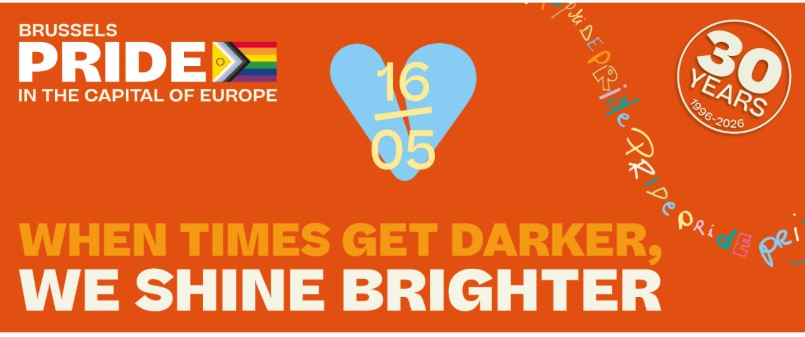
The network also includes Sex&CO, de RainbowHouse and the teams from bezoek.brussel, all of whom bring different kinds of expertise to the same goal: making Pride safer, more accessible and more welcoming for everyone. The result is a system that feels collective rather than top-down, which is exactly what it should be in a community event of this scale.
Why this matters
A Pride that truly wants to be inclusive has to plan for care as carefully as it plans for music and speeches. That is what Safer Pride does: it creates a calm point in the middle of the city, a mobile response system around it, and a set of partners whose experience covers violence prevention, harm reduction and community support.
For Ket, this is one of the most important parts of the Brussels Pride story because it shows that queer celebration can be joyful without being careless. The visible party matters, but so does the infrastructure that keeps people safe enough to enjoy it.
Useful links
KET Magazine is a community‑driven, non‑profit magazine run by volunteers based in Brussels. Get in touch to share your thoughts or tell us about your activities. You can also promote your events on our website or support our work with a donation. Contact us at Info@ket.brussels.
You may also like
-

Queer feet, green beats: Paradise City gets your summer moving (softly)
From 26 to 28 June, Paradise City returns to Kasteel de Ribaucourt in Perk with
-

Queer Paris in Your Pocket: A New Guide to the City’s LGBTQIA+ Memory and Momentum
Released on 4 June by First, Queer Paris is a new pocket guide that maps out the French capital through
-

Let Your Heart Be Heard: The Queer Finale Brussels Has Been Warming Up For
After months of rehearsals, teasers and city‑wide build‑up, Various Voices Brussels 2026 is heading towards its big
-

One Last Warm-Up: Brussels Still Has Time to Join the Biggest LGBTQI+ Choir at ING Arena
Brussels has already been singing queer for weeks, and now one of the most open
-

Dress to Bury the Old World: A Queer Funeral for Dictators at AB
On Friday 5 June, Ancienne Belgique turns into a political dancefloor with “DICTATOR’S FUNERAL”, a
 Nederlands (België)
  English
  Français de Belgique