
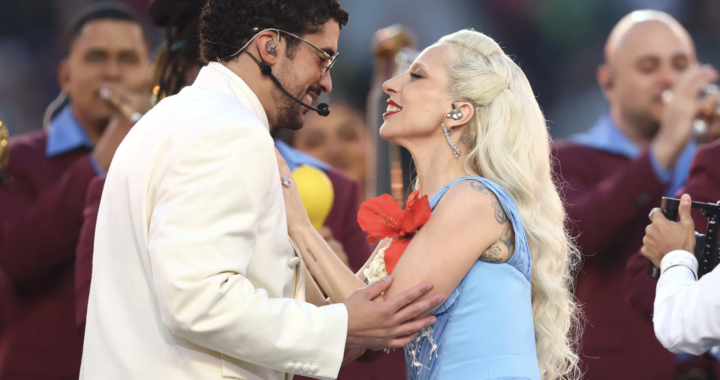
It was a night that rewrote the rules of pop culture — in Spanish. At the 2026 Grammy Awards in Los Angeles, Puerto Rican superstar Bad Bunny made history as the first artist to win Album of the Year with a record entirely in Spanish. His genre-bending opus Debi Tirar Más Fotos not only took home three trophies, but also transformed the ceremony into a defiant statement against America’s hardline immigration policies and rising populism.
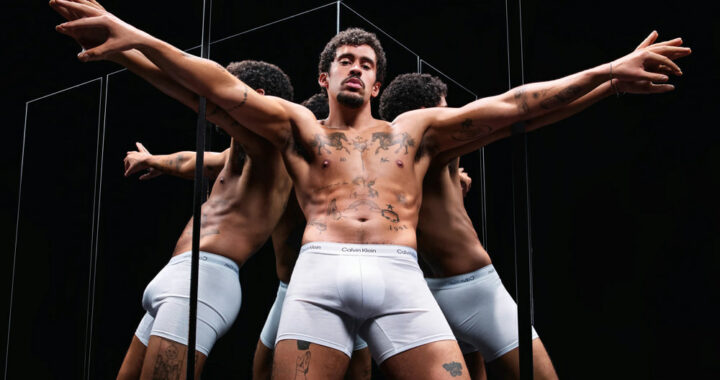
Draped in his usual unapologetic flair, the 31‑year‑old reggaeton and Latin trap icon used his acceptance speech to call out ICE, the U.S. Immigration and Customs Enforcement agency, urging the crowd to “put it out.” Behind him, musicians from Justin Bieber to Joni Mitchell sported pins reading ICE OUT, echoing his message.
“We’re not animals. We’re not foreigners. We’re human — and we’re American,” he declared to a standing ovation.
Moments later, Donald Trump — whose administration’s anti-immigration stance Bad Bunny openly protests — erupted on his Truth Social network, labeling the show “garbage” and even threatening to sue host Trevor Noah after a sly Epstein joke.
Queer Visibility Meets Political Fire
For many LGBTQ+ fans, Bad Bunny’s victory meant more than a trophy. The artist has long used his platform to champion queer expression, famously bending gender norms in his videos and showing support for trans and non-binary communities back home in Puerto Rico. His defiant Spanish-language triumph on the world’s biggest music stage sent a clear message: diversity isn’t a trend — it’s the new mainstream.
Next up, Bad Bunny will headline the Super Bowl halftime show, a performance already stirring conservative outrage. Right-wing pundits decry his decision to sing in Spanish and his vocal defense of queer and migrant rights — proving, once again, that for Benito Antonio Martínez Ocasio, visibility and resistance go hand in hand.
“It’s not just music,” one fan wrote on X. “It’s what the future sounds like — queer, brown, and proud.”
A Night of Bold Voices
Beyond Bad Bunny’s milestone, the Grammys celebrated a patchwork of global talent and identity. Kendrick Lamar bagged five awards, Lady Gaga embraced gothic electro-pop with Mayhem, and Billie Eilish’s “Wildflower” won Song of the Year — with the singer urging fans to “keep fighting and speaking up.”
Even more touching were tributes to immigrants: Nigerian-American artist Shaboozey reminded the audience that migrants “built this country,” while British newcomer Olivia Dean honored the “courage” of her Caribbean family.
The Recording Academy says it welcomed 3,800 new members this year to reflect the “vitality of today’s diverse musical landscape.” Judging from Sunday night’s lineup — from reggaeton to K-pop — that promise rang truer than ever.
You may also like
-
Flora brings Vauxhall Open Air back to Parc Royal for Fête de l’Iris
Brussels’ queer-friendly electronic scene is heading outdoors again on Sunday 10 May 2026, as Flora returns with Vauxhall Open
-
KET in Paris: Dinner on the Seine with Paris Seine
There are evenings when Paris stops being a postcard and starts feeling like a mood.
-
Iskander Moon: Pop Songs as a Place to Feel at Home
There are artists who chase volume, and others who chase resonance. Iskander Moon clearly belongs to the
-
Brussels Pride: Loud Ladies Belgium: Making Room, Making Noise, Making Change
In a music scene that still too often rewards visibility unevenly, Loud Ladies Belgium stands out as
-
KET in Paris: “Spin My Cabaret”: Queer Chaos, Drag Glamour, and the Art of Letting Go
Some nights entertain you. Others stay with you. Spin My Cabaret belongs to the second category. On