
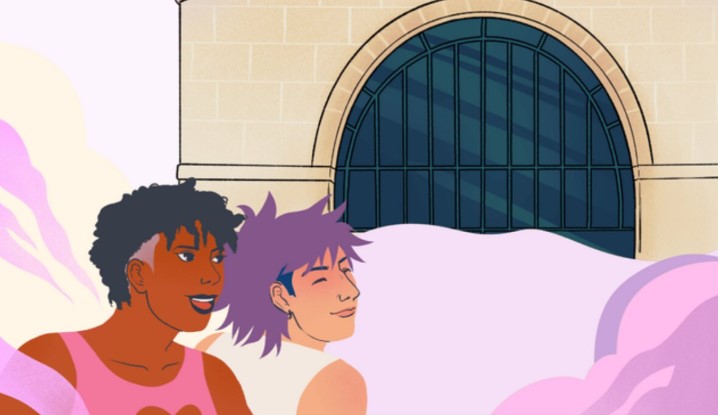
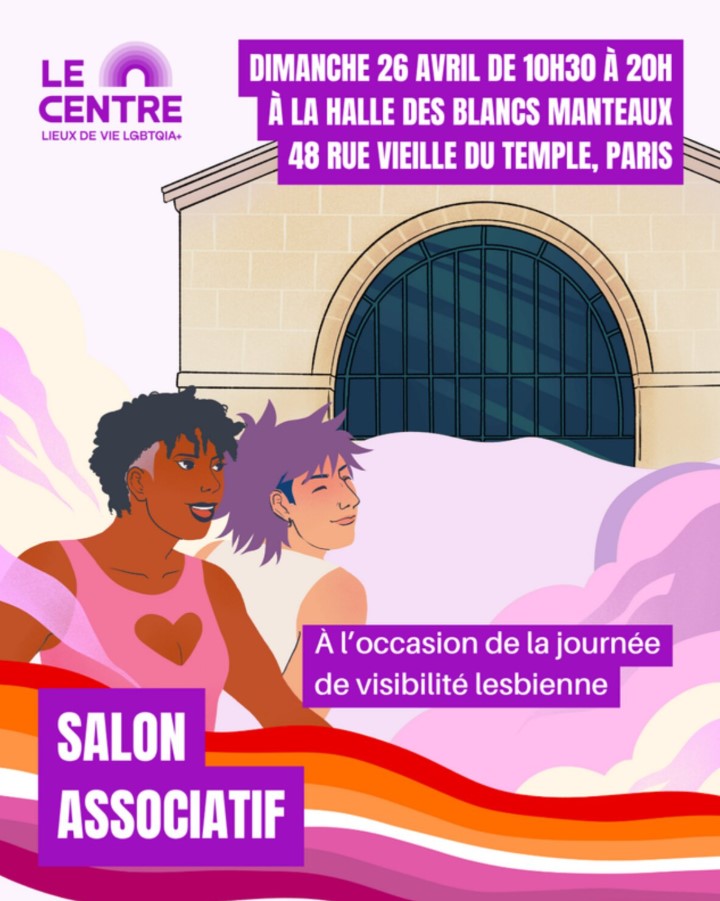
Every April 26, Lesbian Visibility Day reminds us that being seen is not a minor symbolic gesture. It is still a political demand, especially for lesbians who remain underrepresented in media, public life and LGBTQ+ spaces themselves.
The day exists to push back against lesbophobia and against the habit of treating lesbian lives as secondary, invisible or easier to ignore. That invisibility has real consequences: fewer public role models, weaker policy attention and a persistent tendency to flatten lesbian identity into cliché or silence.
Why this date matters
The April 26 date is widely linked to the 1993 U.S. Supreme Court decision in Lambert v. Wicklund, which recognised parental rights for a lesbian mother in a custody context. It later became a fixed date for visibility actions in several countries, while some places continue to use different dates or formats.
That legal reference matters because lesbian visibility has never been only about representation. It is also about family rights, bodily autonomy, parenthood, safety and the right to exist in public without being reduced to a stereotype or a talking point.
Belgium is marking it too
In Belgium, the day is increasingly tied to community programming rather than just a symbolic mention. Tels Quels is among the organisations highlighting the date in Brussels, while Brussels also appears in 2026 Lesbian Visibility Week communications and related community posts.
That matters in a city like Brussels, where queer visibility can be loud at Pride but still uneven the rest of the year. A day like this creates space to centre lesbian voices, stories and needs on their own terms, instead of folding them into a broader LGBTQ+ agenda that can still default to male-centric narratives.
Beyond symbolism
Lesbian visibility is not just about “celebrating identities.” It is about naming the structural issues that still shape lesbian lives: lesbophobia, racism, trans exclusion, economic precarity, health inequalities and the chronic absence of lesbian narratives in culture and politics.
That is why the day remains useful. It forces institutions, media outlets and queer organisations to ask a simple question: who gets to be seen, who gets to speak, and who still gets left out when visibility is supposed to be inclusive?
Useful links
For background reading, see the Ville de Paris page on Lesbian Visibility Day and the Belgian community link from Tels Quels. For a broader rights-based perspective, Amazone’s explainer is also useful: 26 avril : Journée Internationale de la visibilité lesbienne.
KET Magazine is a community‑driven, non‑profit magazine run by volunteers based in Brussels. Get in touch to share your thoughts or tell us about your activities. You can also promote your events on our website or support our work with a donation. Contact us at Info@ket.brussels.
You may also like
-

One Last Warm-Up: Brussels Still Has Time to Join the Biggest LGBTQI+ Choir at ING Arena
Brussels has already been singing queer for weeks, and now one of the most open
-
Lille Pride 2026 is back to claim the city in color
Lille Pride returns on Saturday 30 May 2026 with a full day of community, visibility and celebration,
-
Brussels Is About to Sing Queer: Various Voices 2026 Unfolds Across the City
From 24 to 28 June 2026, Brussels will host Various Voices, Europe’s flagship LGBTQI+ choir festival,
-

Brussels Stands with Senegal’s LGBTQIA+ Community as Repression Gets Worse
Senegal has sharply intensified its anti-LGBTQIA+ repression in 2026, with a new law that increases
-
Queer Mess Open Air: 16 Hours of Queer Joy at Circle Park
On 30 May 2026, Queer Mess Open Air takes over Circle Park in Anderlecht for
 Nederlands (België)
  English
  Français de Belgique