
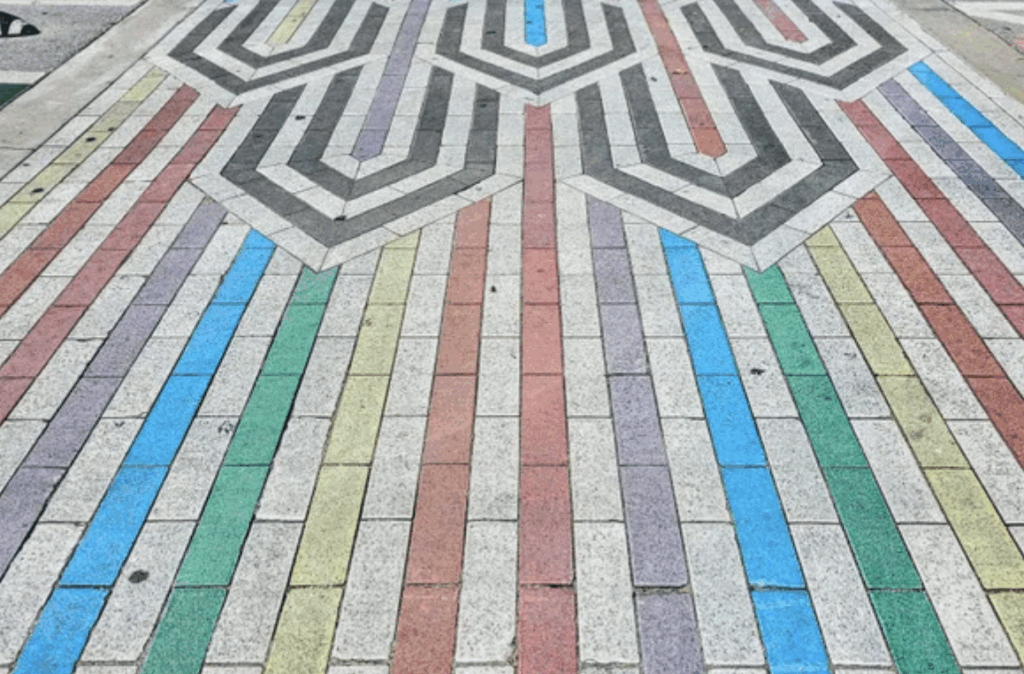
Two days. That’s all it took for Miami Beach’s iconic rainbow crosswalk on Ocean Drive — a symbol of visibility, pride, and resilience — to disappear beneath a layer of asphalt.
After losing its appeal against a Florida state order banning street art, the city watched as workers from the Department of Transportation began tearing up the colorful terrazzo pavers that had once greeted thousands of locals and visitors alike.
For Commissioner Alex Fernandez, it wasn’t just about paint on pavement. “This represented decades of people who endured housing discrimination, expulsion from the military, workplace discrimination, the stigma of HIV and AIDS, the fight for marriage equality — all the hard-won battles that took the LGBTQ community from being marginalized to now being a visible, celebrated part of the community,” he said.
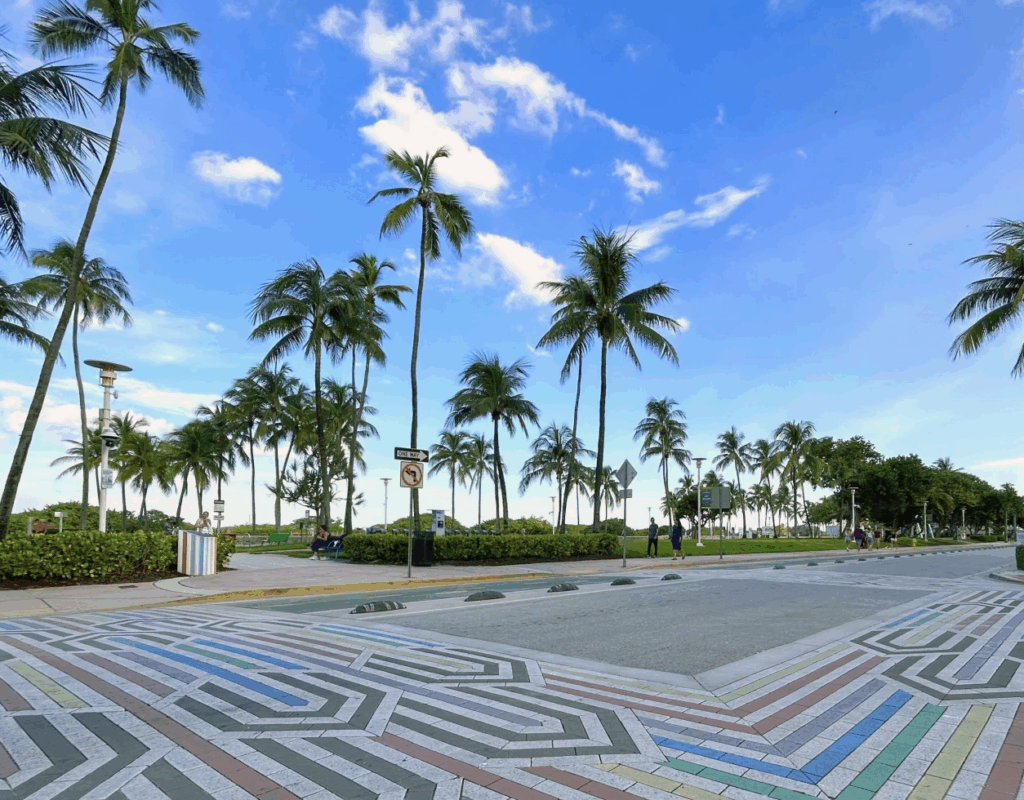
Installed in 2018 by Savino & Miller Design Studio, the Art Deco–inspired design had become a fixture of Miami Beach’s identity — as much about safety as symbolism, cutting traffic accidents by half compared to nearby intersections. But under Governor Ron DeSantis’s administration, the state deemed such expressions “out of hand,” ordering their removal under threat of withdrawing transportation funds.
Critics see this as another blow in a broader campaign against LGBTQIA+ rights in Florida, following bans on gender-affirming care and the “Don’t Say Gay” law silencing classroom discussions on sexuality and identity.
The rainbow crosswalk that once honored the 49 victims of the Pulse Nightclub massacre met the same fate — repainted overnight, then restored by community members, only to be erased again in black and white.
Yet even when erased, the message remains.
Across the Atlantic, in places like Brussels, Berlin, or Lisbon, rainbow crossings still remind us that visibility is a form of love — and defiance. These bright symbols of unity are not just decoration; they’re declarations. They tell every queer person walking home after a long night, or holding hands in daylight, that they belong here.
You may also like
-

One Last Warm-Up: Brussels Still Has Time to Join the Biggest LGBTQI+ Choir at ING Arena
Brussels has already been singing queer for weeks, and now one of the most open
-
Lille Pride 2026 is back to claim the city in color
Lille Pride returns on Saturday 30 May 2026 with a full day of community, visibility and celebration,
-

Brussels Is About to Sing Queer: Various Voices 2026 Unfolds Across the City
From 24 to 28 June 2026, Brussels will host Various Voices, Europe’s flagship LGBTQI+ choir festival,
-

Brussels Stands with Senegal’s LGBTQIA+ Community as Repression Gets Worse
Senegal has sharply intensified its anti-LGBTQIA+ repression in 2026, with a new law that increases
-
Queer Mess Open Air: 16 Hours of Queer Joy at Circle Park
On 30 May 2026, Queer Mess Open Air takes over Circle Park in Anderlecht for
 Nederlands (België)
  English
  Français de Belgique