
In southern Hungary, a queer Roma teacher is facing prison for doing something that should be utterly ordinary in a democracy: organising a Pride march. Geza Buzas‑Habel, 32, helped bring the only Pride outside Budapest to the streets of Pécs last year. Now, after a complaint by the public prosecutor, his case has been sent to court and he risks up to one year in prison for it.
A queer Roma teacher turned into a criminal for Pride
Geza Buzas‑Habel is not a professional activist parachuted in from abroad. He’s a gay Roma teacher, a respected local figure in Pécs, and someone who chose to stay visible even as Hungary’s laws tightened around him. After the government amended the assembly law in 2025 to effectively ban LGBT+ marches, Geza and his community decided not to back down.
In October 2025, they organised the 5th Pécs Pride under the slogan “We will not give in to fear.” Several thousand people joined them, marching not only for LGBT+ rights but also for Roma communities and against the shrinking right to protest. It was a rare moment of visibility outside the capital, a reminder that queer and Roma lives exist far from Budapest, and that resistance is not confined to big city streets.
Now the local prosecutor’s office has informed Geza that his file has been transferred to the court, opening the door to a potential jail sentence of up to one year for the act of organising Pride. Human rights organisations in Hungary, including Amnesty International and several local NGOs, have stepped in to support him and describe the case for what it is: a politically motivated attempt to intimidate and silence.
Useful link for international context and actions:
- Amnesty International – Hungary country page: https://www.amnesty.org/en/location/europe-and-central-asia/hungary/
A Pride movement under legal assault
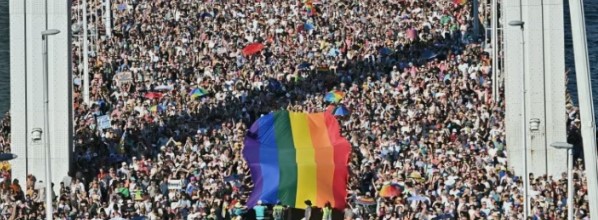
Pécs Pride was not the only march under attack. In Budapest, more than 200,000 people joined the capital’s Pride, a massive show of defiance in a country where LGBT+ rights have been steadily rolled back since Viktor Orbán returned to power in 2010. Instead of recognising this as a legitimate democratic expression, prosecutors have also targeted those who made the march possible.
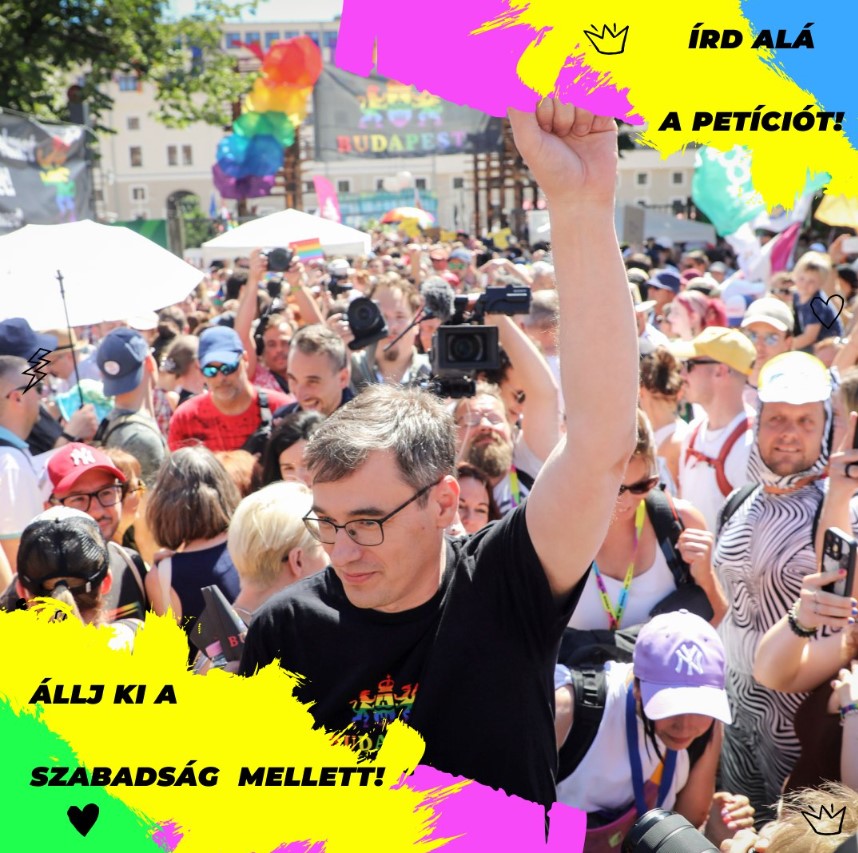
Just last month, the prosecution asked the court to fine Budapest’s mayor, Gergely Karácsony, for allowing the capital Pride to go ahead. The message is clear: not only organisers and activists, but also elected officials who cooperate with them can be punished. This strategy doesn’t just criminalise queer visibility; it tries to make anyone who stands with us think twice before they sign a permit, book a venue, or lend their name.
For updates on Budapest Pride and ways to support:
- Budapest Pride (EN/HU): https://budapestpride.com/en
Orbán’s Hungary: shrinking space for queer lives
None of this is happening in a vacuum. Since 2010, Viktor Orbán’s nationalist government has pushed through a raft of measures targeting LGBT+ people: tightening control over education, restricting legal gender recognition, and passing laws that echo “anti‑propaganda” measures seen in other authoritarian contexts. The 2025 change to the law on public assemblies, which effectively bans LGBT+ marches, is part of this broader project.
What is at stake goes beyond the right to parade once a year. Pride is one of the few moments when queer communities in hostile environments can be visible, find each other, and claim public space that is otherwise marked as heterosexual and cisgender by default. When states criminalise Pride, they are not just restricting a demonstration; they are trying to force queer life back into the private sphere, into the closet, into silence.
For broader background on Hungary’s human rights situation:
- Human Rights Watch – Hungary: https://www.hrw.org/europe/central-asia/hungary
Why this matters for LGBTQ+ people everywhere
For LGBTQ+ people outside Hungary, Geza’s story might feel distant, but its logic is worryingly familiar. Governments around the world are increasingly using laws on “public order”, “morality” or “propaganda” to ban Pride events, restrict gender‑affirming care, or censor queer content. Often, they start with legal harassment and “administrative” measures, hoping the rest of the world will not notice because there are no mass arrests – yet.
Geza Buzas‑Habel stands at the intersection of several identities that states like Orbán’s have long treated as expendable: Roma, queer, teacher, local activist. Going after him sends a message to anyone who shares even one of those identities: don’t organise, don’t speak, don’t gather. That is precisely why his case matters so much, and why international solidarity is not a luxury, but a necessity.
If you want to act from abroad, consider:
- Following and amplifying updates from Hungarian LGBTQ+ and Roma organisations.
- Supporting international groups monitoring Hungary, like ILGA-Europe: https://ilga-europe.org
- Contacting your own representatives to push for pressure on Hungary around human rights and rule of law.
“We will not give in to fear” – as a promise
The slogan of Pécs Pride, “We will not give in to fear”, now sounds less like a theme and more like a personal sentence Geza is being forced to live out in court. But it’s also an invitation to the rest of us. Pride has always been more than a parade: it is a refusal to accept that some lives are negotiable, less worthy, or too controversial for public space.
If Hungary succeeds in jailing a queer Roma teacher for organising a Pride march, it will not only be a blow to one man in one city. It will be a warning shot to every small town Pride, every first‑time organiser, every mayor wondering whether to sign off on a permit. The response must be just as loud: from Budapest to Pécs to Brussels and beyond, we do not give in to fear – and we do not abandon those who refuse to disappear.
You may also like
-

One Last Warm-Up: Brussels Still Has Time to Join the Biggest LGBTQI+ Choir at ING Arena
Brussels has already been singing queer for weeks, and now one of the most open
-

Lille Pride 2026 is back to claim the city in color
Lille Pride returns on Saturday 30 May 2026 with a full day of community, visibility and celebration,
-

Brussels Is About to Sing Queer: Various Voices 2026 Unfolds Across the City
From 24 to 28 June 2026, Brussels will host Various Voices, Europe’s flagship LGBTQI+ choir festival,
-

Brussels Stands with Senegal’s LGBTQIA+ Community as Repression Gets Worse
Senegal has sharply intensified its anti-LGBTQIA+ repression in 2026, with a new law that increases
-

Queer Mess Open Air: 16 Hours of Queer Joy at Circle Park
On 30 May 2026, Queer Mess Open Air takes over Circle Park in Anderlecht for
 Nederlands (België)
  English
  Français de Belgique