
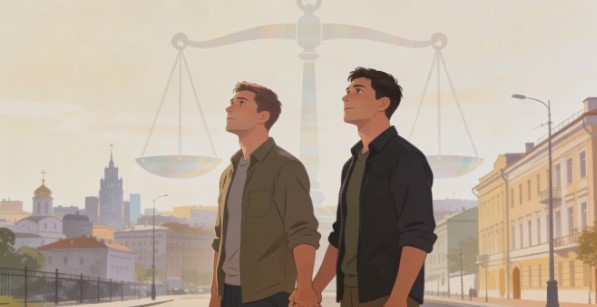
In a rare, explicit reference to LGBTQ+ rights, Ukrainian President Volodymyr Zelensky said on 11 June that there should be open public discussion about the rights of LGBTQ+ people in Ukraine. Speaking at a cultural event in Kyiv, he stressed that all Ukrainians “have absolutely the same rights, regardless of any prejudices held by people from the 15th century,” and described Ukrainians as “modern people.” The comments, reported by the Kyiv Independent, come as public support for equal rights grows, even while legal recognition of same‑sex couples remains stalled in parliament.
A rare, clear statement in public
The exchange happened when Oleksandr Demenko, a veteran and head of an LGBTQ+ military and veterans’ NGO, asked Zelensky whether Ukraine needs cultural products that “normalize LGBTQ+ topics” and increase tolerance. Zelensky answered that everything “should be discussed openly with society,” calling that “completely normal.”
He went further, underlining that “we are all here together, we are defending the state, we are the same and we have absolutely the same rights, regardless of any prejudices held by people from the 15th century. We are modern people.” In a country at war, where LGBTQ+ soldiers are fighting and dying on the front lines, hearing the president publicly tie equal rights to shared sacrifice carries symbolic weight – even if laws have not yet changed.
Growing support, persistent violence
According to polling cited by the Kyiv Independent, support for equal rights has significantly increased in recent years. A 2024 survey by the Kyiv International Institute of Sociology found that over 70% of Ukrainians believe LGBTQ+ people should have the same rights as any other citizen. Other studies confirm a similar trend, especially among younger people.
This shift in attitudes coexists with ongoing threats and violence, particularly from far‑right groups. Pride events and queer cultural gatherings in Kyiv have repeatedly faced attacks or attempted disruptions, and LGBTQ+ people still report harassment and physical aggression in everyday life. Zelensky’s call for open discussion does not erase these realities, but it comes against a backdrop where more and more Ukrainians say in principle that equality matters.
Legal recognition still stuck in limbo
Legally, Ukraine is in a contradictory moment. Same‑sex relations were decriminalised in 1991, and workplace discrimination protections were introduced in 2015. But same‑sex marriage and civil partnerships are still not recognised, blocking access to basic rights like hospital visitation, medical decision‑making, inheritance or next‑of‑kin status.
Since Russia’s full‑scale invasion, several petitions have called for equal rights and marriage or partnership recognition, many of them initiated or supported by LGBTQ+ soldiers concerned about their partners’ legal vulnerability if they die at the front. Zelensky previously asked the government to examine the possibility of civil partnerships, saying in 2024 that he would sign such a law if parliament passed it.
In March 2026, Ukraine’s Supreme Court recognised a same‑sex couple as a de facto family, a landmark ruling hailed by Human Rights Watch as a significant step toward equality. But the bill to create civil partnerships has been stuck in parliament for years, and a new draft Civil Code has raised alarm by defining de facto unions in a way that appears to exclude same‑sex couples.
Read also : Ukraine’s Supreme Court Recognises a Gay Couple as a Family. What Does It Really Change?
Parliament meetings and “open, responsible dialogue”
The same day as Zelensky’s comments, Parliament Speaker Ruslan Stefanchuk met with LGBTQ+ NGOs to discuss changes to the Civil Code. According to his public statement, he emphasised the importance of maintaining an “open and responsible dialogue” on questions of individual rights, dignity, private life and equality, and said that all proposals must be reviewed carefully in light of Ukraine’s constitution, European Court of Human Rights case law and European standards.
This reflects the double pressure Ukraine faces: internally, from citizens and activists demanding recognition, and externally, from European institutions linking LGBTQ+ rights to the country’s broader path toward EU membership and compliance with non‑discrimination norms.
Why this matters beyond Ukraine
From Brussels, these developments are not abstract. Many Ukrainian refugees, including LGBTQ+ people, have found temporary or long‑term safety in Belgium. For them, the gap between the reality they experience here and the lack of legal protection back home is stark. Zelensky’s words – “we are modern people,” “we have absolutely the same rights” – do not change their immediate legal situation, but they help shift the public narrative inside Ukraine in a direction that could make future reforms more possible.
For KET’s readers, this is also a reminder that queer and trans struggles are deeply entangled with questions of war, nationalism and geopolitics. LGBTQ+ Ukrainians are defending their country while still being denied basic recognition as families in law. Supporting them means paying attention not only to battlefield news, but also to these slow, complex fights over who counts as fully human in the legal text.
KET Magazine is a community‑driven, non‑profit magazine run by volunteers based in Brussels. Get in touch to share your thoughts or tell us about your activities. You can also promote your events on our website or support our work with a donation. Contact us at Info@ket.brussels.
You may also like
-
Various Voices Brussels 2026: the choir festival is getting its volunteer chorus ready
In less than two months, Brussels will host Various Voices 2026, Europe’s biggest LGBTQI+ choir festival,
-

Pride as mourning and defiance: why Metz needs us to march with them
June is Pride month across the world, a time when marches, parades and festivals celebrate
-
When love becomes a crime: Niger’s new anti-LGBT law and what it means for our communities
Niger has just promulgated a new penal code that, for the first time, explicitly criminalises
-

One Last Warm-Up: Brussels Still Has Time to Join the Biggest LGBTQI+ Choir at ING Arena
Brussels has already been singing queer for weeks, and now one of the most open
-

Lille Pride 2026 is back to claim the city in color
Lille Pride returns on Saturday 30 May 2026 with a full day of community, visibility and celebration,
 Nederlands (België)
  English
  Français de Belgique