
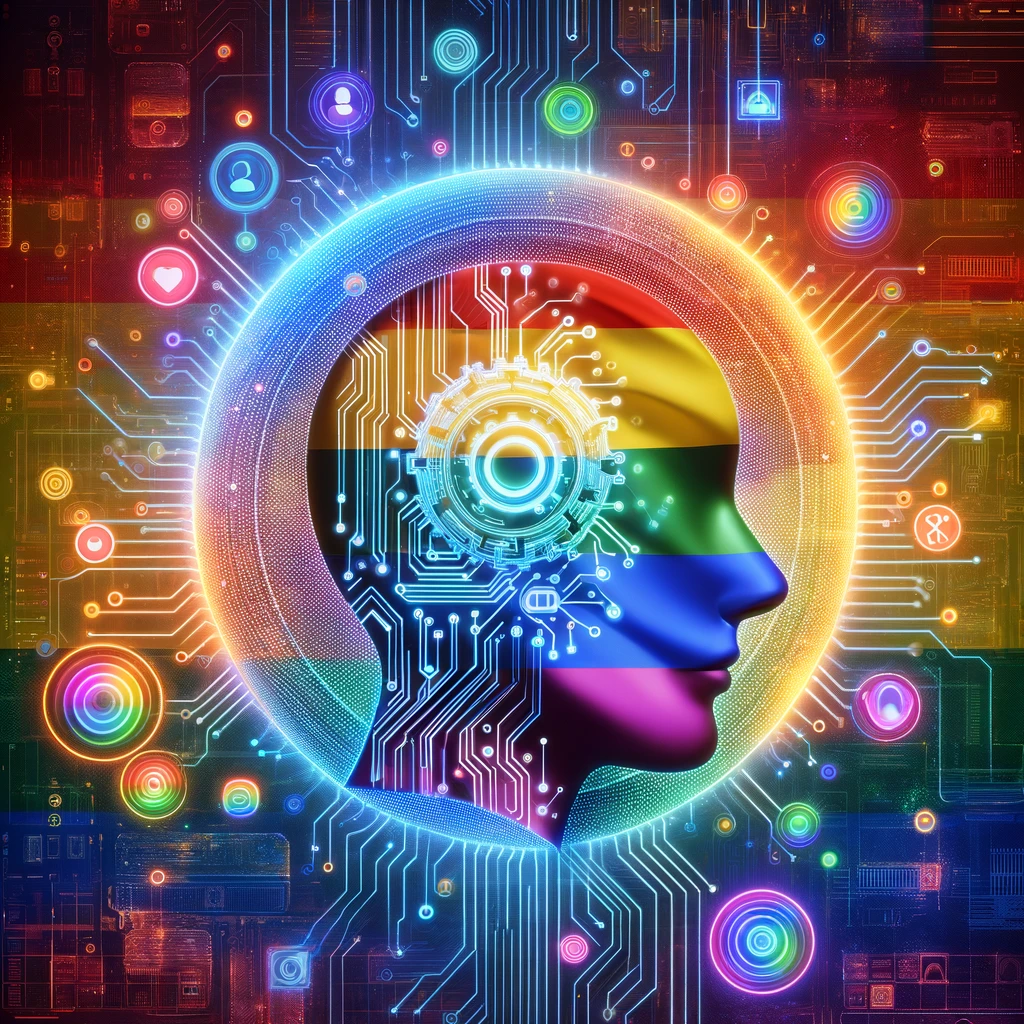
In an era where artificial intelligence (AI) is rapidly evolving, its impact on society’s fabric, especially regarding the rights and safety of LGBTIQ+ individuals, has become a focal point of concern and analysis. A recent study by Forbidden Colours, a Brussels-based organization advocating for LGBTIQ+ rights in Europe, sheds light on this pressing issue, revealing how AI can both discriminate against and disseminate disinformation about LGBTIQ+ communities.
AI: A Double-Edged Sword for LGBTIQ+ Communities
AI’s influence spans various facets of life, including healthcare, freedom of expression, and privacy, significantly affecting LGBTIQ+ communities. The study highlights several key concerns:
- Health and Safety Risks: AI’s potential to spread harmful misinformation can exacerbate mental health issues within LGBTIQ+ communities, further endangering their physical well-being.
- Freedom of Expression Under Threat: The proliferation of AI-generated content can amplify hate speech and misinformation, undermining the freedom of expression and safe spaces online for LGBTIQ+ individuals.
- Privacy Intrusions: AI technologies, particularly those involving data collection and surveillance, pose significant privacy risks, potentially exposing sensitive information about individuals’ sexual orientation or gender identity without their consent.
The Role of Mis- and Disinformation
A notable aspect of the study is its focus on how AI can be weaponized to spread mis- and disinformation about LGBTIQ+ people. This not only perpetuates discrimination but also manipulates public opinion and political agendas, further marginalizing these communities. The strategic intent behind such information manipulation adds a layer of complexity, highlighting the need for comprehensive strategies to combat AI-facilitated disinformation campaigns.
Towards an Inclusive and Safe Digital Environment
The study concludes with a call to action for stricter regulations and proactive measures to ensure AI technologies do not perpetuate discrimination or harm against LGBTIQ+ communities. Among the recommendations are the development of more inclusive AI models, improved content moderation on social media platforms, and greater transparency in AI’s deployment and governance.
As we navigate the challenges and opportunities presented by AI, it’s imperative to ensure that advancements in technology promote inclusivity, respect, and safety for all, particularly for marginalized communities like LGBTIQ+. The findings of Forbidden Colours’ study serve as a crucial reminder of the work that remains to be done in achieving a digital environment where human rights are upheld, and diversity is celebrated.
The intersection of AI and LGBTIQ+ rights presents both challenges and opportunities for enhancing inclusivity and combating discrimination. By addressing the concerns outlined in Forbidden Colours’ study, stakeholders can work towards a future where AI serves as a force for good, safeguarding the rights and dignity of LGBTIQ+ individuals across the globe.
Full report : Forbidden Colours
You may also like
-

At Liège’s Queer Families Festival, Every Family Has a Story
The third edition of the Queer Families Festival takes place on 11 October at the
-

“After”: Listening to LGBTQIA+ Survivors Speak About Intimate Partner Violence
On 8 October, Tels Quels invites people to Les Grands Carmes in central Brussels for
-

Liège’s Maison Arc-en-Ciel Needs Support to Keep Its Doors Open
Maison Arc-en-Ciel de Liège, a vital LGBTQIA+ community hub in Wallonia, is facing growing financial
-
Garden Party de la Maison Arc-en-Ciel de Liège
Liège’s Maison Arc-en-Ciel is bringing back its annual Garden Party on Saturday 5 September 2026.
-
IGLYO Wants to Hear From You: Europe’s Biggest LGBTQI School Survey Is Back
IGLYO, the Brussels-based international LGBTQI youth network, has just launched the second edition of its