
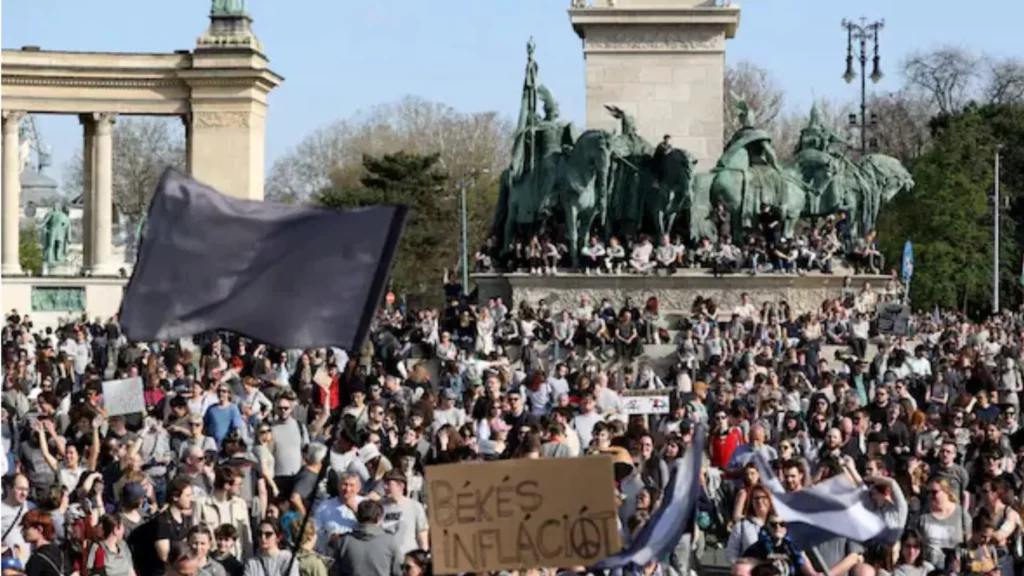
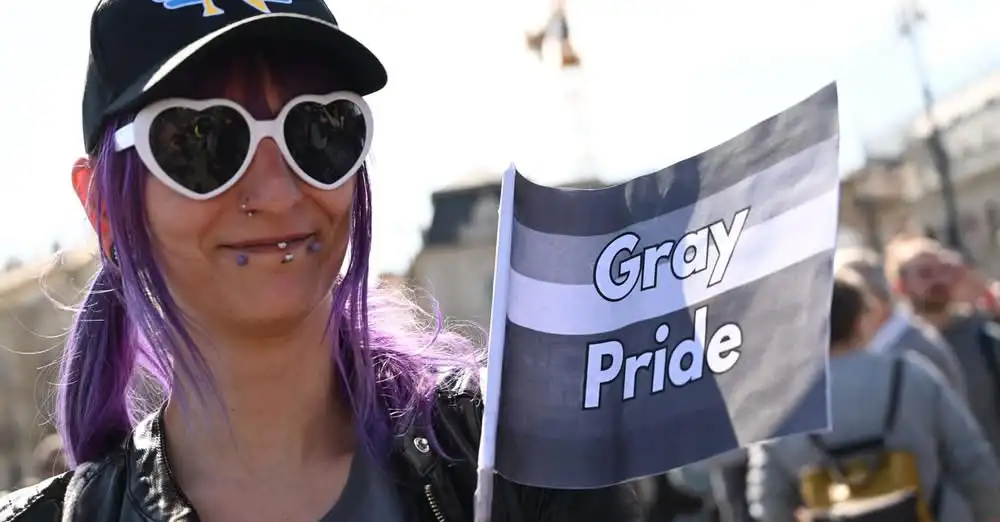
On April 12, over 10,000 people dressed in grey flooded the streets of Budapest, waving desaturated rainbow flags in a sharp, satirical protest. Dubbed “Gray Pride,” the demonstration mocked Hungary’s ban on Pride events — a ban backed by a freshly amended constitution that now enshrines anti-LGBTQIA+ discrimination into law.
Just two days later, the Hungarian Parliament formalised what critics call state-sponsored LGBTphobia. Marriage equality is now constitutionally blocked. Legal gender recognition? Gone. The new text even allows Pride marches to be banned in the name of “child protection” — a concept Orbán’s government twists to suppress visibility and silence queer voices.
But Hungary’s queer community isn’t backing down. Led by the Hungarian Two-Tailed Dog Party (MKKP), known for using humour as political critique, protesters marched with signs reading “Sameness is trendy” and “Censorship couture.” As one marcher put it: “We don’t want everyone to look the same. That’s exactly the danger.”
Artist Dóra Szilágyi, who co-designed the grey campaign visuals, told us: “They think stripping away our colours will make us disappear. But we are still here. Still visible. Even in black and white.”
Across Europe, this is more than a Hungarian issue. It’s a warning. And a call to unite. Budapest’s “Gray Pride” reminds us: joy is resistance, visibility is power — and Pride, in any colour, is never optional.
You may also like
-

At Liège’s Queer Families Festival, Every Family Has a Story
The third edition of the Queer Families Festival takes place on 11 October at the
-
Türkiye’s LGBTQIA+ Community Faces a New Wave of Pressure
LGBTQIA+ people in Türkiye are living through a sharp escalation in state pressure: Pride events
-

Fiji Declares a National HIV Emergency — and the World Must Pay Attention
Fiji has declared a national HIV emergency after a dramatic rise in diagnoses: 2,016 people
-

“After”: Listening to LGBTQIA+ Survivors Speak About Intimate Partner Violence
On 8 October, Tels Quels invites people to Les Grands Carmes in central Brussels for
-

Balkan Trafik! Turns Brussels’ Bourse into a Three-Day Balkan Universe
After a year away, Balkan Trafik! returns to Brussels from 19 to 21 November 2026