

Hungary has recognized registered partnerships for same-sex couples since 2010. While these partnerships stop short of full equality with marriage—particularly when it comes to adoption—they offer a way for LGBTQ+ couples to formalize their relationships in a country where legal and social acceptance remains limited.

Adrián and Peti, a Hungarian couple, illustrate the complexities of navigating this framework. Their relationship began like many others—a message on a dating app that led to late-night conversations and, eventually, a shared life. They built a home together in Hungary, balancing personal commitments with professional ambitions.
When Adrián was offered a job in Austria, the move presented new opportunities but also uncertainties. Austria’s recognition of same-sex marriage, however, allowed them to take a significant step in solidifying their partnership. The decision to marry wasn’t just personal; it simplified legal and financial matters, giving them a more secure foundation for the future.
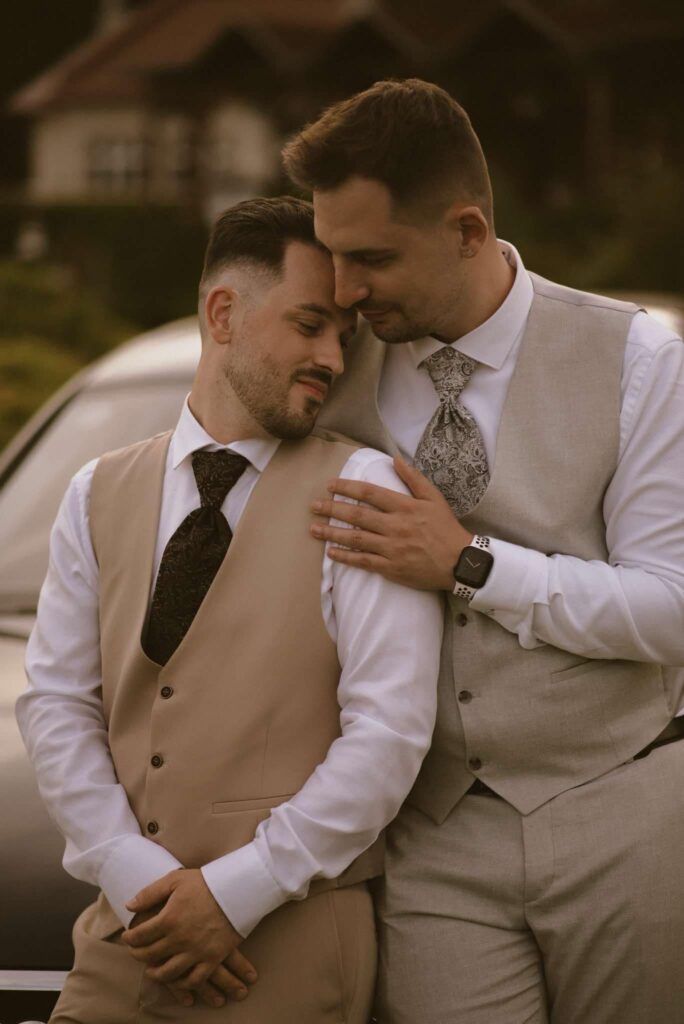
The wedding in Austria was a low-key affair, reflecting the straightforward administrative process for same-sex unions there. Back in Hungary, the couple hosted a larger celebration, where the mix of acceptance and unfamiliarity among guests highlighted the uneven social landscape LGBTQ+ people navigate in the country.
While their union has brought personal and practical stability, it also underscores broader disparities. Hungary’s refusal to recognize same-sex marriages performed abroad, for instance, complicates matters for couples like Adrián and Peti. Despite these challenges, they are focused on their next goal: opening a patisserie in Austria and building a life without the constant negotiation of legal and cultural barriers.
Their experience is a reminder that progress isn’t evenly distributed. While registered partnerships provide a foothold, full equality remains out of reach in Hungary. For same-sex couples, each step forward involves navigating a patchwork of rights, protections, and societal attitudes that vary widely—even within Europe.
By sharing their story, Adrián and Peti highlight both the gains and the gaps in LGBTQ+ rights. In doing so, they contribute to a broader conversation about what equality truly means and how far we still have to go.
This article was inspired by a story originally published on Humen Online, a leading platform highlighting LGBTQ+ experiences and perspectives in Hungary. Pictures of Adrián and Peti by Sipák Sára
You may also like
-

One Last Warm-Up: Brussels Still Has Time to Join the Biggest LGBTQI+ Choir at ING Arena
Brussels has already been singing queer for weeks, and now one of the most open
-

Lille Pride 2026 is back to claim the city in color
Lille Pride returns on Saturday 30 May 2026 with a full day of community, visibility and celebration,
-

Brussels Stands with Senegal’s LGBTQIA+ Community as Repression Gets Worse
Senegal has sharply intensified its anti-LGBTQIA+ repression in 2026, with a new law that increases
-

Queer Mess Open Air: 16 Hours of Queer Joy at Circle Park
On 30 May 2026, Queer Mess Open Air takes over Circle Park in Anderlecht for
-

Rainbow Kids: A Pride Afternoon for Queer Families in Brussels
Rainbow Kids is a colourful, kid‑friendly event in Brussels that puts queer and rainbow families
 English
  Français de Belgique
  Nederlands (België)