
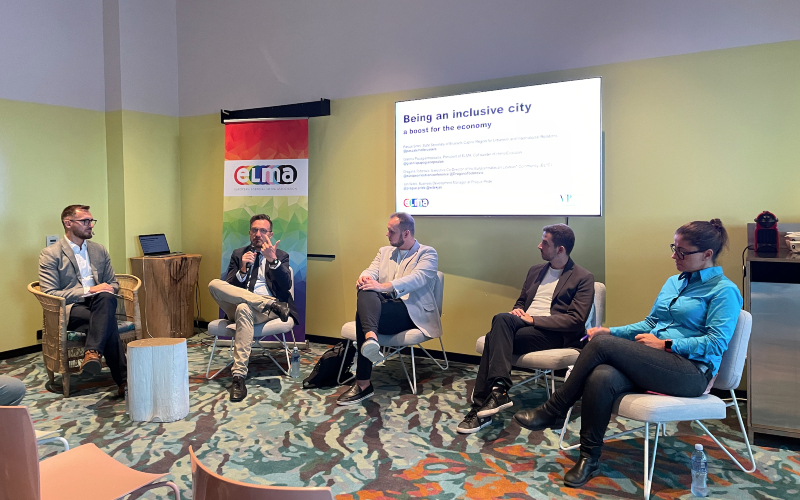
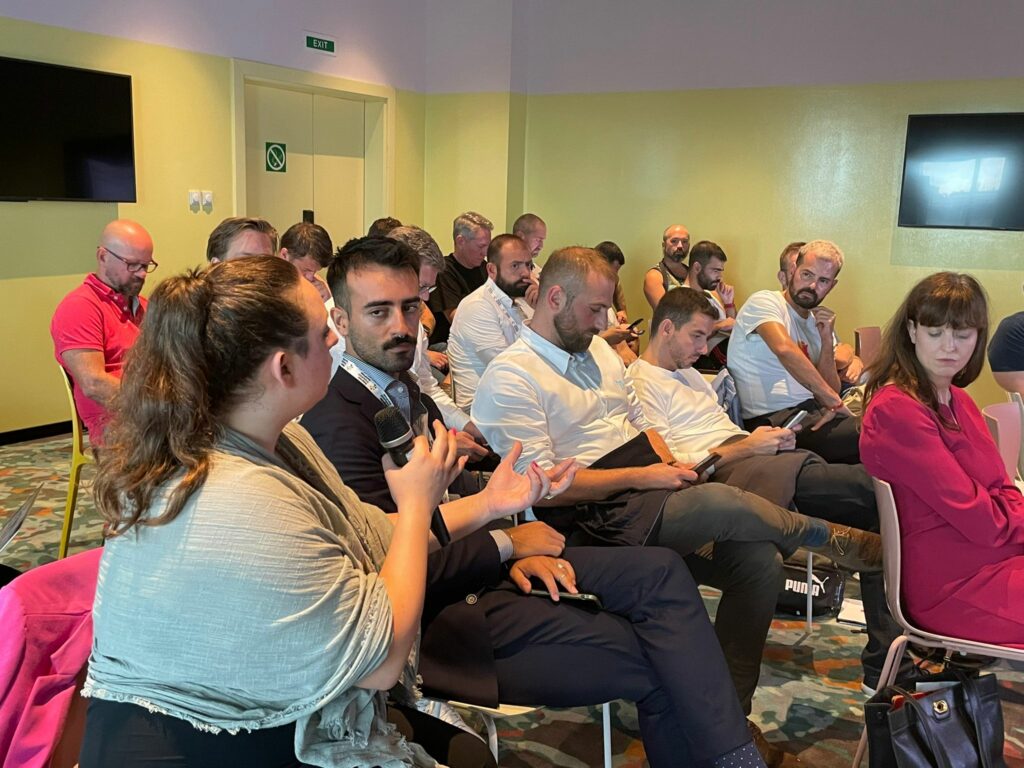
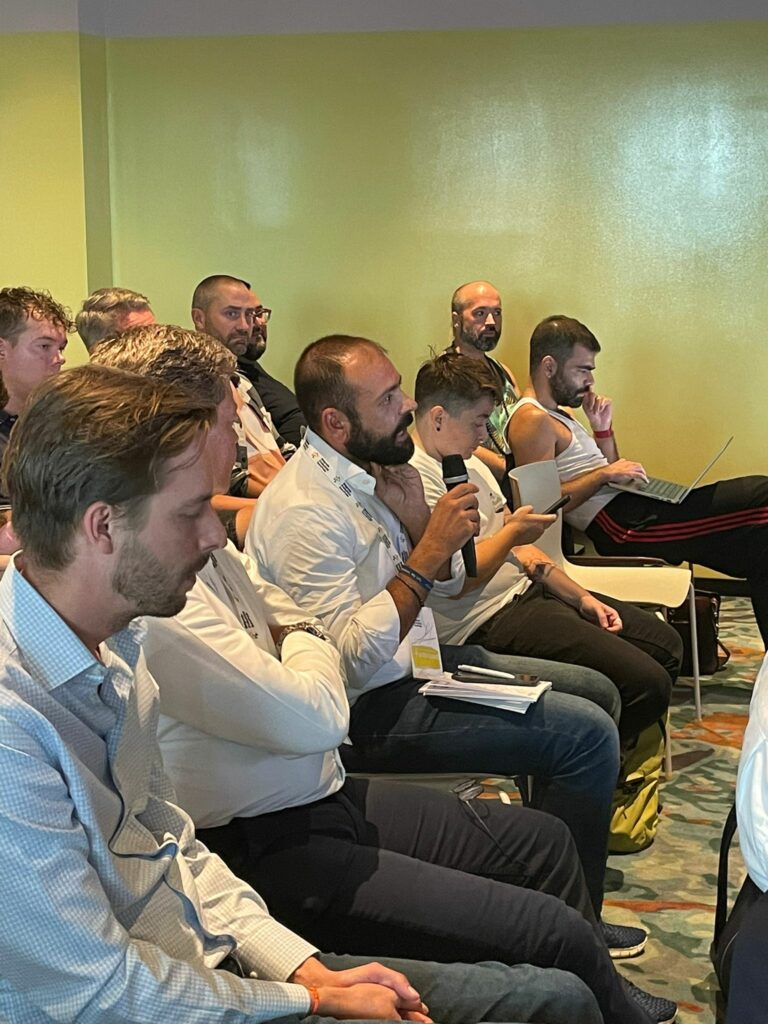
EuroPride in Belgrade has been a bit of an emotional roller-coaster, but one of the high-points has been events such as the human rights conference and the panel discussion sessions supported by the Brussels-Capital Region and ELMA – the European LGBTQIA+ Media Association.
One of the topics covered included the benefits and challenges of creating an inclusive city.
Facilitated by Vincent Reillon of Forbidden Colours, the panel included Giannis Papagiannopoulos of AntiVirus, Dragana Todorović, of the Eurocentralasian Lesbian* Community, Jan Witek of Prague Pride, and Pascal Smet of the Brussels-Capital Region.
Key discussion points included:
- Is the city a safe space? If the local community welcomes and supports LGBTQ people, that enables LGBTQ people to express themselves – to open bars, organise Prides, to have queer media, to build a thriving queer community. This creates a safe environment for people who want to come and live or visit the city. Zero-tolerance towards hate-speech and hate-crime is also important.
- Intersectionality is important to recognise. LGBTQ people are not a homogenous group. Marginalised people often fall through the cracks of local policies. Equally, we must recognise and discuss privilege and how that shapes our experiences and inclusion initiatives.
- Multinational companies can play a leadership role in countries such as Serbia – they have inclusive policies in place for their employees. But these larger companies perhaps need to be braver in making these policies visible within the communities in which they operate. For example, the government in Serbia appears to listen more to business leaders than community activists – that’s why business leaders can be important allies.”
- Rising conservatism across Europe has the potential to create a backlash against progressive and inclusive initiatives.
You may also like
-

At Liège’s Queer Families Festival, Every Family Has a Story
The third edition of the Queer Families Festival takes place on 11 October at the
-

“After”: Listening to LGBTQIA+ Survivors Speak About Intimate Partner Violence
On 8 October, Tels Quels invites people to Les Grands Carmes in central Brussels for
-
Liège’s Maison Arc-en-Ciel Needs Support to Keep Its Doors Open
Maison Arc-en-Ciel de Liège, a vital LGBTQIA+ community hub in Wallonia, is facing growing financial
-
Garden Party de la Maison Arc-en-Ciel de Liège
Liège’s Maison Arc-en-Ciel is bringing back its annual Garden Party on Saturday 5 September 2026.
-
IGLYO Wants to Hear From You: Europe’s Biggest LGBTQI School Survey Is Back
IGLYO, the Brussels-based international LGBTQI youth network, has just launched the second edition of its