
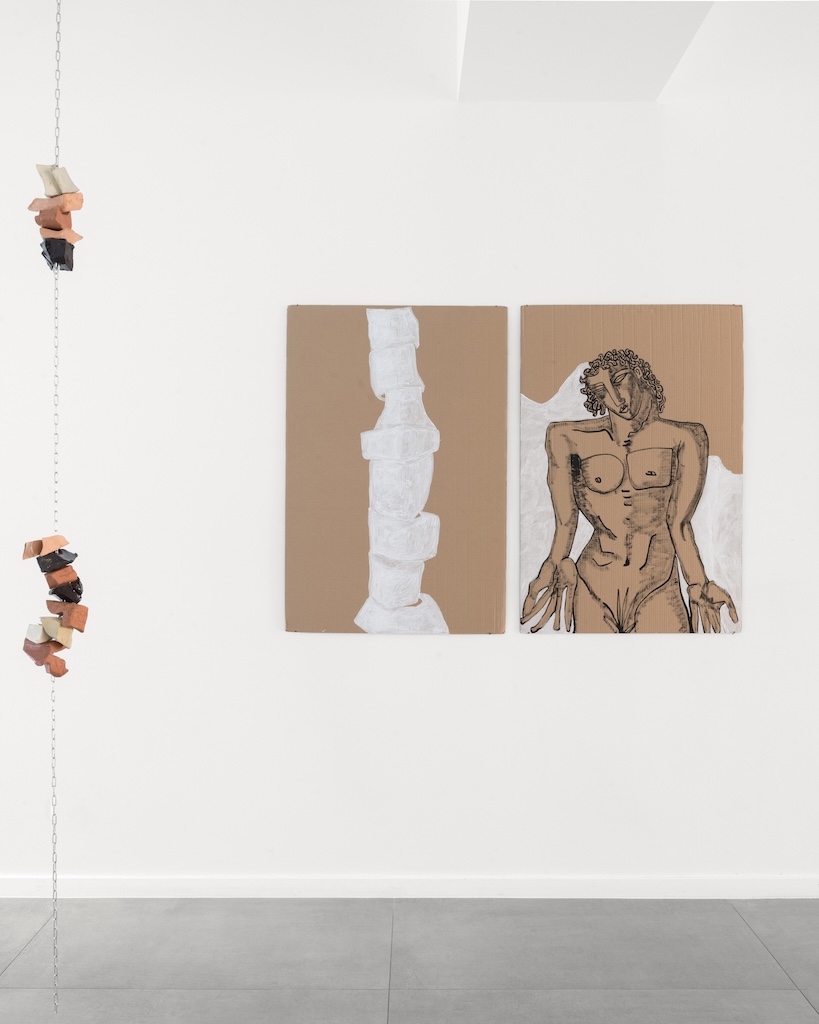
“Icried when I washed my first bone” marks Iris Marchand’s inaugural solo exhibition in Belgium, hosted at EDJI Gallery on Rue du Page 15, 1050 Brussels. Featuring her latest works in painting, drawing, and ceramics from the concluding months of 2023, Marchand introduces a fresh corporeal lexicon—focused on skeletal structures, spines, remnants, and above all, bones.
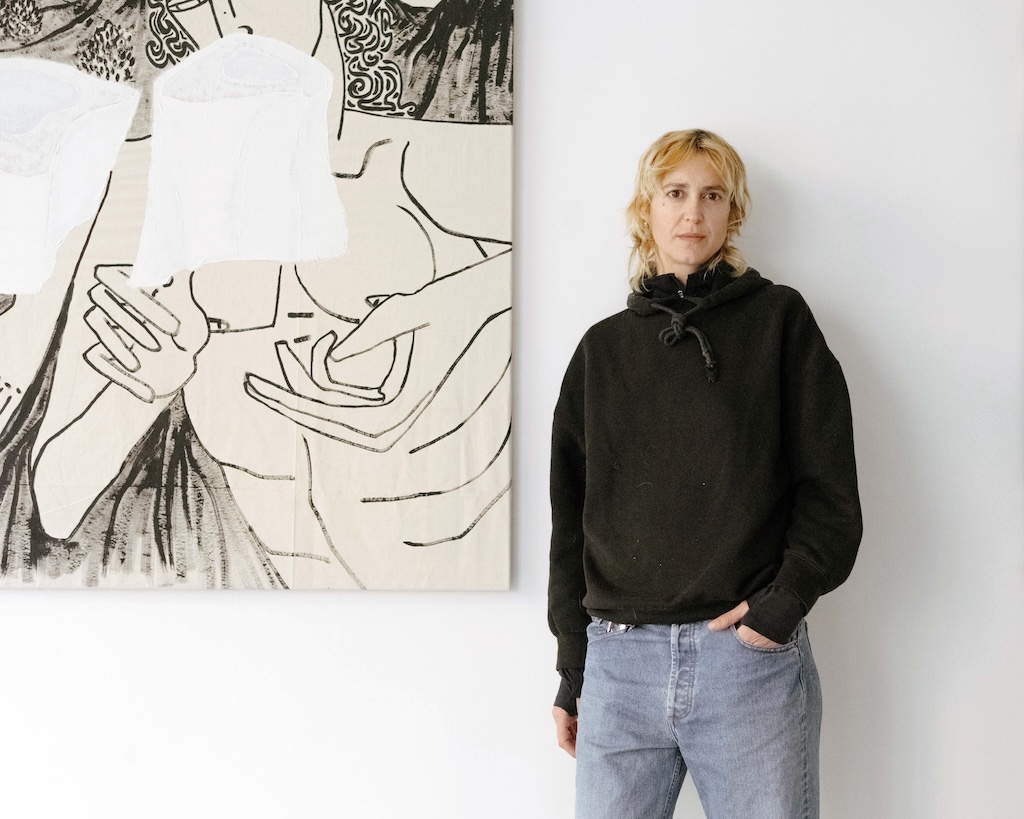
The title, “I cried when I washed my first bone,” serves as a poignant revelation, offering an emotionally charged glimpse into a distant memory of tears, bones, and cleansing. In an interview with GUS Magazine, Iris shared the inspiration behind the title, stating, “It’s the story of a structured work, a developing spine that Edouard and Ranji (EDJI Gallery) give me the opportunity to showcase.”
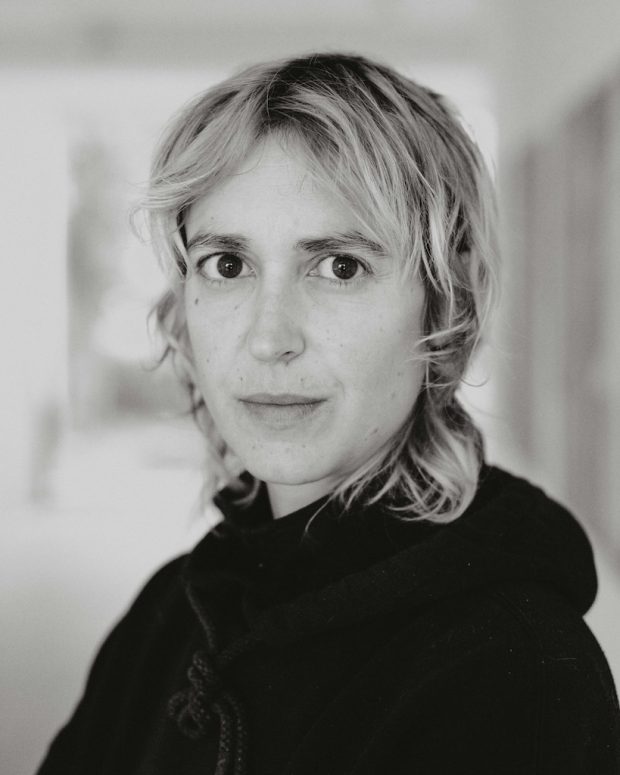
Iris’s exhibition, characterized by humble materials like bed sheets, cardboard, and ceramics, crafts an intimate body of work that transcends both physical and emotional spaces.
In the paintings throughout this exhibition, Iris works on three layers of figuration—landscape, body, and bones,” explains the article. These sculptural bones, carved from gesso, act as both support and shield, adding a profound dimension to the corporeal forms depicted. The figures emerge through bold, gestural lines, accentuating the nuances of contorting flesh, pliable hands, and embedded wrinkles.
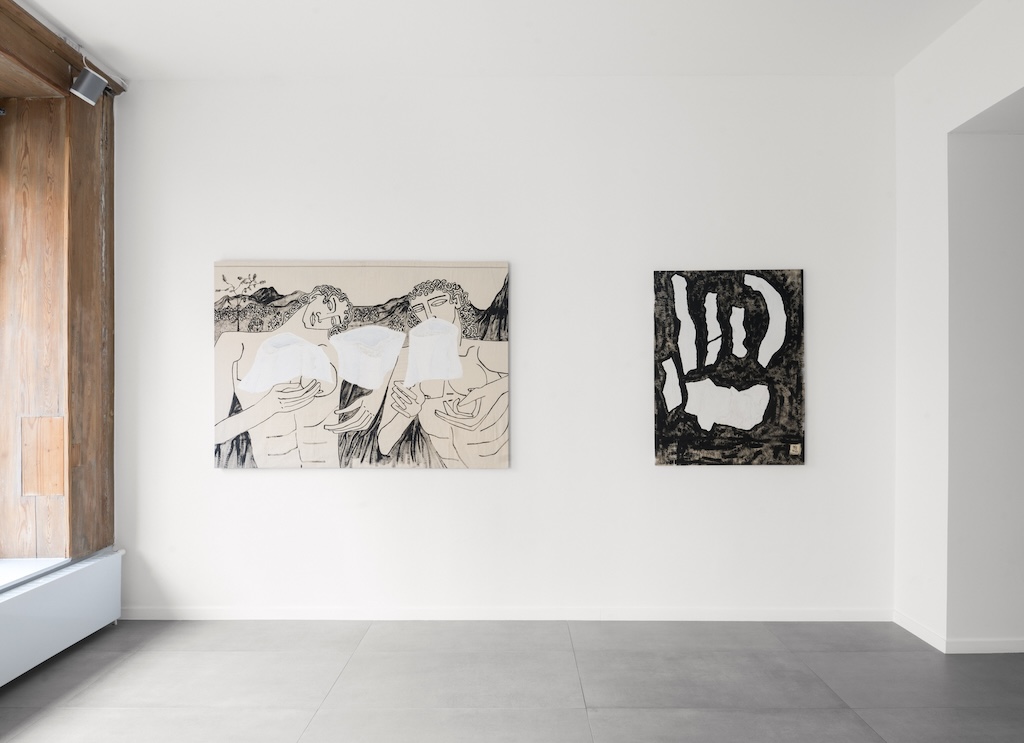
Notably, antique bed sheets serve as the canvas for these paintings, imbuing the artworks with a rich chromatic spectrum and a unique corporeal history. Marchand, in the interview, reflected on this choice, describing the sheets as “supports and receptacles for the body, its flesh, its sweat, and its substance.”
The exhibition also showcases diptychs titled “Attitudes Anatomiques 1, 2, and 3,” offering a rhythm reminiscent of thoughtful contemplation. These arrangements feature bones and bodies against a matte dark gold cardboard backdrop, creating a coupled organization that evokes the cadence of thought.
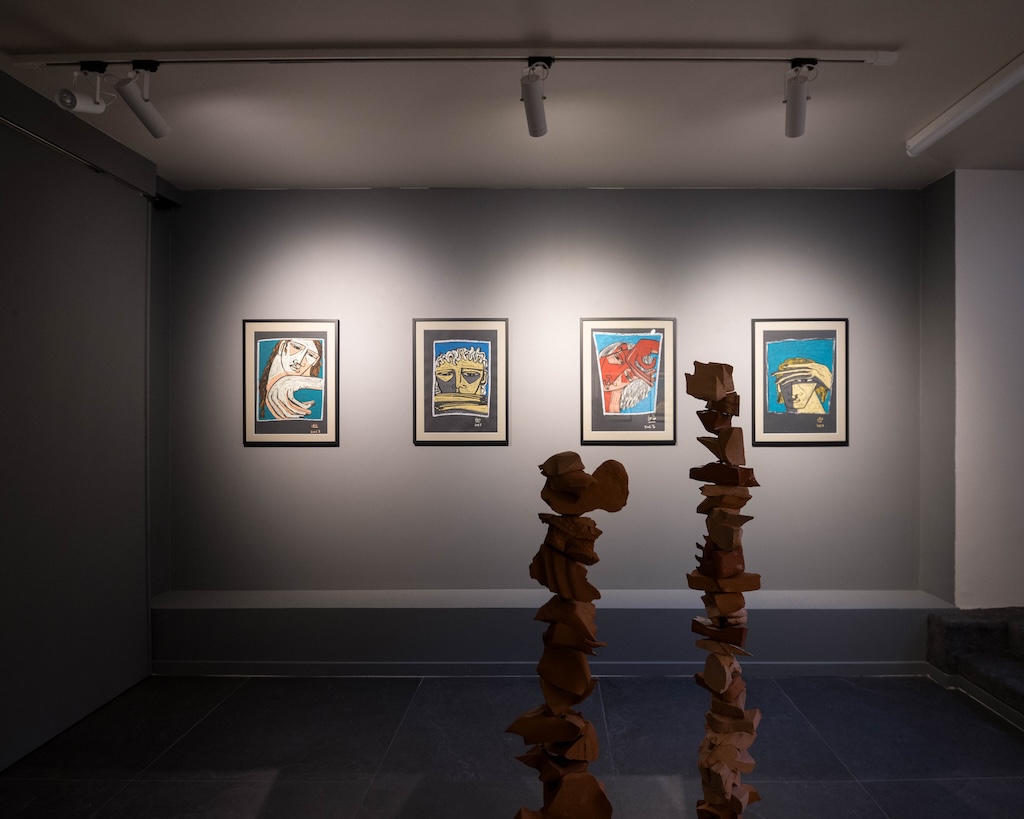
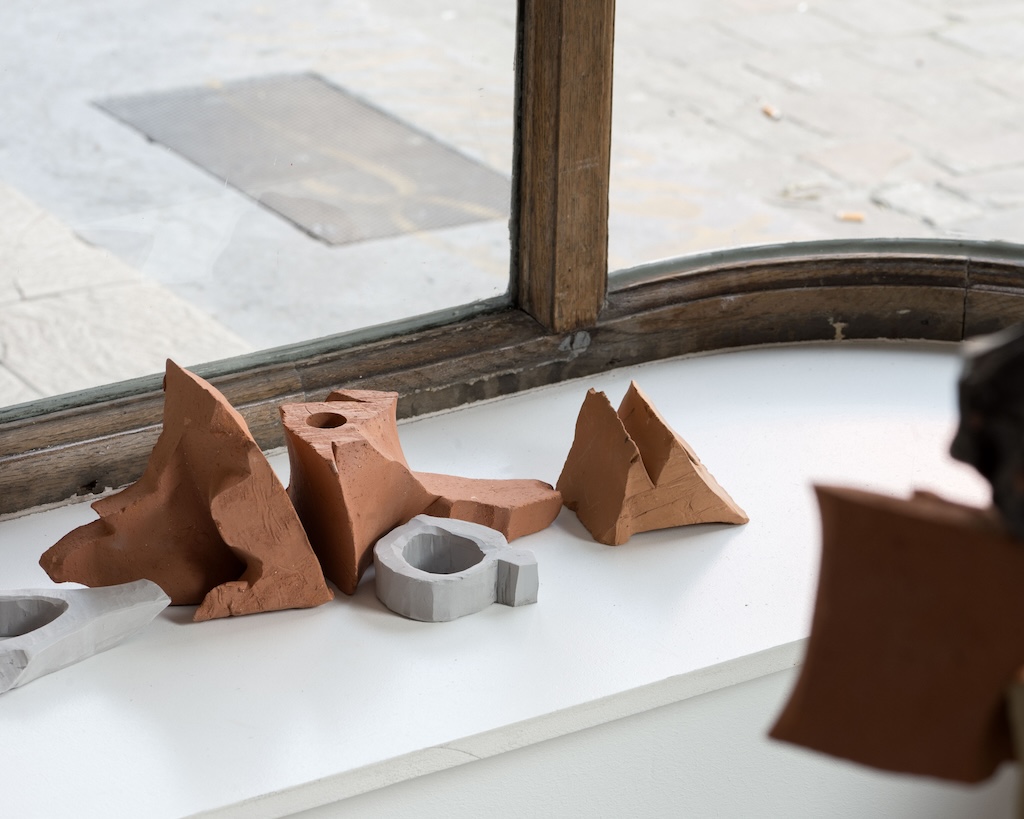
Gesso’s sculptural quality takes on additional dimensions through ceramics—mosaic portraits and bone-like relics displayed in various forms. The exhibition presents a cosmic choreography with ceramic spines intermittently stacked on metal chains, descending from the ceiling, and rising from the ground.
In her hands, featuring prominently in her art, Iris’s commitment to challenging gender norms is evident in the non-gendered bodies depicted. In the interview, she explained, “Hands were always a figure of study for me. They are a part of the body that can stand apart, that one can look down at and describe as if it were other.”
As Iris discusses her artistic process and the challenges faced, a theme of constant self-redefinition emerges. The artist’s quest for balance between the persona defined through art and the one perceived by the audience adds layers to her creative journey.
Iris Marchand’s “I cried when I washed my first bone” exhibition at EDJI Gallery transcends until 10/02
You may also like
-

This Friday at UMI: Baile TRAMA lands in Brussels
This Friday at UMI: Baile TRAMA brings Brazil’s underground to Brussels This Friday, UMI welcomes Baile TRAMA, a
-

Benefit Party at Les Halles de Schaerbeek puts trans solidarity center stage
On 17 and 18 April, Les Halles de Schaerbeek hosts Benefit Party, a two-day fundraising event
-

Designing Childhood at Design Museum Brussels: how children shaped the future of design
From 1 April to 20 September 2026, Design Museum Brussels presents Designing Childhood. A History of
-

Mothers and Daughters: calling for memories, building a collective queer archive
Mothers and Daughters, Brussels’ beloved lesbian & trans bar and art space, is looking back on
-

Doel Festival: the ghost village that refused to die – and turned itself into a dancefloor
On 25 July, Doel Festival returns for its fifth edition and once again turns Belgium’s
