
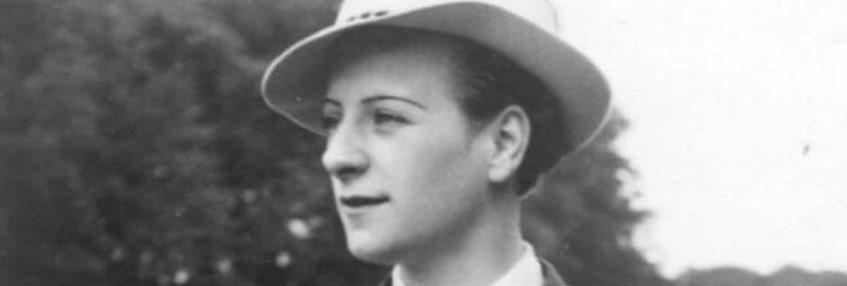
Brussels named a bridge over its canal after Suzan Daniel to honor one of the key pioneers of the LGBTQ+ movement in Belgium, and to make lesbian activism visible in the city’s public space. The Suzan Daniel Bridge, opened in 2022 near Tour & Taxis and the Canal, symbolically connects neighborhoods while also highlighting a woman whose work connected queer communities long before Pride flags flew on official buildings.
Who was Suzan Daniel?
Suzan Daniel, born Suzanne De Pues in Brussels in 1918, was a lesbian activist who became involved in local queer circles as early as the 1930s. She is widely regarded as a founding figure of the LGBTQ+ movement in Belgium, both through her community work and her efforts to document queer lives.
She was Belgium’s first female film critic, adopting the name “Daniel” in tribute to French actress Danielle Darrieux, and used cultural work as a pathway into public debate. In 1953, she created the Centre culturel de Belgique (CCB), the first Belgian association for gay men and lesbians, carefully named so it could exist in a hostile social and legal context.
From erasure to recognition
Although she founded the CCB, Suzan Daniel was soon pushed aside as men took control of the group, mirroring broader sexist patterns within early homophile movements. In the second half of her life she lived more discreetly, but remained a reference point for later generations of activists and historians.
In 1996, the Suzan Daniel Fund was created as Belgium’s first LGBTQ+ archive and documentation center, preserving queer histories that had often been erased or destroyed. When she died in Laeken in 2007, she left behind a legacy of militant energy and cultural engagement that had helped lay the groundwork for later legal advances such as equal marriage.
Why a bridge bears her name
The decision to name a bridge after Suzan Daniel reflects a broader move in Brussels to diversify public toponymy and to make women and LGBTQ+ people visible in the urban landscape. The bridge links different neighborhoods over the canal, and city officials explicitly framed it as a tribute to a lesbian campaigner who was “too modern” for her time but essential to the birth of the national movement.
For LGBTQ+ people today, the Suzan Daniel Bridge offers both a practical landmark and a symbolic anchor: a visible reminder that queer history in Belgium has roots in the city’s streets, cinemas, bars, archives, and activist circles. It is also a rare example of a piece of major infrastructure named after a lesbian activist, which makes it particularly meaningful for lesbian and queer communities.
Useful links
News piece on the bridge naming (EN): https://www.vrt.be/vrtnws/en/2022/10/05/brussels-bridge-named-after-lesbian-campaigner
Suzan Daniel Fund (LGBTQ+ archives and documentation, EN/FR/NL): https://www.fondssuzandaniel.be
Article on Suzan Daniel’s role in Belgian history (EN): https://www.thebulletin.be/five-women-who-changed-course-belgian-history
Background on LGBTQ+ pioneers in Flanders, including Suzan Daniel (EN): https://www.canonvanvlaanderen.be/en/events/same-sex-marriage
Feature on the Suzan Daniel Bridge (EN): https://ket.brussels/2022/10/03/the-new-suzan-daniel-bridge-pays-tribute-to-an-lgbtq-pioneer
You may also like
-

Endless Summer Camp: Scout Rules Meet Queer Desire at Balsamine
Summer might be over, but Sophie Guisset has other plans. From 19 to 28 November
-

Escher in Brussels: Who Said Reality Had to Behave?
Staircases refuse to play by the rules, birds become fish, and two hands draw each
-

When Nuns Go Pirate: A Queer Sacred Thriller at Varia
What happens when lesbian love, religious memory and horror theatre enter a locked convent—and refuse
-
KET in Paris — Le Hasard Ludique, Where the Tracks Lead to Music
For this stop in our KET in Paris series, we visited Le Hasard Ludique, a
-

At Liège’s Queer Families Festival, Every Family Has a Story
The third edition of the Queer Families Festival takes place on 11 October at the