
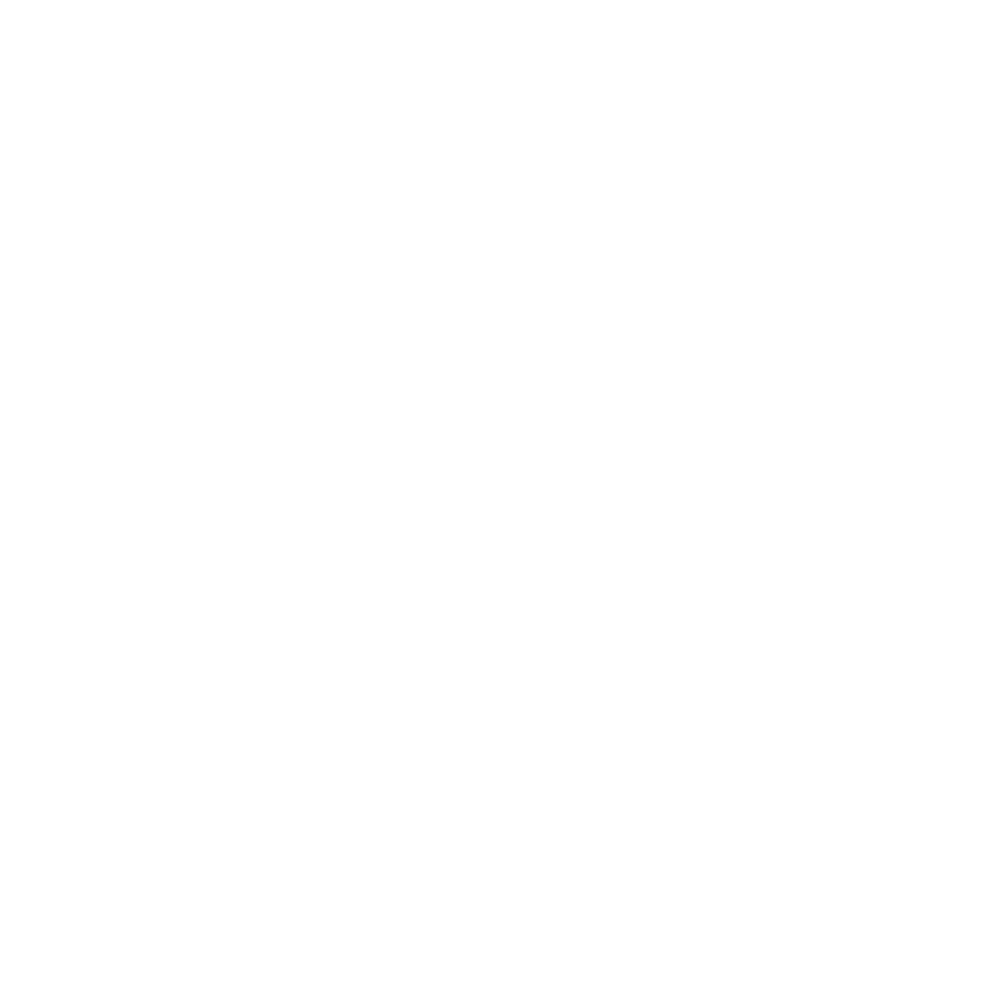
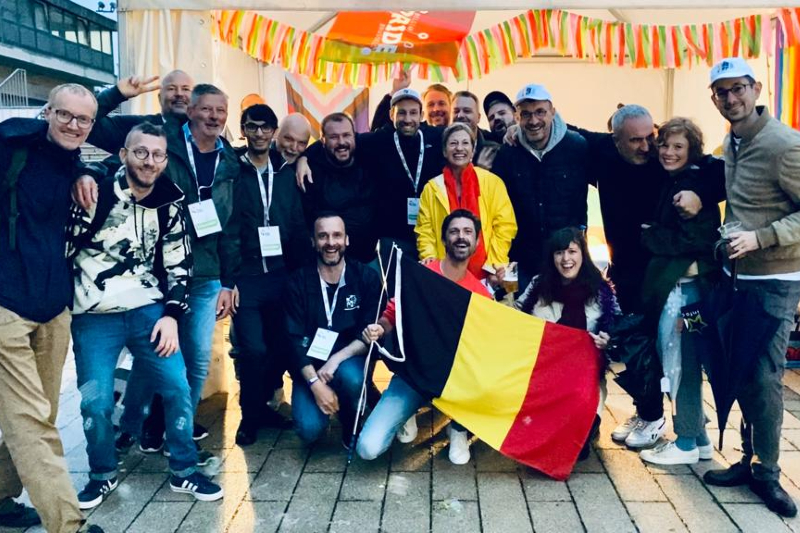
One of the strengths of an event such as EuroPride is to see representatives from cities across Europe, coming together to support the local host LGBTQ community – this year, the host city was Belgrade in Serbia.
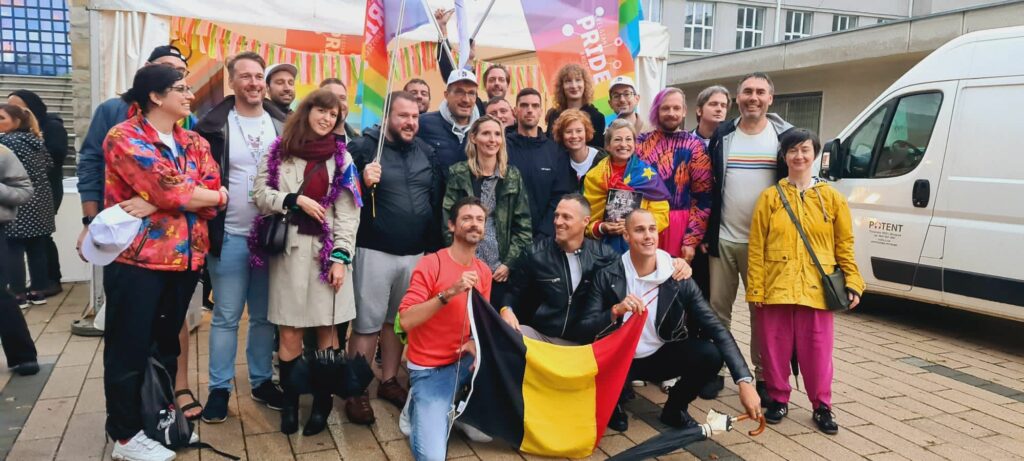
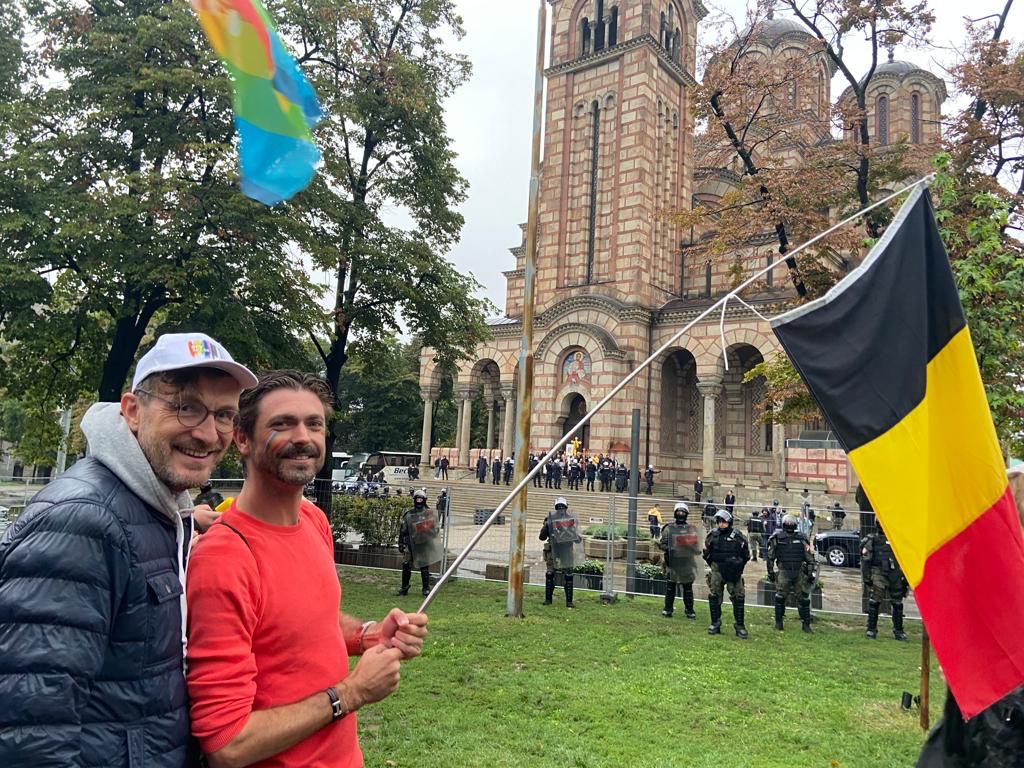
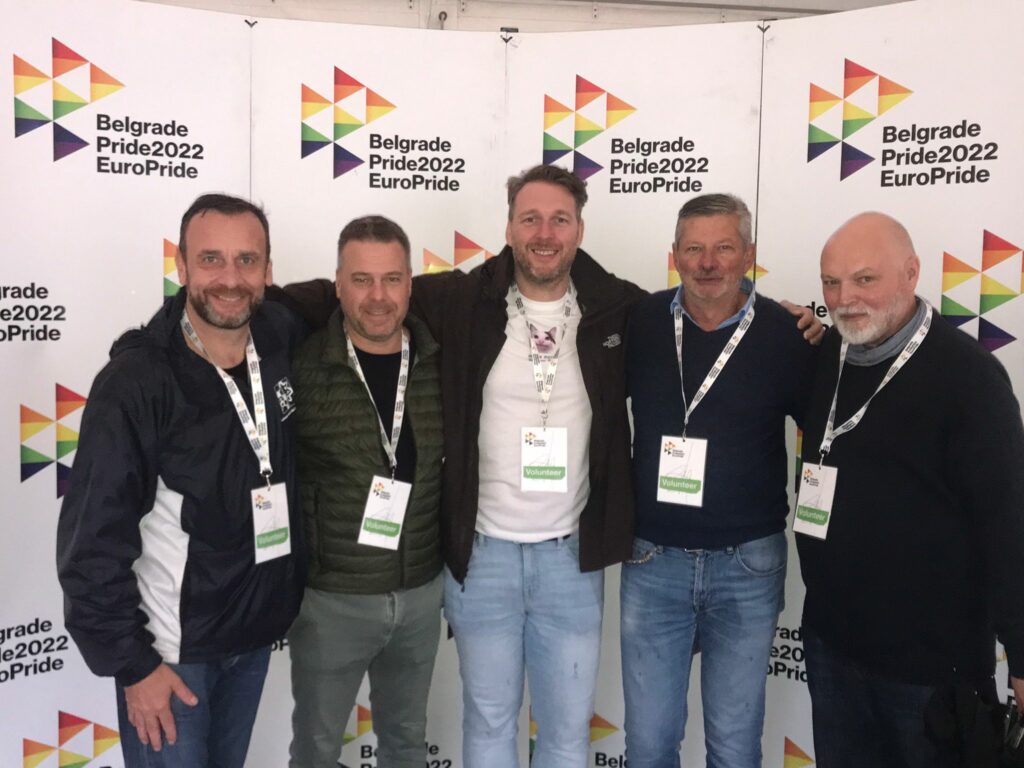
A large delegation from Brussels was one of the most visible in Belgrade, participating in the human rights conference, hosting panel discussions and receptions, and facing down homophobic protestors to take part in the Pride march through the streets of the city.
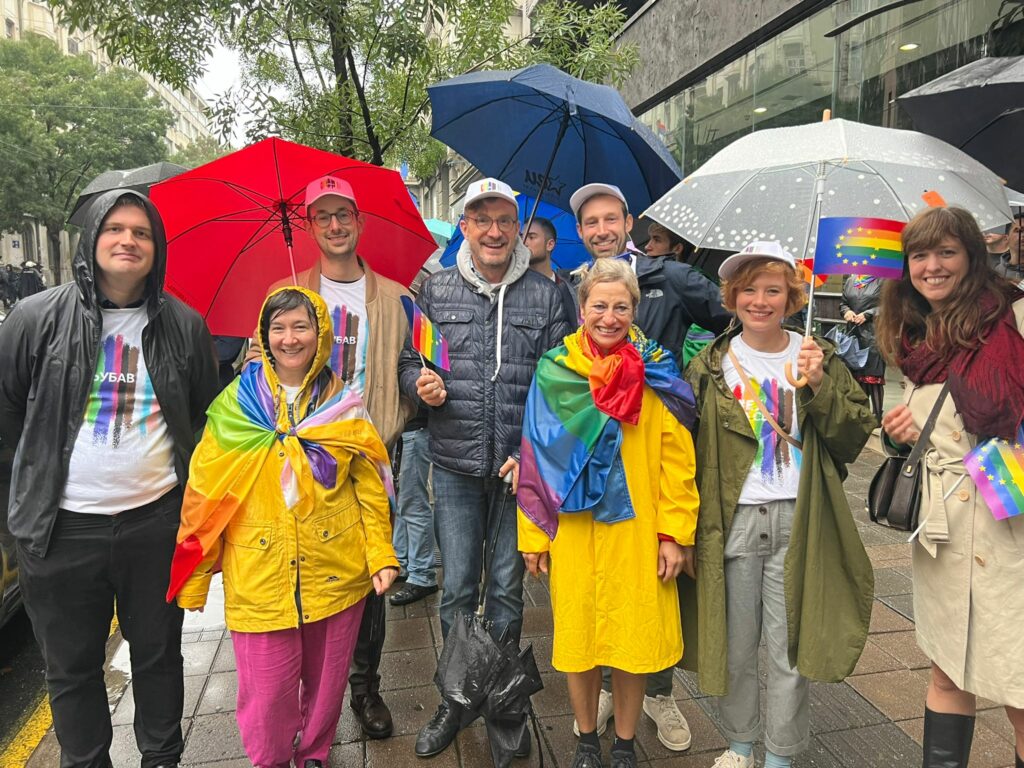
Whether the march would actually take place was touch-and-go throughout the weeks leading up to EuroPride, and right down to the last minute. There had been repeated announcement by the President and the various responsible authorities that the Pride parade had been cancelled. But, right at the last minute, the Prime Minister, who is an out and proud lesbian, gave an undertaking that the march could go ahead and that appropriate security would be in place.
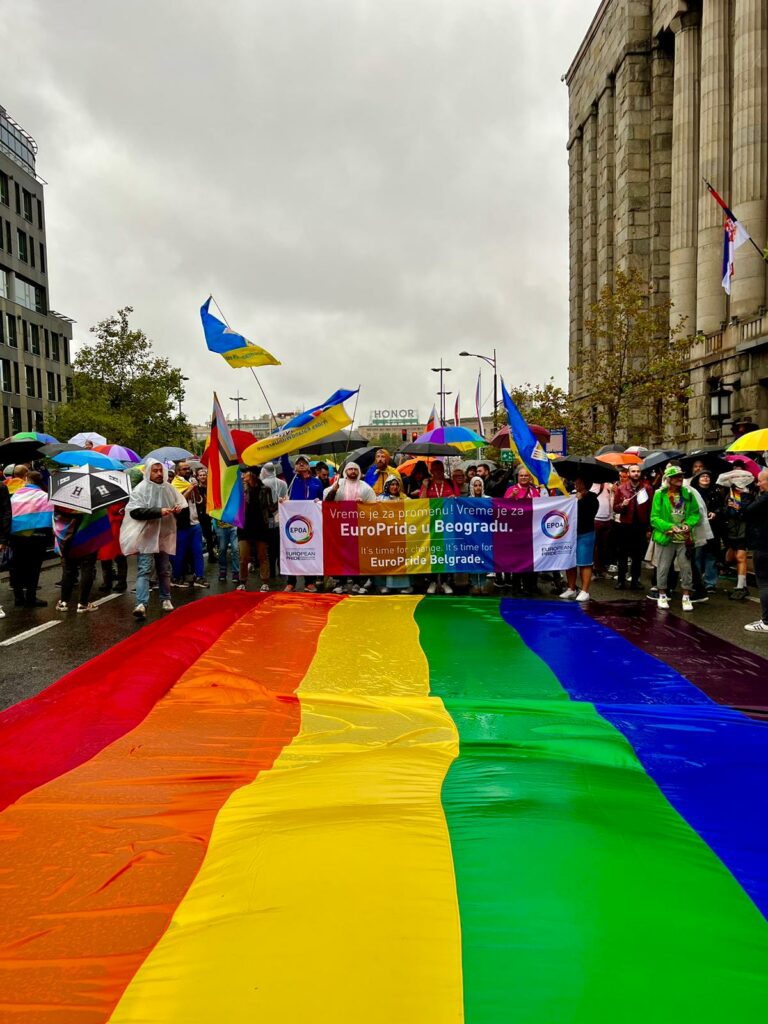
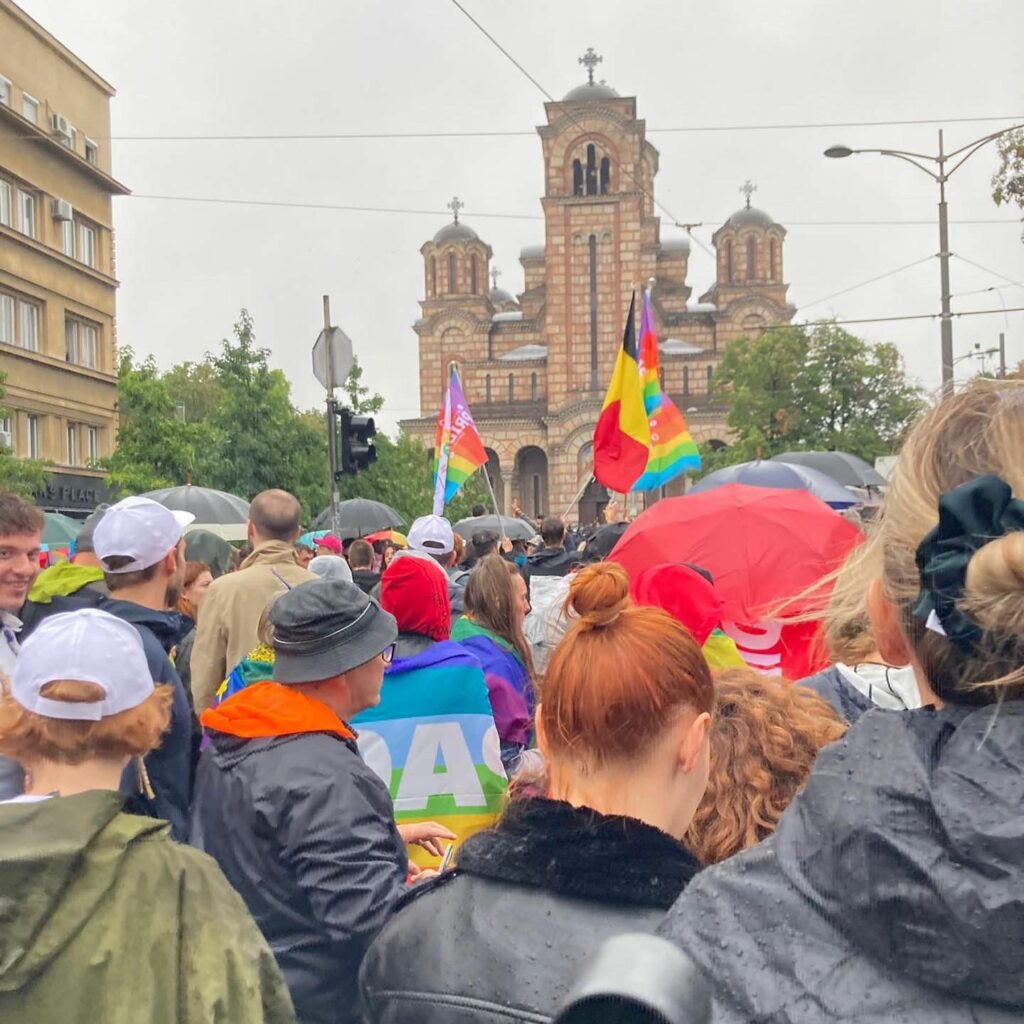
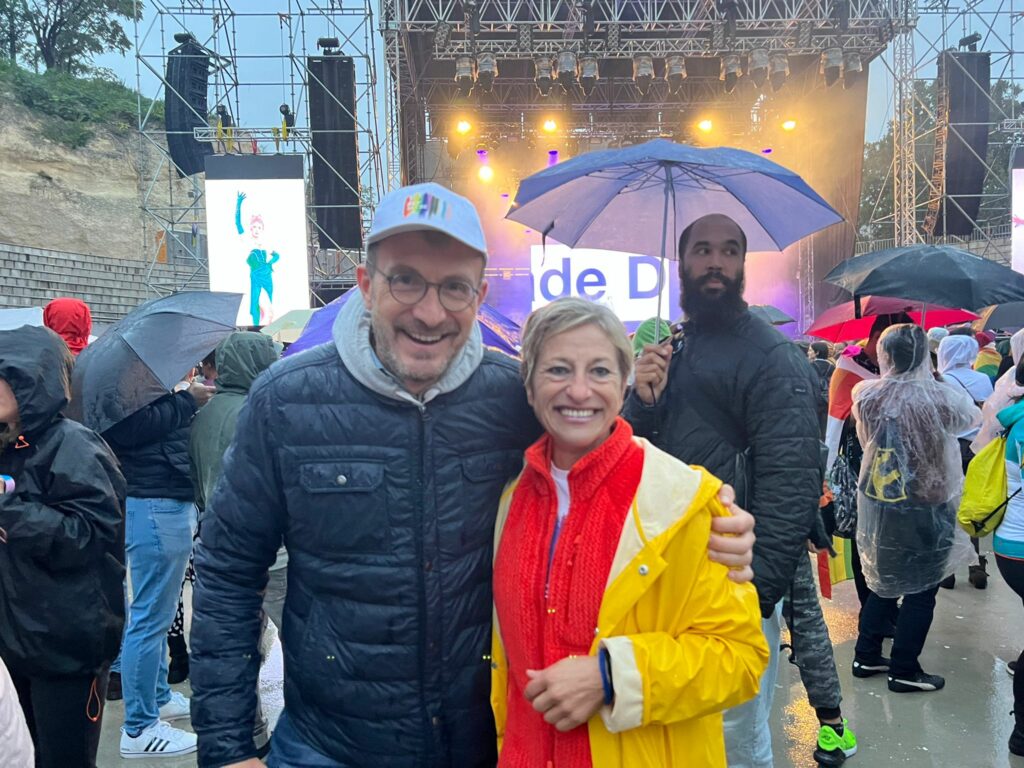
It wasn’t great weather for marching – heavy, solid rain that continued throughout the afternoon and well into the night.
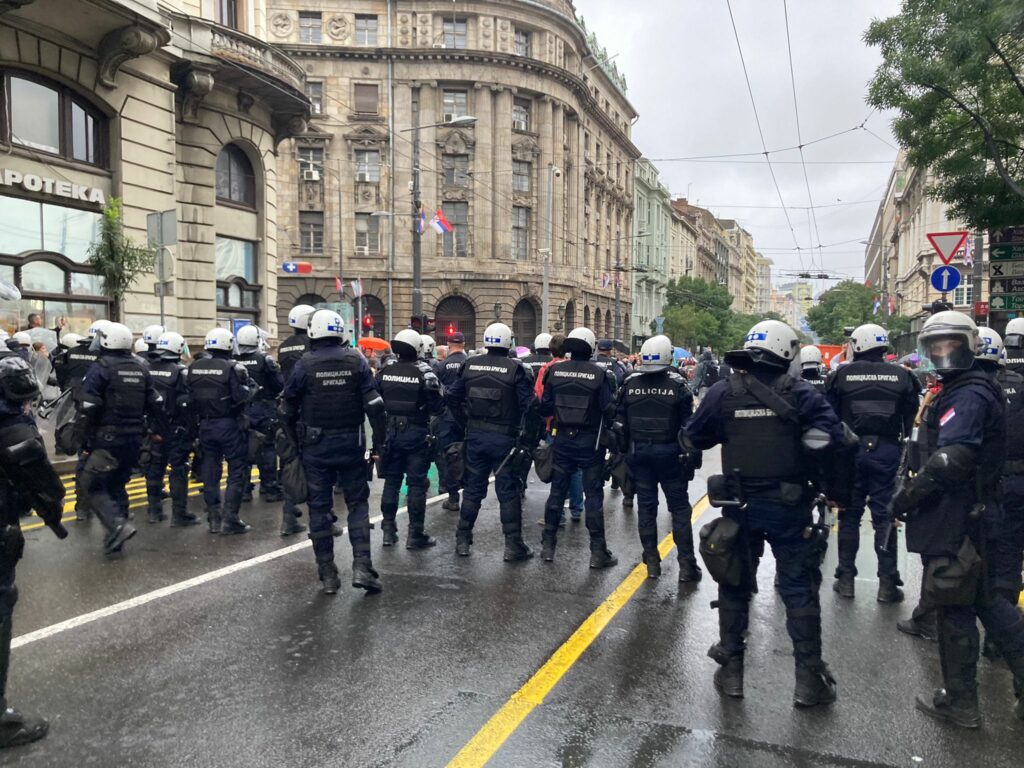
The gathering point for the march was in front of the Constitutional Court building. This street had been cordoned off and was a security-controlled area. All of the surrounding streets had also been closed. The security presence was very visible – riot police and security service personnel everywhere you looked. It was intimidating.
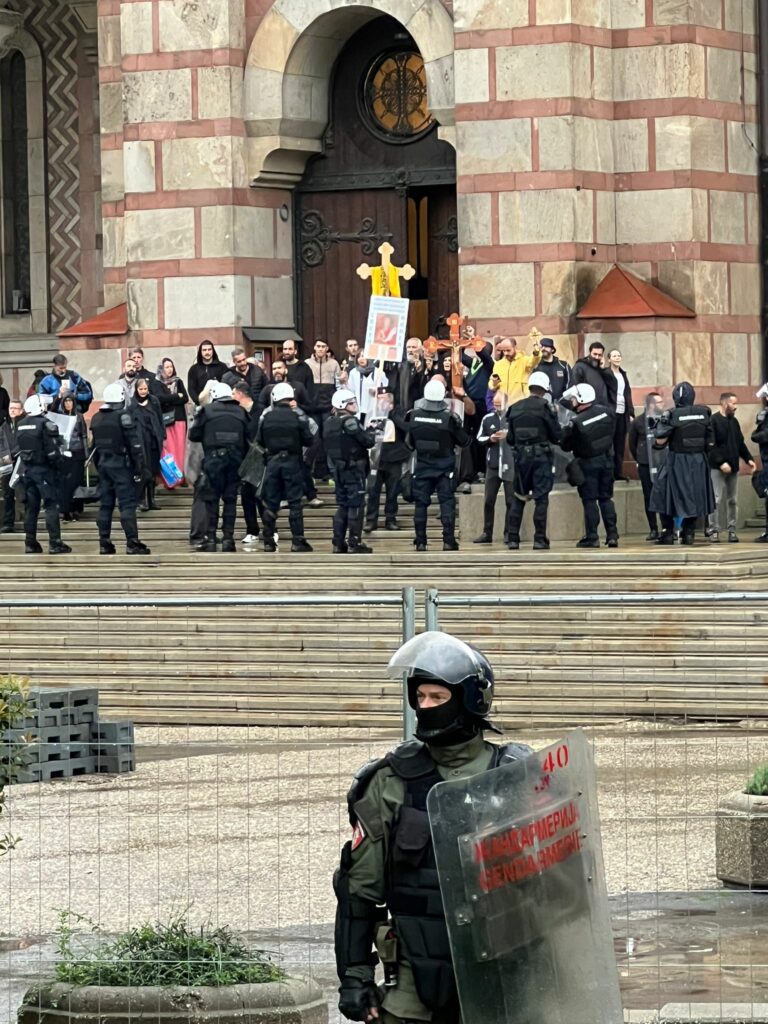
There were also protestors. You would think that the rain might have dampened the enthusiasm of the protestors a little but they were still out in force – groups of vocal protestors kept at bay by cordons of riot police. The protests seems to be predominantly religion-led – the orthodox church has been vocal and strident in its opposition to EuroPride. According to local people that I spoke with, these anti-gay protests also include a large element of nationalist extremists.
The security was tight, but not impregnable. As we were waiting for everyone to assemble, about four presumably orthodox protestors pulled out crosses and bibles and began spitting on the giant rainbow flag on the ground. Two of them – a man and a woman – began kissing. It provided some content for the assembled local media but security soon ushered them away.
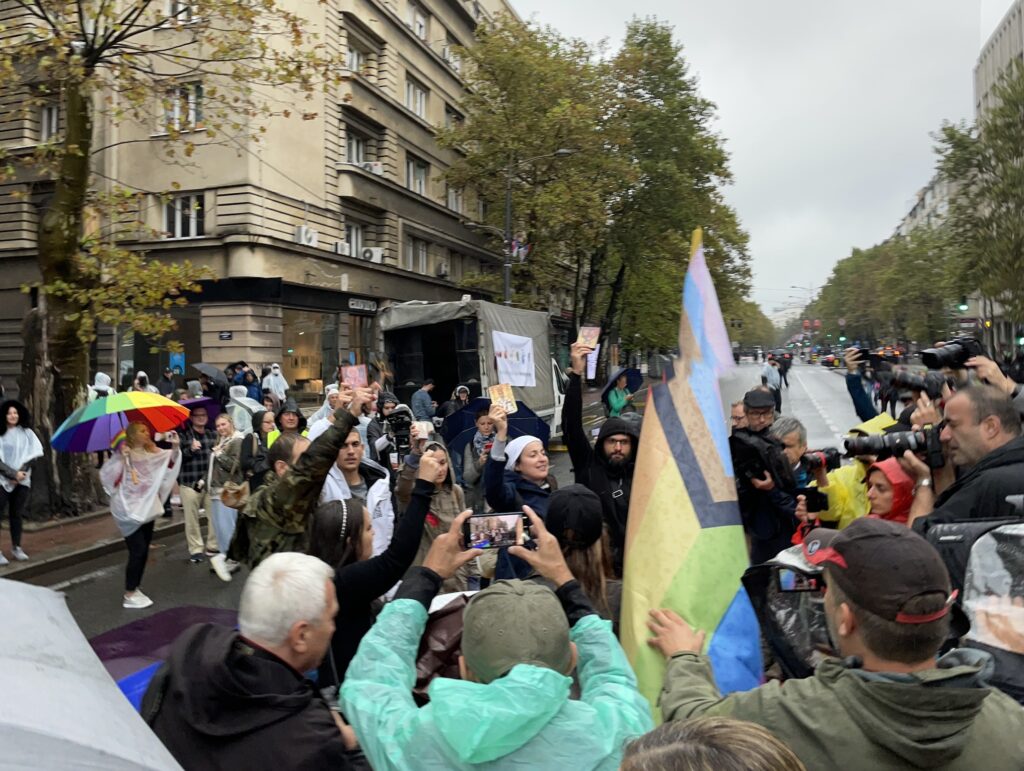
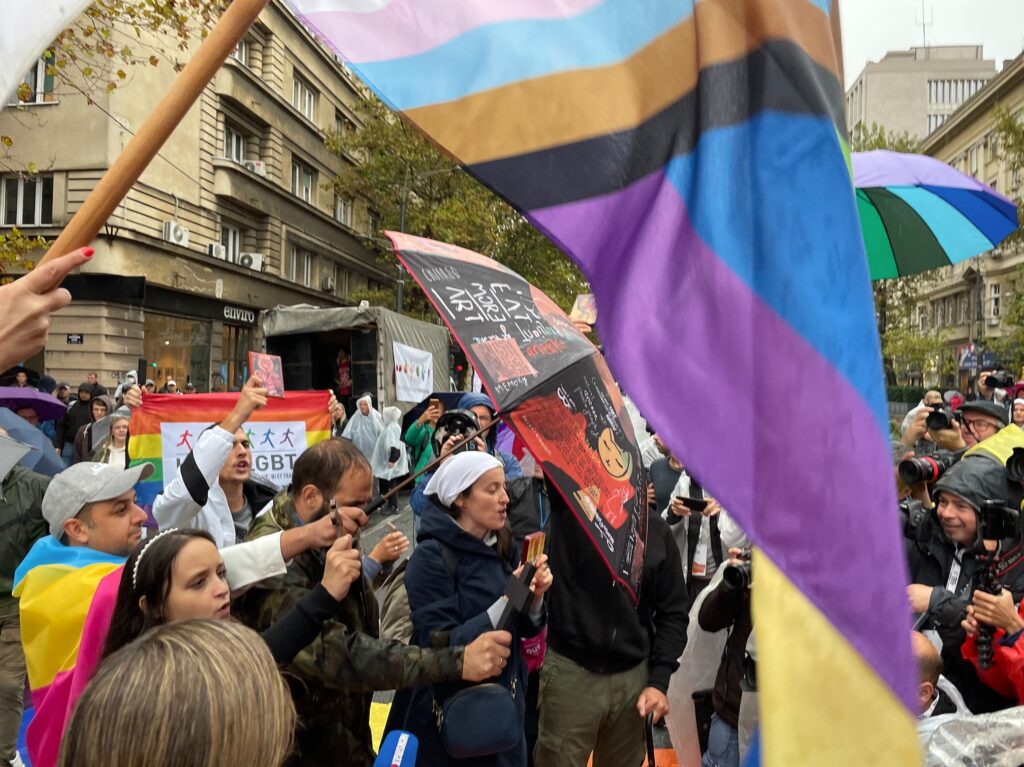
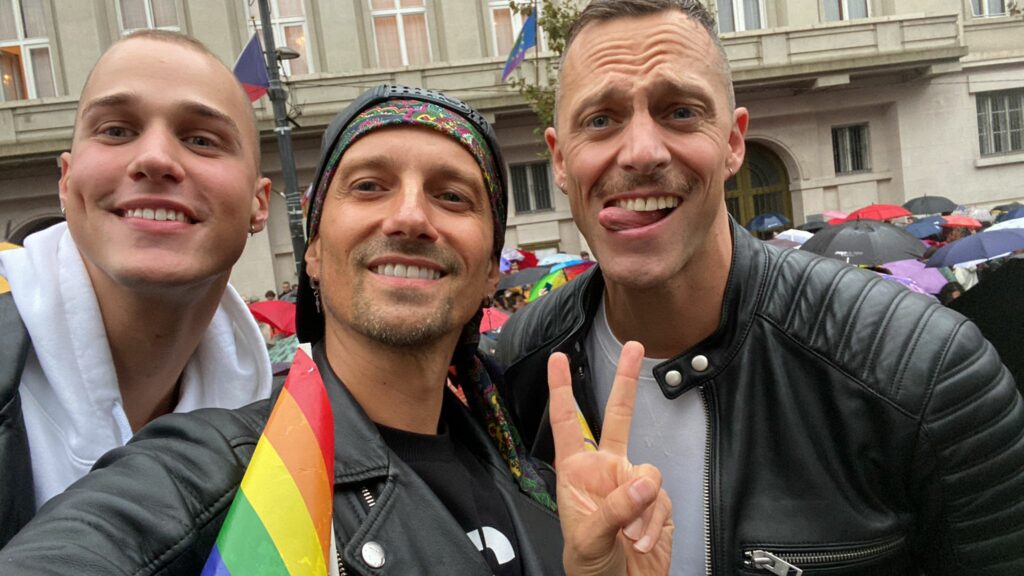
It’s hard to gauge the size of the crowd assembled for the march – it was a sea of umbrellas. I’m guessing a couple of thousand of people.
At about 5:30 PM, the march began – a short but slow walk to Tašmajdan stadium. There was a heavy police presence guiding the march – the distance was about 1 km. At one point, we passed nearby a large orthodox church – the bells were ringing and there was a small group of anti-gay protestors on the steps of the church, surrounded by riot police to ensure there was no actual contact between the protestors and the marchers.
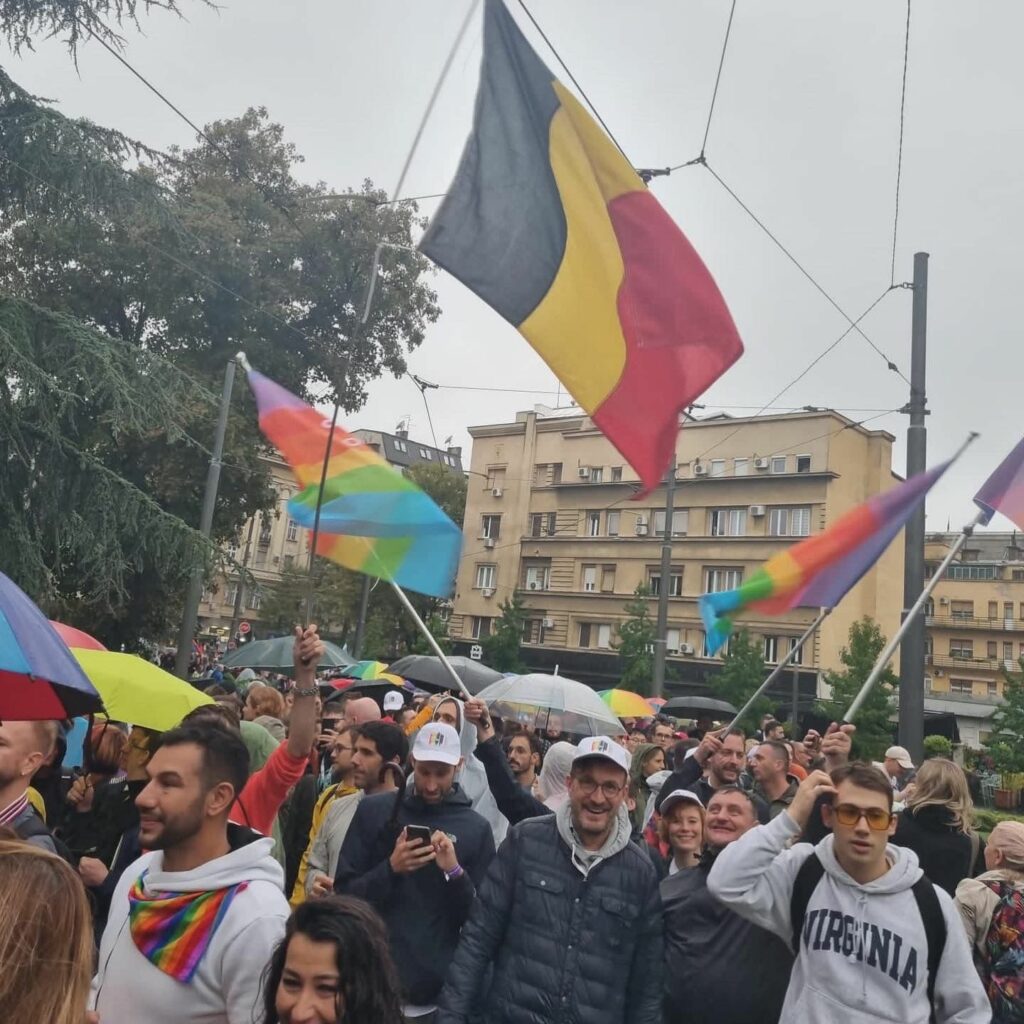
When we got to Tašmajdan stadium, there was a DJ playing music. The open-air stadium was fairly waterlogged, but there was a lot of enthusiastic dancing and drinking.
Brussels was represented with a stall near the entrance of the stadium. From here, the delegation handed out copies of Ket Magazine.
There have been media reports of clashes between the anti-gay protestors and the police, with reports of a number of arrests. On the way to the airport the next day, my taxi driver said that there had been a lot of activity on social media throughout the event – urging the anti-gay protestors to attack the police and attack the Pride march.
I have heard at least one second-hand report of Pride attendees being attacked on their way home, but I haven’t been able to verify this.
EuroPride done. We were proud to be able to represent Brussels at such an important event for the LGBTQ community.
You may also like
-

From the United States comes another alarming blow for LGBTQ+ rights
The latest news from the United States is deeply worrying for LGBTQ+ people and their
-
RainbowHouse opens call for projects for Brussels Pride Week 2026
RainbowHouse Brussels has launched its call for projects for Brussels Pride Week 2026, inviting associations, collectives, artists
-

Matrimiel: an Ixelles festival celebrating women’s know-how and intergenerational transmission
From 8 to 10 May 2026, the Abbaye de la Cambre in Ixelles will host Matrimiel,
-

Mothers and Daughters: calling for memories, building a collective queer archive
Mothers and Daughters, Brussels’ beloved lesbian & trans bar and art space, is looking back on
-

“The LGBT Lobby” Is a Lie: Why This Old Fantasist Myth Still Fuels Real Violence
For decades, anti-LGBT+ voices have recycled the same tired story: that queer people form a