

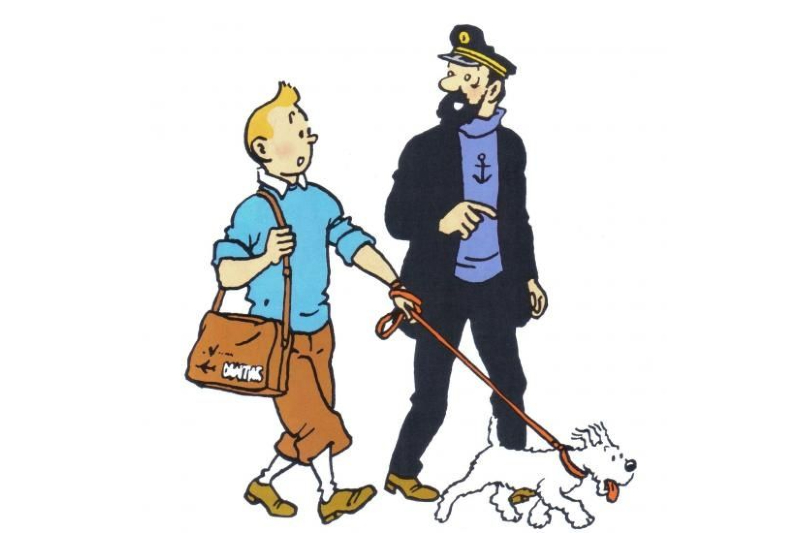
Tintin is one of the iconic cultural touch-points of Belgium, but just how queer is the intrepid reporter?
The creation of Tintin
First published in 1929, The Adventures of Tintin is the creation of Georges Remi, who wrote under the pen name Hergé.
Initially serialised in newspapers, Tintin quickly became one of the most popular comic-book characters of the 20th century – the stories were translated and read around the world.
Who is Tintin?
Tintin is a courageous young Belgian reporter and adventurer. His investigative journalism often leads him into dangerous mysteries.
He’s intelligent, inquisitive, and creative – never compromising his Boy Scout ideals. But we don’t ever get any backstory to Tintin. We never even find out if he has any other names apart from Tintin.
Other characters that regularly feature in the stories include Snowy, Captain Haddock, Professor Calculus, and Thomson and Thompson.
Is Tintin gay?
Tintin’s creator was silent on the question, and there’s nothing definitive included in the published adventures of the intrepid reporter. So, we need to put our Gaydar to work and see what we can deduce.
Sure, first impression is that Tintin is a well-groomed young twink with a cute dog, but is there more to it than that?
Tintin’s world is fairly homocentric. Sure, there’s a couple of female characters that appear throughout the adventures – but we’ve done the maths. Out of 350 characters featured, only eight of those are women and none of them are even remotely close to being any kind of romantic interest for Tintin.
Most fan-fiction conjecture centres around Tintin’s relationship with Captain Haddock. It’s not really clear how the two men met. Haddock emerges as a kind of wayward father-figure to the considerably younger Tintin – remember, we don’t know anything about Tintin’s actual parents. Tintin and Snowy move into Haddock’s home – Marlinspike Hall. Also, Tintin seems to be a calming influence on Haddock – Haddock goes from a hard-drinking foul-mouthed sailor into a caring and almost noble character.
We may not have conclusive evidence, but anything is possible.
You may also like
-

At Liège’s Queer Families Festival, Every Family Has a Story
The third edition of the Queer Families Festival takes place on 11 October at the
-

“After”: Listening to LGBTQIA+ Survivors Speak About Intimate Partner Violence
On 8 October, Tels Quels invites people to Les Grands Carmes in central Brussels for
-

Liège’s Maison Arc-en-Ciel Needs Support to Keep Its Doors Open
Maison Arc-en-Ciel de Liège, a vital LGBTQIA+ community hub in Wallonia, is facing growing financial
-

Garden Party de la Maison Arc-en-Ciel de Liège
Liège’s Maison Arc-en-Ciel is bringing back its annual Garden Party on Saturday 5 September 2026.
-
IGLYO Wants to Hear From You: Europe’s Biggest LGBTQI School Survey Is Back
IGLYO, the Brussels-based international LGBTQI youth network, has just launched the second edition of its