
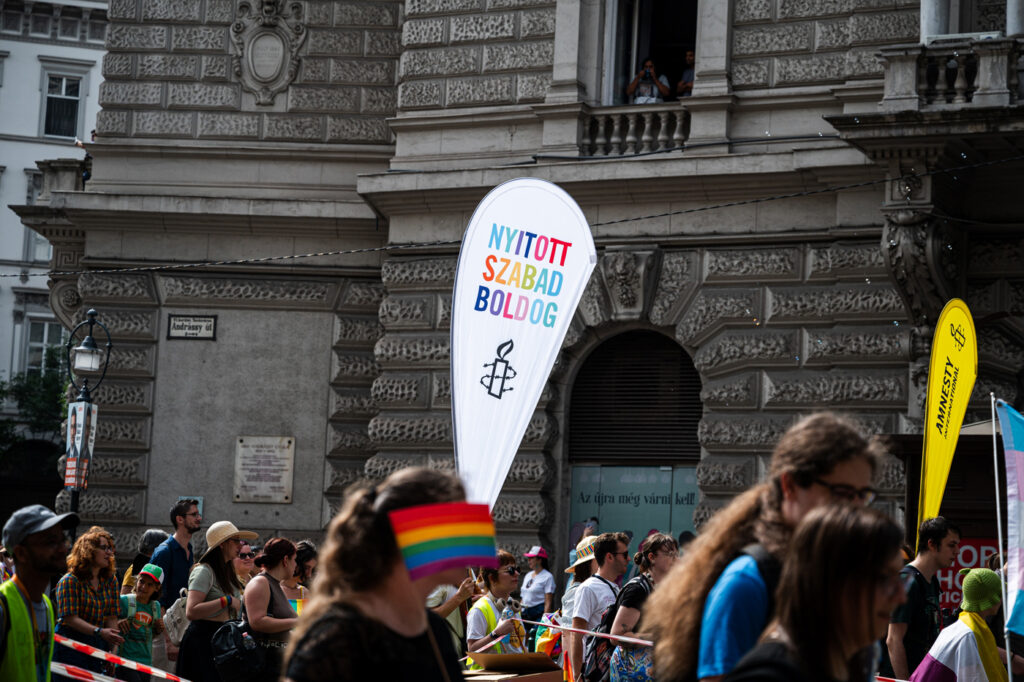
In Hungary, even a peaceful walk for equality can now be deemed too dangerous — not because of violence, but because it “looks like Pride.”
That was the justification used by Budapest police in May 2025 to ban a planned LGBTQIA+ demonstration organized by five major human rights organizations, including Amnesty International Hungary and the Háttér Society. The march, scheduled for June 1st along Andrássy Avenue, was meant to raise awareness about homophobia, transphobia, and the ongoing impact of Hungary’s infamous “Paragraph 33,” which stripped trans people of legal gender recognition five years ago.
What was planned as a peaceful, rights-focused march was shut down on the grounds that it mirrored previous Pride events in form and spirit — thus supposedly violating recent legislation banning gatherings that “display homosexuality or sexual minorities,” on the pretext of protecting children.
But what is truly being protected here? Not children — as the Háttér Society aptly pointed out — but a discriminatory status quo that uses “child protection” as a smokescreen for censorship and erasure.
“The government’s message is clear,” the organizers stated. “You can gather — as long as your gathering doesn’t look queer.”
This vague standard turns visibility itself into a liability. It’s not just about banning a specific parade, but about criminalizing a form of existence. If a peaceful march is too Pride-like to be permitted, then LGBTQIA+ people are expected to be silent, invisible, and compliant. The implications go far beyond Hungary: it sets a precedent for suppressing dissent, policing public space, and rewriting the terms of who gets to belong.
Yet the community is refusing to be silenced. The five organizations behind the banned march are taking the case to court. And Budapest Pride, scheduled for June 28, is expected to be bigger than ever.
“This decision only fuels our resolve,” the statement continued. “Let’s stand together against injustice, and march for a freer, safer, and more equal Hungary.”
At a time when queer lives are used as political scapegoats, Pride is not just a celebration — it’s an act of defiance, a claim to space, and a commitment to solidarity.
Brussels knows this story too well. We at KET stand with our friends in Budapest — and everywhere queer joy, rights, and resistance are met with repression. See you in the streets.
This article was written thanks to HUMEN magazine (Hungary) , as KET.brussels is part of the European LGBTQIA* Media Association.
You may also like
-

Protection for Everybody: a digital statement for safer, more inclusive spaces
Protection for Everybody presents itself as a clear, purpose-driven initiative focused on protection and safety for
-

State-sponsored discos? Lithuania’s cheeky bid to boost the birth rate
Lithuania is taking an unusually nightlife-friendly approach to its demographic crisis, floating the idea of
-
Colombia: Catholic Leader Washes Trans Sex Workers’ Feet in Historic Act of Inclusion
In Colombia, a powerful moment unfolded that reached far beyond church walls. The country’s highest
-

Ignacio Lago makes history in Argentina: Colón winger becomes the first active male pro to come out
Argentine winger Ignacio “Nacho” Lago has made history by becoming the first active professional male footballer in Argentina to
-

From the United States comes another alarming blow for LGBTQ+ rights
The latest news from the United States is deeply worrying for LGBTQ+ people and their