
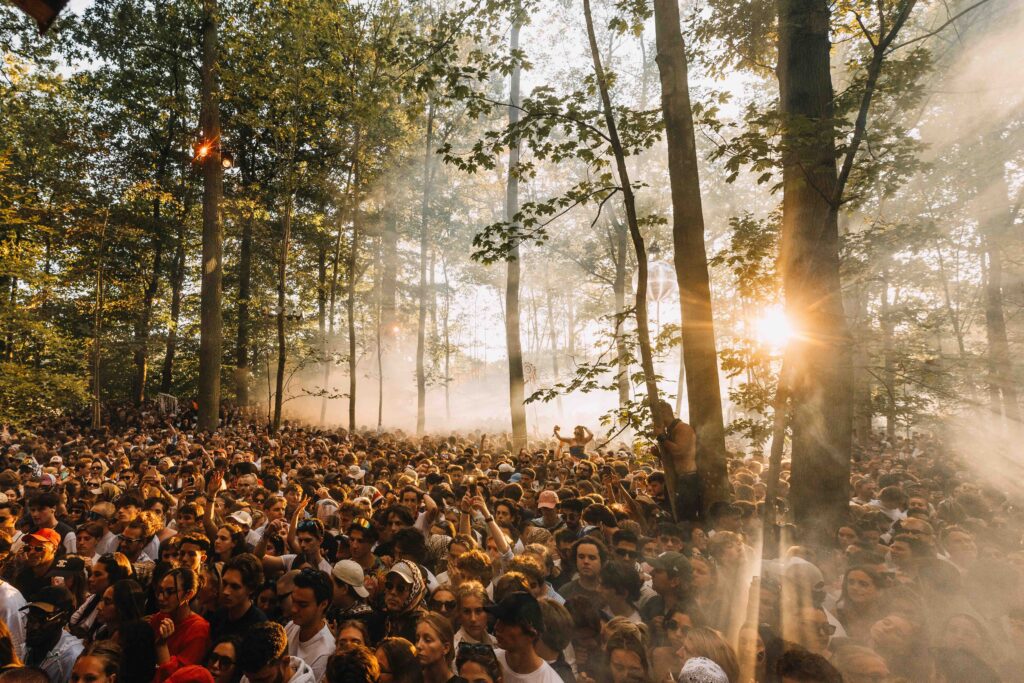
When Voodoo Village marks its tenth anniversary from 12 to 14 September 2025 near Brussels, its reputation for being immersive and visionary in music and nature remains. What may go unnoticed by many, however, is just how deliberate and concrete its commitment to inclusivity and support truly is.
Real Safety by Design
Inclusion at Voodoo Village begins with safety. The festival partners with organizations such as Safe ’n Sound and Flow to support visitor wellbeing on site, deploying mobile “safe souls” teams to help with disruptions or anyone in distress. Quiet zones, especially The Sanctuary near The Oracle, offer calm, stimulus free environments overseen by psychotherapists. Visitors can also access post festival support via a hotline.
A new feature this year is a dedicated space staffed by midwives for nursing mothers. This lactation area is hosted inside The Sanctuary. Festivalgoers also benefit from electrolyte and coffee bars, designed to help them stay hydrated and energized throughout the event.
Digital Disconnection for Presence
Voodoo Village takes a pioneer stance in Belgium by introducing a no phone policy in designated areas like The Oracle. Upon entry, attendees are asked to cover their phone cameras with stickers, encouraging a moment of genuine presence and connection.
The Oracle: Beyond Music
More than just a stage, The Oracle is a cornerstone of the festival’s inclusion ethos. It hosts a series of immersive, inward facing experiences such as one on one sessions, spiritual and movement workshops and mindful discussions that invite visitors to step out of festival frenzy and reconnect with themselves and each other.
A Holistic Vision of Care
The festival’s efforts extend into a broader wellbeing framework. The Sanctuary offers professional mental health support ringside, while midwife supported facilities, hydration stations and silent zones reinforce that care is not an afterthought but woven into the infrastructure.
While many festivals promise inclusivity, Voodoo Village delivers it through clear, well resourced structures that prioritize diverse needs. Here, inclusion is not a buzzword but a living practice integrated into the visitor experience.
You may also like
-
Protection for Everybody: a digital statement for safer, more inclusive spaces
Protection for Everybody presents itself as a clear, purpose-driven initiative focused on protection and safety for
-
La nuit des Finta: a slam night centring FINTA and queer voices in Brussels
On 24 April 2026, Le Jacques Franck in Saint-Gilles will host La nuit des Finta, a slam event
-
From the United States comes another alarming blow for LGBTQ+ rights
The latest news from the United States is deeply worrying for LGBTQ+ people and their
-
MAATWERK is building more than a festival in Brussels
Brussels-based initiative MAATWERK is positioning itself as more than an events platform: it is building a music-driven
-
Les Nuits Botanique turns up the heat with its 2026 Garden Party, featuring queer DJ KAMPIRE
Brussels’ spring-to-summer festival season kicks off with the return of the Les Nuits Botanique Garden Party,