
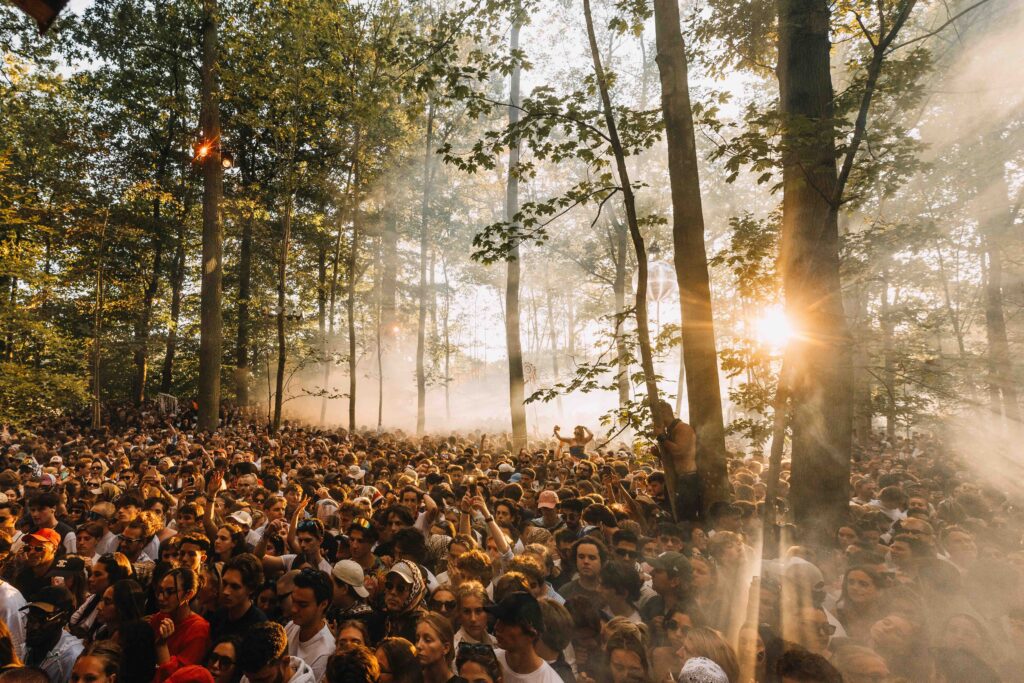
When Voodoo Village marks its tenth anniversary from 12 to 14 September 2025 near Brussels, its reputation for being immersive and visionary in music and nature remains. What may go unnoticed by many, however, is just how deliberate and concrete its commitment to inclusivity and support truly is.
Real Safety by Design
Inclusion at Voodoo Village begins with safety. The festival partners with organizations such as Safe ’n Sound and Flow to support visitor wellbeing on site, deploying mobile “safe souls” teams to help with disruptions or anyone in distress. Quiet zones, especially The Sanctuary near The Oracle, offer calm, stimulus free environments overseen by psychotherapists. Visitors can also access post festival support via a hotline.
A new feature this year is a dedicated space staffed by midwives for nursing mothers. This lactation area is hosted inside The Sanctuary. Festivalgoers also benefit from electrolyte and coffee bars, designed to help them stay hydrated and energized throughout the event.
Digital Disconnection for Presence
Voodoo Village takes a pioneer stance in Belgium by introducing a no phone policy in designated areas like The Oracle. Upon entry, attendees are asked to cover their phone cameras with stickers, encouraging a moment of genuine presence and connection.
The Oracle: Beyond Music
More than just a stage, The Oracle is a cornerstone of the festival’s inclusion ethos. It hosts a series of immersive, inward facing experiences such as one on one sessions, spiritual and movement workshops and mindful discussions that invite visitors to step out of festival frenzy and reconnect with themselves and each other.
A Holistic Vision of Care
The festival’s efforts extend into a broader wellbeing framework. The Sanctuary offers professional mental health support ringside, while midwife supported facilities, hydration stations and silent zones reinforce that care is not an afterthought but woven into the infrastructure.
While many festivals promise inclusivity, Voodoo Village delivers it through clear, well resourced structures that prioritize diverse needs. Here, inclusion is not a buzzword but a living practice integrated into the visitor experience.
You may also like
-
FrancoFaune 2026: Brussels, Turn Up the Volume
From 1 to 11 October, FrancoFaune returns for its 13th edition, spreading French-language music across
-
Bears Attack: Brussels’ Bear Folies Hit the Dancefloor
Belgium Bear Pride celebrates its 15th anniversary from 29 September to 4 October 2026, and
-
KET in Paris — At Paradis Latin, Even the Waiters Take the Stage
For this stop in our KET in Paris series, we spent an evening at Paradis
-
At Liège’s Queer Families Festival, Every Family Has a Story
The third edition of the Queer Families Festival takes place on 11 October at the
-
Pink Screens Turns 25 — and Brussels’ Queer Cinema Is Still Coming Home Late
From 28 October to 7 November 2026, Pink Screens returns to Brussels for its 25th