
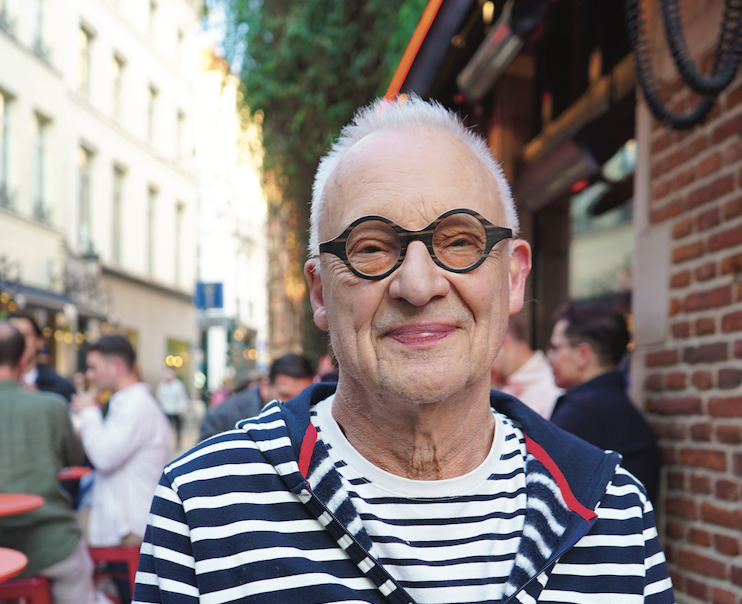
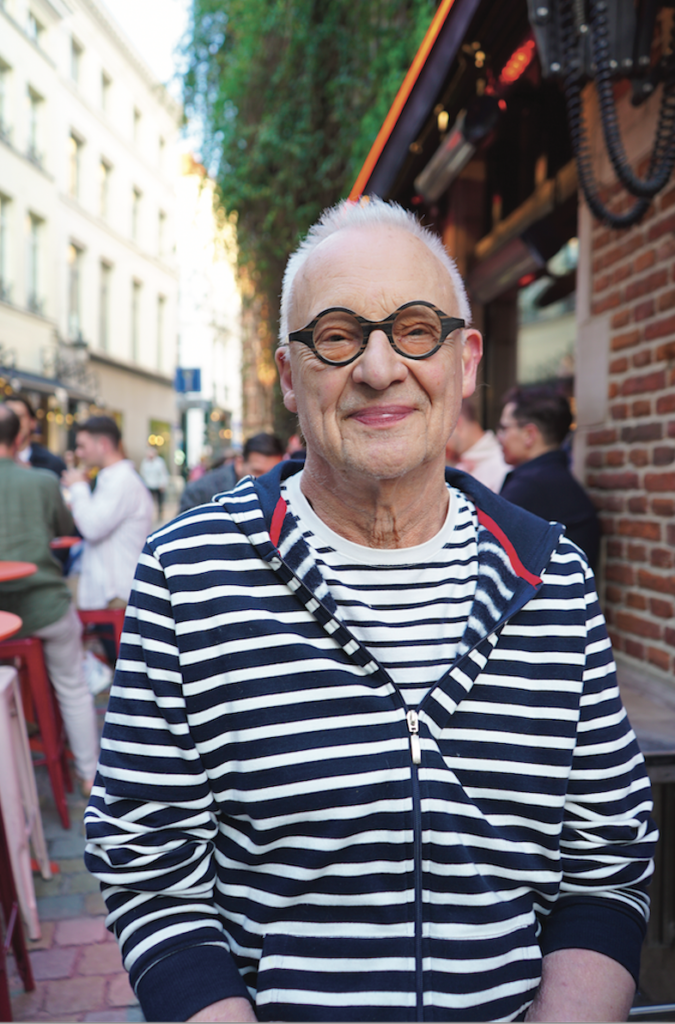
In a city where languages overlap and identities intersect, some stories become landmarks. The story of Chille Deman is one of them. Co-creator of Brussels Pride and co-founder of RainbowHouse Brussels, he is both a witness and an architect of its evolution. His lifelong commitment to the LGBTQIA+ community in Brussels was recently recognized with the Honorary Citizenship of the City, a distinction that reflects decades of visibility, resistance, and care.
It all begins in 1996. At the time, nothing is guaranteed. Not rights, not visibility, not even a place in public space. And yet, something shifts.
“It was overflowing enthusiasm. We were 4,500 participants, whereas there had been 2,500 in Antwerp two years earlier. But above all, there were many Walloons, people from Brussels, and people from the European institutions, which had not been the case before. Before that, there were mainly Flemish and Dutch participants.”
Brussels suddenly becomes a meeting point. Not just geographically, but symbolically. A city capable of bringing people together across linguistic and social divides.
Pride itself did not emerge out of nowhere. It was rooted in earlier marches, pauses, and attempts. But Brussels changed the scale.
“Given the success in Brussels, the decision was made to organize a Pride every year, always in Brussels. And it was the first time we called it Pride.”
That moment marked the beginning of a new kind of visibility. Still, it remained fragile. Early marches were pushed to the margins of the city.
“We walked along almost empty avenues… The police were supportive, but politicians were absent.”
Behind today’s festive image lies a much more uncertain past.
“We were worried about finances… If the evening event did not meet expectations or if there was a bomb alert… we would have gone bankrupt.”
From the very beginning, however, the direction was clear.
“The entire Pride was organized around ten demands. The two most important were a law against discrimination and the recognition of same-sex couples.”
The years that followed proved that vision right. From legal cohabitation to marriage, from adoption rights to transgender recognition, Belgium became one of the countries where progress translated into real change.
Today, Pride looks different. It has grown, expanded, opened up.
“Pride has become ‘Pride for everyone’. It is an event organized by LGBTQIA+ people but open to anyone who values diversity and inclusion.”
This evolution sometimes raises questions. But for Chille Deman, some things remain unchanged.
“Pride is a coming out… Being able to walk without fear, without hiding in front of thousands of people, is an enormous liberation.”
That might be its core. The ability to offer a space where people can exist fully, even if just for one day.
When speaking to younger generations, his message is calm but clear. Refuse division. Avoid labels that separate more than they unite. Recognize differences without losing the sense of a shared community.
At the same time, the work is far from over. The struggles are shifting. Expanding.
“These demands are not only about LGBTQIA+ people, but about anyone exploring new ways of building relationships.”
In a world where LGBTQIA+ rights are still under threat in many places, Pride also carries an international responsibility. A gesture of solidarity. A platform for those who cannot yet march freely in their own countries.
So what is Pride today. Celebration or protest.
“Both, of course. It is a celebration of diversity and a demonstration to change mentalities and a way to show our international solidarity.” In Brussels, Pride is more than an event. It is a living story. One that continues to unfold, carried by people like Chille Deman, who believed from the very beginning that taking up space could help change the world
Picture by Elena Leleu
You may also like
-
NAYA brings soul, soft edges and a little “Bagarre” to Café Flora
Brussels-based singer-songwriter NAYA releases her debut EP, Bagarre, on 30 October 2026, with a release
-

At Liège’s Queer Families Festival, Every Family Has a Story
The third edition of the Queer Families Festival takes place on 11 October at the
-

Stanislawa: Building a Queer Future from Belgium’s Clubbing Past
Between Brussels and Amsterdam, DJ and producer Stanislawa turns 1990s trance, sensual techno and progressive-house
-

“After”: Listening to LGBTQIA+ Survivors Speak About Intimate Partner Violence
On 8 October, Tels Quels invites people to Les Grands Carmes in central Brussels for
-

Orlane on Amour Pluriel: The Rise of a Queer Belgian Pop Icon
Orlane has never hidden her queerness. In ROUGE À LÈVRES, desire for a woman slips