
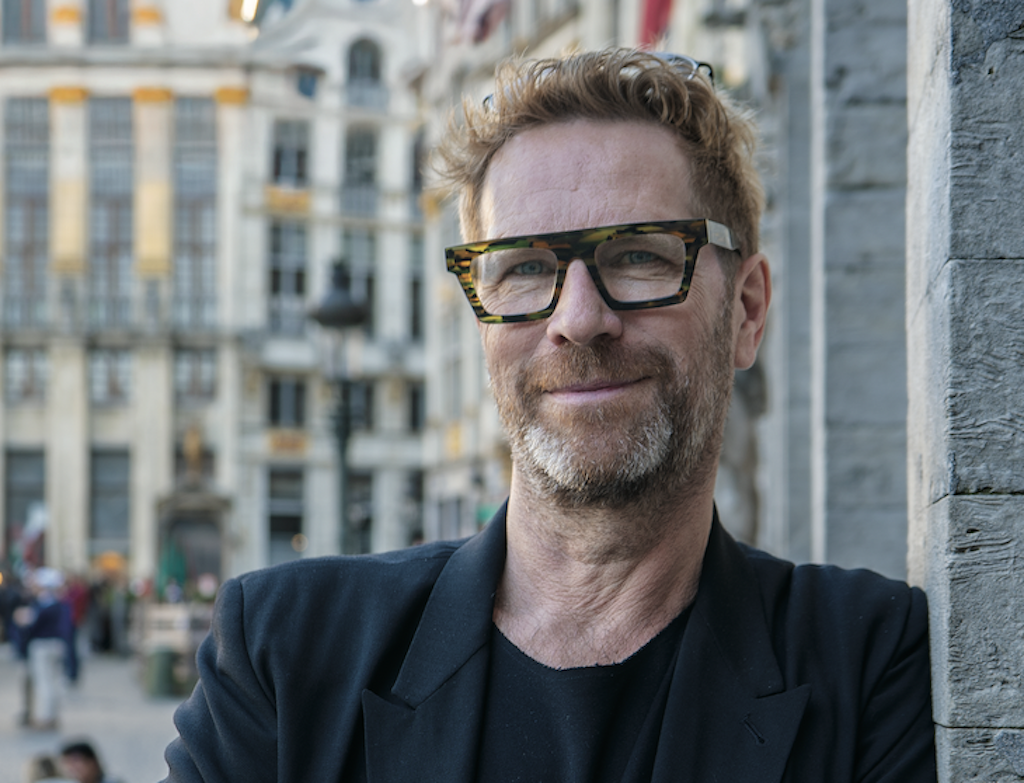
In a series tracing the evolution of Brussels Pride through its coordinators, Alan De Bruyne looks back on a defining chapter. Coordinator from 2010 to 2018, he witnessed Pride grow from a local march into a major public event. His words reflect a movement constantly navigating between celebration and resistance.
There is no hesitation when Alan De Bruyne defines his Pride. “Pride4everyone.” It is a simple phrase, but one that carries the weight of years of work, negotiation, and vision.
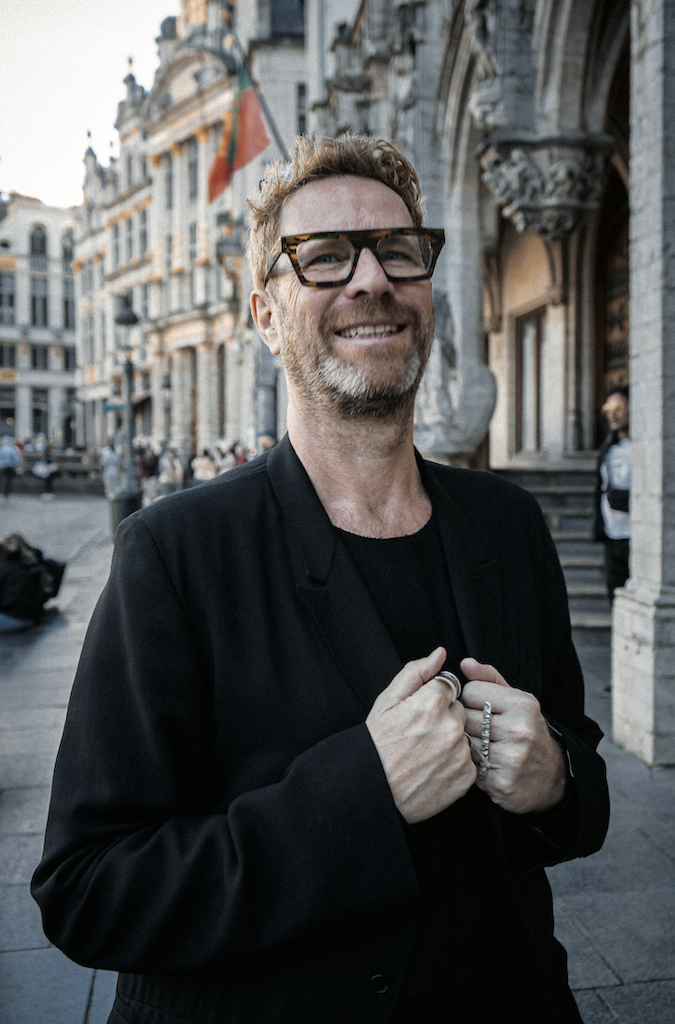
When he joined the organization, Pride was already present in the city. “We already marched in the city center,” he recalls. But one moment stands out as a shift in scale and meaning. The decision to move beyond familiar spaces and take the stairs of the Bourse marked a new visibility. “And especially seeing all those people who were there for us.” Pride was no longer only a community gathering. It had become a shared public moment.
That sense of collective presence intensified in the wake of tragedy. The murder of Ihsane Jarfi marked a turning point. “Before the parade, at the opening, I think we had one hundred politicians on the steps. We, together with the public, shouted loudly that we had had enough,” he says. During the march, everything stopped. “We all sat down for three minutes. The energy was enormous.” It was a pause that transformed the atmosphere. That year, Pride grew rapidly, but more importantly, it drew in people beyond the LGBTQIA+ community. “Because of what happened, a lot of people who were not LGBTQI+ came to show their support.”
As Pride expanded, so did the questions it raised. Growth brought visibility, but also internal tensions. One of the most difficult moments for Alan came from within. “The hardest internal debate, and one I lost, was to diversify the board so that we would become a mirror of our public and not dominated by white men.” For him, representation was not symbolic. It was essential to maintaining unity. “If we stayed as we were, we would no longer have a Pride, but something dispersed. There would no longer be a unity.”
Despite these challenges, change was already happening on the ground. “When I started, Pride was very male, white, young, gay,” he explains. His work focused on opening that space. “I consciously worked so that Pride would also be accessible first to women, to people of Arab origin, to Black Africans.” This meant creating dedicated spaces, inviting new voices, and making sure people who had not previously felt included could find their place. It also meant building initiatives where refugees could feel seen and valued.
For Alan, one of the most important achievements is something that can easily be overlooked. “The fact that everyone can be at Pride without aggression.” He describes it in concrete terms. “A lesbian couple with their children must feel comfortable, just like a group of men in leather and drag queens.” This coexistence is not accidental. It reflects a deliberate effort to make Pride a space where difference does not divide.
At its core, Pride remains, for him, a public act. “The Pride, the first part, is a manifestation. LGBTQI+ people take the street, and the street is for everyone.” It is this idea of reclaiming space that gives Pride its meaning, even as it evolves.
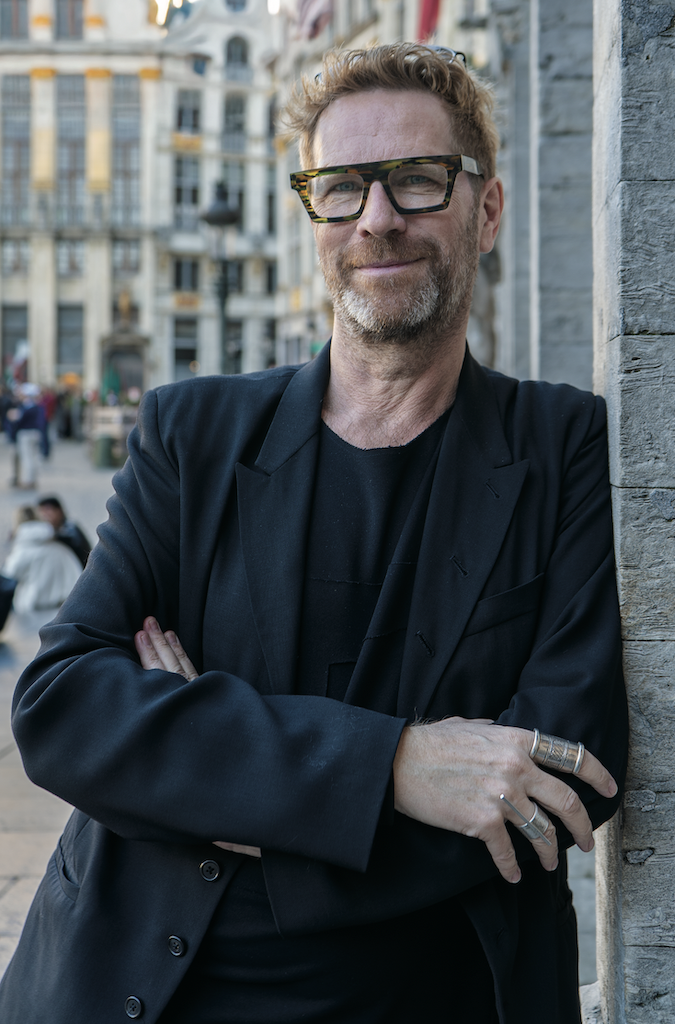
Over time, however, he observed a shift. “At the moment we treated and managed it like a classic event, and no longer directed it as a movement.” This transformation is at the heart of his concerns today.
Looking beyond Brussels, he points to the global context. “Today, our brothers in Senegal, and soon in Ghana, are put in prison. Our trans sisters and brothers in the USA are marginalized and punished, deprived of rights.” The contrast is difficult to ignore. “And we just party. A shame.”
His words are not a rejection of celebration, but a call to reconnect with the roots of Pride. The balance between joy and struggle, between inclusion and activism, remains fragile. “We must always give space to radicality. They are the ones who have changed and will change things,” he says. At the same time, he acknowledges the need for structure. “It must be negotiated and framed.”
What continues to define Brussels Pride, in his view, is its unique atmosphere. “The difference of Brussels with all the other Prides I have visited in the world is this convivial, connecting and combative side.” It is also one of the rare moments where communities come together across divides. “Maybe also because it is the only event where Walloons and Flemish people meet and celebrate together.”
Looking ahead, Alan does not believe Pride will lose its relevance. “A marginalized group will always be used so that the center can position itself,” he reflects. Which is why, he insists, these moments of collective presence will remain necessary. “A moment where we come together to empower ourselves will always be necessary.”
Between celebration and protest, between unity and tension, Alan De Bruyne’s Pride remains anchored in a simple idea. Pride is for everyone. But keeping it that way requires constant attention, courage, and care.
Because Pride is not only something we celebrate. It is something we build, together.
Pictures by Elena Leleu
KET Magazine is a community‑driven, non‑profit magazine run by volunteers and based in Brussels. You can find our other music and nightlife stories on ket.brussels, and you can always write to us to share your projects or pitch a story: info@ket.brussels
You may also like
-

At Liège’s Queer Families Festival, Every Family Has a Story
The third edition of the Queer Families Festival takes place on 11 October at the
-
Stanislawa: Building a Queer Future from Belgium’s Clubbing Past
Between Brussels and Amsterdam, DJ and producer Stanislawa turns 1990s trance, sensual techno and progressive-house
-

“After”: Listening to LGBTQIA+ Survivors Speak About Intimate Partner Violence
On 8 October, Tels Quels invites people to Les Grands Carmes in central Brussels for
-

Orlane on Amour Pluriel: The Rise of a Queer Belgian Pop Icon
Orlane has never hidden her queerness. In ROUGE À LÈVRES, desire for a woman slips
-
Liège’s Maison Arc-en-Ciel Needs Support to Keep Its Doors Open
Maison Arc-en-Ciel de Liège, a vital LGBTQIA+ community hub in Wallonia, is facing growing financial