

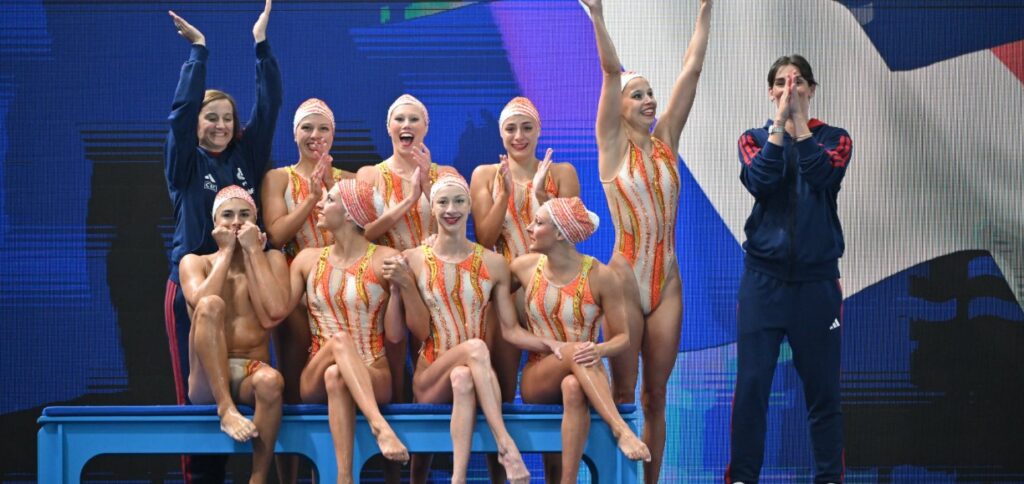
At just 17, Milan Violon has become the first man to represent France in artistic swimming at a major championship — a symbolic step in a discipline long coded as feminine. But his breakthrough at the European Championships in Paris-Saint-Denis also triggered a wave of sexist and hateful comments online. His story matters far beyond the pool: it says a lot about who gets to belong in sport, and how queer-friendly spaces are still being negotiated in public view.
A First That Breaks the Mold
Milan Violon’s appearance in the French team marks a turning point for artistic swimming, a sport that only recently opened the door to men at the highest level. According to the RTL source, rule changes in 2022 helped make mixed participation possible, and Violon’s selection in a European final made him the first man to represent France in the discipline at that level.
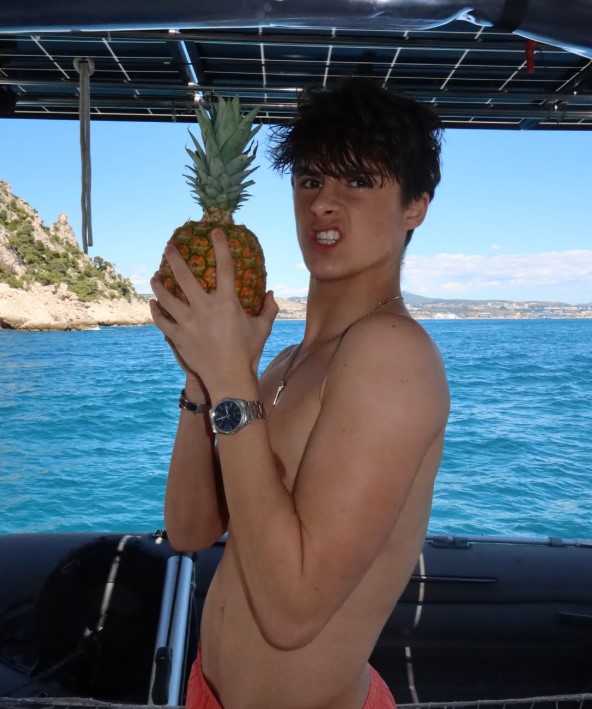
That alone makes his presence significant. For queer readers, it also resonates with a familiar truth: visibility can be powerful, but it can also make people a target when they challenge rigid ideas about gender, bodies, and “who belongs where.”
More Than Just One Athlete
What makes this story bigger than a sports headline is the social reaction around it. The French Swimming Federation condemned the comments directed at Violon as sexist, discriminatory, and hateful, calling his participation an important step for diversity and the evolution of the sport.
That matters now because queer and gender-nonconforming people still face policing in spaces that are supposed to be about talent, discipline, and teamwork. When a teenager becomes the centre of public backlash simply for being present in a team, it shows how much work remains to make sport genuinely inclusive.
Why It Hits Home In Belgium
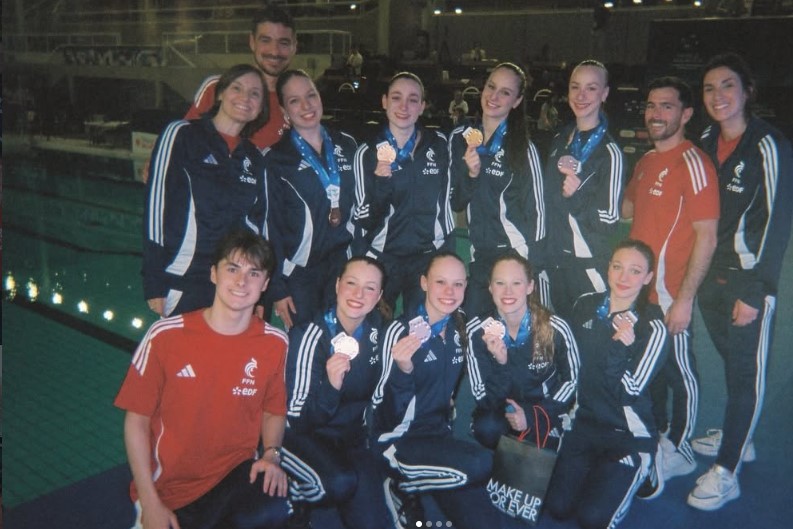
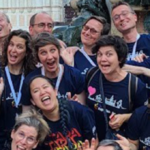
From Brussels queer sports clubs to bigger community tournaments, the local scene has long shown that sport can be something else: safer, warmer, more collective. Organisations like Brussels Gay Sports have built spaces around conviviality, diversity, inclusion, and openness — proof that athletic life does not have to be built on exclusion or gender stereotypes.
That context makes Violon’s story feel especially relevant in Belgium too. It reminds us that representation is not a nice bonus; it is part of how communities see themselves, claim space, and keep pushing institutions to evolve.
Practical Info
Milan Violon’s story comes from the European Artistic Swimming Championships held in Paris and Saint-Denis, where he competed with the French team in early August 2026. The RTL piece does not provide event access details, but it documents the key dates and the wider public debate around his participation.
If you want the broader local conversation around queer sport in Brussels, Brussels Gay Sports remains a useful entry point for inclusive activities and community events in the city.
Small reminder: progress in sport often starts with one person refusing to disappear. Milan Violon’s presence is one of those moments.
KET Magazine is a community‑driven, non‑profit magazine run by volunteers and based in Brussels. You can find our other music and nightlife stories on ket.brussels, and you can always write to us to share your projects or pitch a story: info@ket.brussels
You may also like
-
Türkiye’s LGBTQIA+ Community Faces a New Wave of Pressure
LGBTQIA+ people in Türkiye are living through a sharp escalation in state pressure: Pride events
-

Fiji Declares a National HIV Emergency — and the World Must Pay Attention
Fiji has declared a national HIV emergency after a dramatic rise in diagnoses: 2,016 people
-

Balkan Trafik! Turns Brussels’ Bourse into a Three-Day Balkan Universe
After a year away, Balkan Trafik! returns to Brussels from 19 to 21 November 2026
-

In Myanmar, the Spirit Wives Keep Dancing
Near Mandalay, in a country torn apart by civil war, the annual Taungbyone festival has
-
Back To Brussels? BGS Is The LGBTQI+ Sports Community Waiting To Meet You
September means fresh starts, new routines and, for a lot of people landing in Brussels