

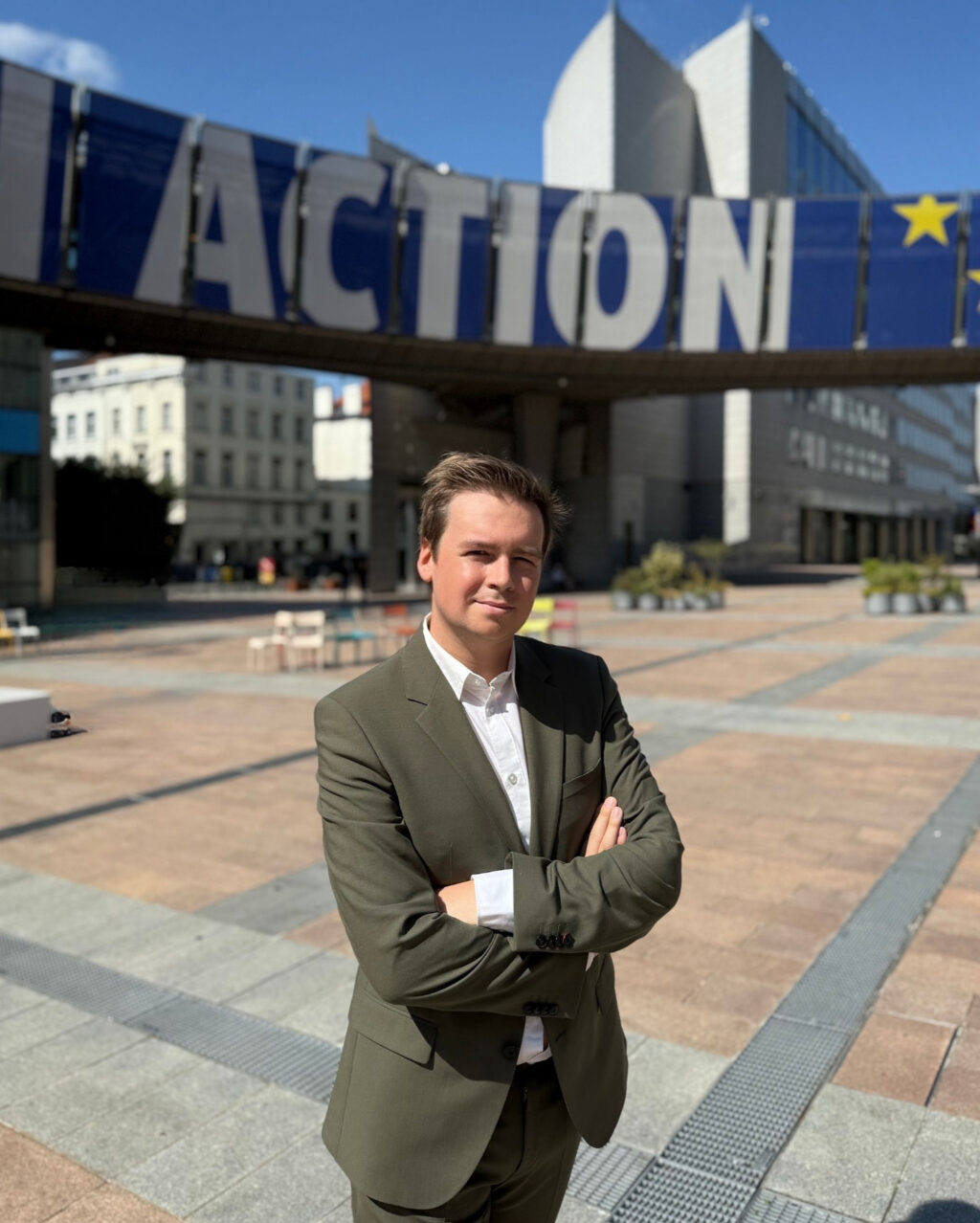
As Europe faces an increasing backlash against Diversity and Inclusion, LGBTQI+ rights are becoming a central battleground in wider political struggles. In this interview with KET Magazine, Remy Bony, Executive Director of Forbidden Colours, shares his insights on the current state of rights in Europe, the influence of Trumpism, and the resilience of civil society.
Q: How would you describe the current state of LGBTQI+ rights in Europe?
Remy Bony: We are at a turning point. For years, Europe presented itself as a global champion of LGBTQI+ rights, but that narrative is cracking. What we are witnessing is not just a backlash. It is a coordinated political strategy. LGBTQI+ people are being used as scapegoats to divide societies and weaken democracies. Hungary is the clearest example, but similar warning signs are emerging in Bulgaria, Romania, Czechia, Slovakia and Italy. At the same time, the global rollback of Diversity and Inclusion policies creates a dangerous feedback loop that legitimises those who want to dismantle equality. Progress still exists, but it is no longer guaranteed.
Q: Do political developments in the United States influence anti-LGBTQI+ rhetoric in Europe?
R.B : Absolutely. What we call “Trumpism” is not just about one individual. It is a political model that has been exported very effectively. European politicians increasingly use rhetoric mirroring United States culture wars, such as “gender ideology,” “protecting children,” or “parental rights.” These narratives are often coordinated and amplified across borders. More broadly, Trumpism has normalised the idea that democratic institutions are optional and that minority rights can be sacrificed for political gain. There is also concern that future United States policies could financially support anti-LGBTQI+ groups in Europe, further weakening progressive civil society.
Q: What are the consequences of organisations scaling back their Diversity and Inclusion commitments?
R.B : The consequences are immediate and tangible. When companies retreat from Diversity and Inclusion, LGBTQI+ employees face fewer protections and greater vulnerability, particularly in countries with weak legal safeguards. Externally, it sends a troubling signal that equality is optional. Many corporations previously limited their engagement to symbolic gestures like rainbow logos during Pride, without supporting LGBTQI+ organisations or speaking out against political attacks. As the political climate shifts, some are simply abandoning even that façade, emboldening governments and extremist actors to go further.
Q: How effective have European institutions been in protecting LGBTQI+ rights?
R.B : We need to stop pretending that European institutions are consistently effective. The European Union has become more conservative, and this has real consequences. The European Commission often relies on soft, non-binding initiatives rather than enforcing legally binding measures that would compel Member States to respect fundamental rights. Political hypocrisy also plays a role, with members of major political groups enabling anti-LGBTQI+ narratives without facing consequences. While important legal tools exist, particularly through the Court of Justice of the European Union, the Union is still reacting instead of leading. The main gap is not a lack of instruments, but a lack of courage.
Q: Despite these challenges, what gives you hope for the future?
R. B: What gives me hope is not the system, but people. Across Europe, we are witnessing unprecedented mobilisation. When Budapest Pride was threatened, hundreds of thousands showed their support. Activists are more connected than ever, and young people refuse to accept a rollback of their rights. There is also growing recognition that LGBTQI+ rights are a litmus test for democracy itself. Neutrality is no longer an option. Governments, companies and institutions must choose whether to defend fundamental rights or enable their erosion. Despite everything, one thing is clear. We are not going back into the closet.
You may also like
-
A bedside lamp, a shared kitchen, a new beginning: help build CADAL’s next queer home
The building is there. Now it needs the things that turn accommodation into a place
-

Bangkok, twelve points? Eurovision Asia is ready for its first big night
K-pop, beatboxing, folk-pop and a fresh set of national rivalries: Eurovision is taking its formula
-
US – A blue wave, new faces — and a gay man heading to the Senate
Democrats have won back control of the US House and Senate in the 3 November
-
Brussels Rainbow Village: More Than a Night Out
Just steps from Brussels’ Grand Place, the Saint Jacques neighbourhood is a place to meet,
-
Thirty-seven and still dancing: La Demence opens its birthday weekend at Fuse
La Demence turns 37 with three nights in Brussels, beginning at Fuse on Friday 30

