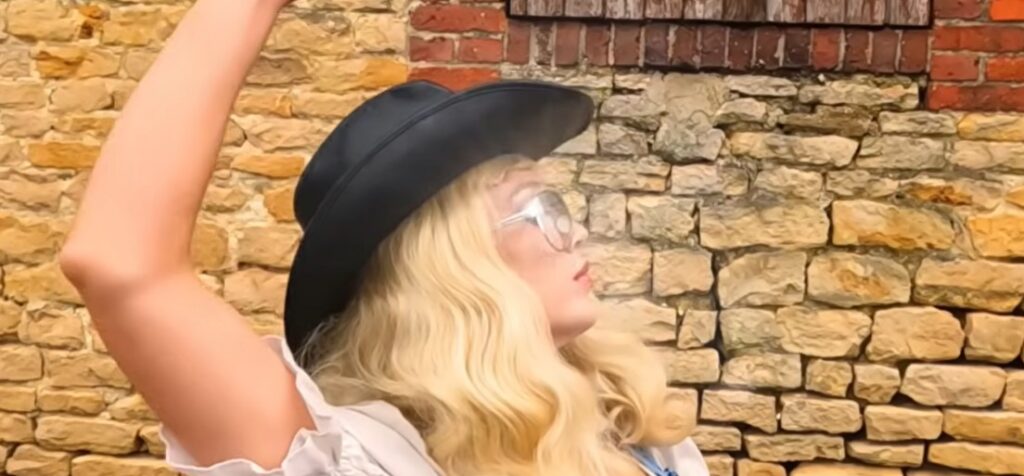
Sam Quealy does not simply walk on stage – she lands there, like a glitching pop alien in heels too high to be practical and charisma too big for the room. An Australian pop icon now based in Paris, she fuses disco, electronic music and futuristic glamour into something that feels tailor‑made for queer nightlife: high‑camp, hyper‑feminine, emotionally charged and a little bit dangerous.
A jawbreaker in pop form
Her second album, JAWBREAKER, takes its name from the cult candy – and the metaphor fits. Like the sweet, Quealy’s music is glossy, colourful and instantly addictive, but there’s a hardness underneath, a bite that keeps everything from becoming too smooth. Where her first record Blonde Venus (2023) explored explosive techno‑pop and underground experimentation, JAWBREAKER pushes her into a brighter, more luxurious dance‑pop universe.
The songs layer lush disco grooves with airy, celestial melodies, capturing the chaotic energy of the world around her without losing a sense of joy. Quealy is constantly walking a tightrope between sensitivity and subversion, excess and precision, which is exactly why her work resonates so strongly with LGBTQ+ listeners who live in that same tension every day.
Crafted between home studio and legend
Created with her long‑time collaborator Marlon Magnée (co‑founder of French band La Femme), JAWBREAKER was born somewhere between DIY intimacy and mythic history. Parts of the album were built in their home studio, others at the legendary Studio Ferber in Paris, where Serge Gainsbourg recorded in the 1970s.
This time, Quealy leaned hard into live instrumentation to carve out a more sumptuous, radiant sound. If Blonde Venus felt like discovering a secret rave in a basement, JAWBREAKER is more like walking into a neon‑lit ballroom filled with mirrors, strings, and synths that glow. She has described her debut as a space of pure experimentation, niche and underground; with this new record, she keeps that rebellious DNA but wraps it in something bigger, more cinematic.
A drag‑coded, hyper‑femme stage animal
On stage, Sam Quealy becomes a kind of pop cyborg: part masculine energy, part drag‑level hyper‑femininity. She has said that her performance persona feels like a caricature of womanhood – full of wigs, towering heels and exaggerated gestures – but beneath the excess there is a very real, very sincere presence.
It’s a combination many queer and trans fans recognise instantly. The way she occupies that “too much” space, turning it into power instead of shame, speaks to the same impulse that has always animated queer performance and drag: the right to exaggerate, to play, to be unreal in order to get closer to something emotionally true. Her shows are not just concerts; they’re a kind of permission slip to be loud, glamorous and vulnerable all at once.
Songs of desire, chaos and self‑invention
At the heart of Quealy’s work are songs about desire, passion and self‑assertion. She doesn’t pretend to have neat answers to the chaos she sings about, but she does insist on the right to feel everything – and to dance through it. That insistence makes her especially compelling for LGBTQ+ audiences, who are used to navigating worlds that demand we shrink ourselves.
In JAWBREAKER, the collision of glossy production and emotional intensity mirrors the way many queer people build themselves: layering beauty and armour, softness and sharp edges, humour and pain. Sam Quealy turns that process into sound and movement, giving us a heroine who is both pop fantasy and deeply human.
If you’re going to see her at Botanique
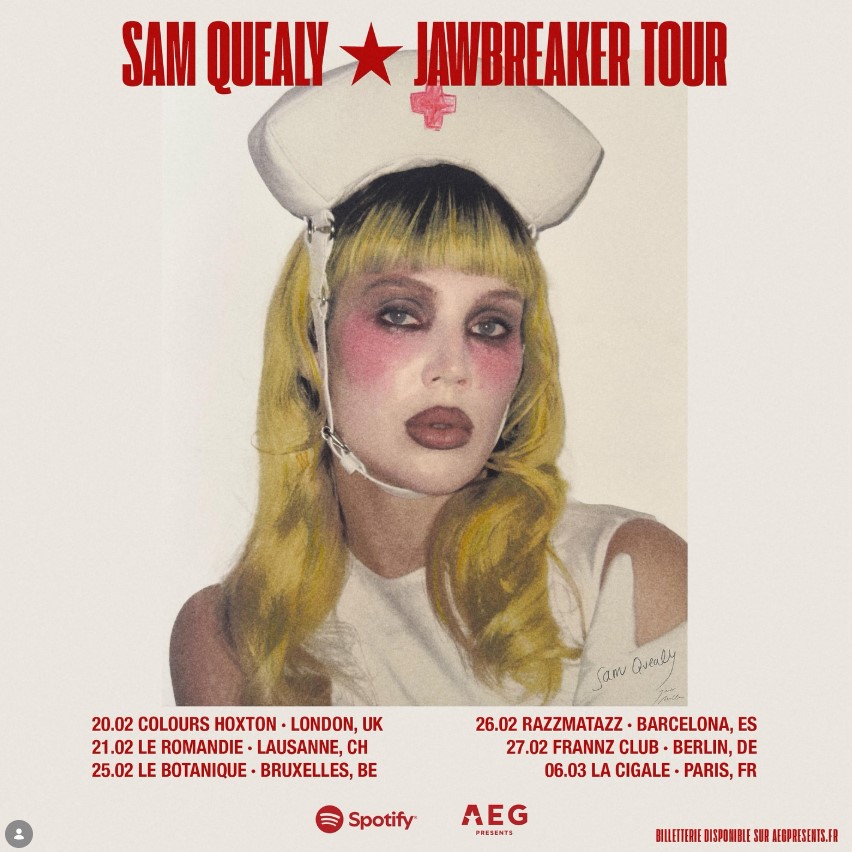
Catching Sam Quealy live at Botanique on Wednesday, 25 February 2026, is stepping into her universe for real: doors open at 19:30, but the transformation starts much earlier, in the way the crowd dresses, gathers and anticipates. Expect a show that feels part club night, part drag revue, part sci‑fi opera – and don’t be surprised if you walk out feeling a little bolder, a little shinier, and a lot more in love with your own chaos.
You may also like
-

This Friday at UMI: Baile TRAMA lands in Brussels
This Friday at UMI: Baile TRAMA brings Brazil’s underground to Brussels This Friday, UMI welcomes Baile TRAMA, a
-

Designing Childhood at Design Museum Brussels: how children shaped the future of design
From 1 April to 20 September 2026, Design Museum Brussels presents Designing Childhood. A History of
-

Clément Legrand at the Maison Arc-en-Ciel Liège: celebrating the beauty of the male body
Next Friday, April 3, 2026, the Maison Arc-en-Ciel Liège welcomes French artist Clément Legrand for a
-
THE VOTOS — A NON-EXHAUSTIVE ATLAS OF IMAGINATION
By Jean-Paul Lespagnard at La Verrière, Brussels Between Marrakech and Brussels, between craft and ritual,
-
Queer Writing Group: a nomadic playground for stories that don’t fit
Once a month, the Queer Writing Group turns spaces like literary house Passa Porta into
