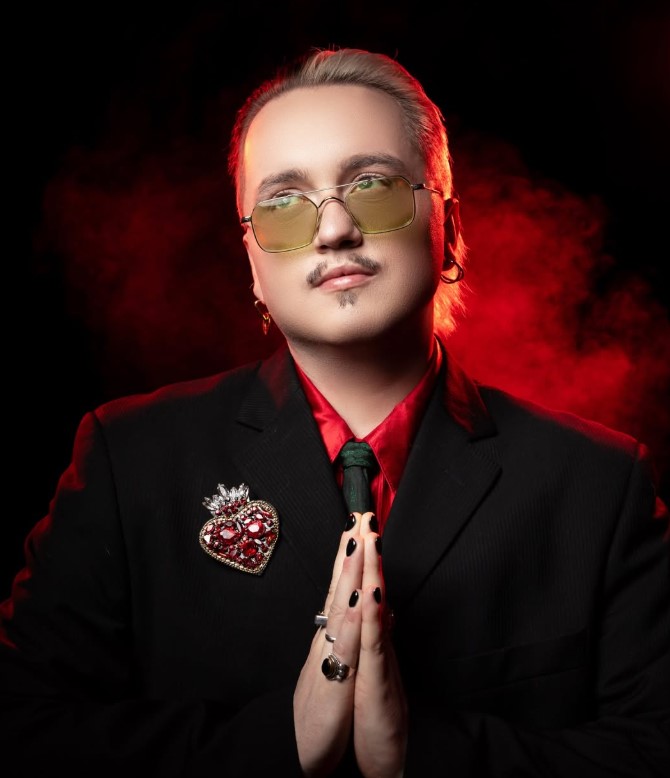
There’s a moment, somewhere between the cracked voice and the held note, when Antoine Delie stops being “that guy from TV talent shows” and becomes something else entirely. For queer audiences in Belgium and beyond, the Baudour‑born singer is slowly turning into something rarer: a pop artist who doesn’t just survive homophobia, but alchemises it into songs that hold you right where it hurts.
A queer kid from Baudour who never really left
Antoine grew up in Baudour, near Mons, and he never pretends otherwise. Even now that he’s based in Paris and bouncing between TV studios and recording sessions, coming back home is more than a weekend trip – it’s a ritual. He talks about his region as if it were a person he needs to check in on: two days with family, a walk through familiar streets, the kind of grounding that no streaming number can replace. For someone whose life is increasingly lived online and on stage, Baudour is the offline password.
That attachment to home matters when you listen to him as a queer artist. In a media landscape where queerness is often framed as a big‑city phenomenon, his story says something different: yes, you can be visibly queer, vulnerable and ambitious and still claim a small Belgian town as part of your DNA.
When the anthem turns into a target
In 2023, Delie sang the Belgian national anthem, La Brabançonne, at the Spa‑Francorchamps Formula 1 Grand Prix. What should have been a proud, slightly surreal gig – a queer, androgynous singer performing for petrol‑head crowds and global TV – quickly turned into a nightmare.
Once the broadcast ended, the push notifications started. Insults. Homophobic slurs. Voice messages dripping with contempt. Then the messages went further: death threats, fantasies of violence, letters sent to his grandparents’ house, people invoking Russia “to put us back in our place”.
He did what you’re told to do: he filed complaints, documented the harassment, tried to trust the system. “Nothing really happened,” he would later admit in interviews, adding that at one point he was afraid to go out in the street. Like so many queer and trans people caught in digital hate storms, he learned the hard way how slowly institutions move compared to the speed of online violence.
“André”: answering a hater with a piano
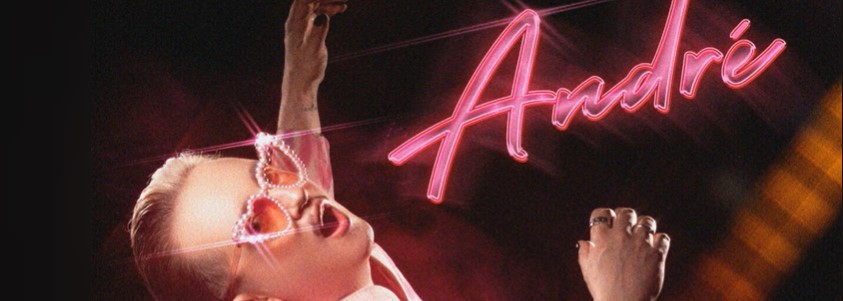
Out of that spiral came “André”, a slow‑burning, piano‑driven song named after one of his most vicious online attackers. The name isn’t there to glorify him; it’s a mask that stands in for every anonymous profile picture that thinks a screen is a licence to destroy.
On La France a un incroyable talent, Delie chose “André” as his calling card: just him, a piano, and this story of someone who has been pushed against the wall and decides to sing instead of disappear. The performance left the audience and jury visibly shaken, not because it was a tear‑jerker attached to a sob story, but because the anger in the song never turns into revenge.
Delie’s trick – and his quiet act of defiance – is to write from a place of tenderness. He doesn’t excuse what happened, but he refuses to become what the harassment tried to make him: bitter, smaller, silent. “André” is a love song in disguise: love for himself, for anyone who has ever been bullied off a platform, for all the kids watching who might recognise their own DMs in his lyrics.
From The Voice to queer visibility
French‑speaking audiences first met him on The Voice France in 2020, where his crystalline tone and openly queer styling made him stand out immediately. He made headlines performing Charles Aznavour’s “Comme ils disent”, a classic about a gay man’s lonely dignity, and used the occasion to speak about homophobia, respect and the right to exist without apology.
In an interview with LGBTQ+ magazine TÊTU, he spoke candidly about visibility: not so much about the ritual of a “big” coming‑out, but about refusing to slice his life in half for the cameras. “I’m a book that’s open,” he said in substance – if his sexuality is part of the story, it will be there, sung and said, not hidden in the margins.
That attitude matters in a French‑Belgian pop scene where queer artists still often get asked to “tone it down” or keep their pronouns neutral. Delie’s answer has been to lean into colour: glam‑rock outfits, gender‑fluid silhouettes, and a stage presence that owes as much to piano‑bar intimacy as to queer cabaret.
Singing for queer kids who haven’t found their voice yet
What makes Antoine Delie particularly resonant for LGBTQ+ audiences is that he doesn’t treat queerness as a branding accessory or as a single trauma point. It’s the air around his songs: the way he talks about fear of being judged, about shame and the slow work of learning not to judge yourself first.
Since he started speaking more openly about his queer identity, the hate hasn’t vanished; if anything, some of it intensified, especially online. But with “André”, and with the songs he continues to write, he’s trying to flip the script. The goal isn’t just catharsis for himself; it’s also a message to two audiences at once:
- To the harassers: this is not harmless, and it will not stay invisible.
- To the harassed: you are not alone, and what is happening to you is not your fault.
In a music industry increasingly flooded with algorithm‑generated tracks, Delie has been vocal about how saturated the landscape feels – and how strange it is to see AI listed as a quiet competitor when your very existence as a queer artist still triggers death threats. His answer, again, is stubbornly human: concerts, live emotion, songs that can crack on a high note because someone in the front row is crying.
Why his story matters
For queer listeners, especially in Belgium, Antoine Delie offers a recognisable mix of fragility and defiance: a small‑town kid who made it to prime‑time TV, paid the price in homophobic backlash, and chose to answer with a song rather than silence. His career is still unfolding – between TV shows, new releases and emotionally loaded hometown gigs – but the pattern is already clear: when the world shouts “too much”, he tends to sit at a piano and ask, gently but firmly, “not enough for whom?”.
Maybe that’s why “André” lingers long after the last chord. It’s not just a portrait of a hater; it’s a mirror held up to a culture that still treats queer visibility as something to punish. And in that mirror, Delie appears exactly as he is: voice shaking a little, eyes wet, refusing to look away.
You may also like
-

Benefit Party at Les Halles de Schaerbeek puts trans solidarity center stage
On 17 and 18 April, Les Halles de Schaerbeek hosts Benefit Party, a two-day fundraising event
-

Designing Childhood at Design Museum Brussels: how children shaped the future of design
From 1 April to 20 September 2026, Design Museum Brussels presents Designing Childhood. A History of
-

Mothers and Daughters: calling for memories, building a collective queer archive
Mothers and Daughters, Brussels’ beloved lesbian & trans bar and art space, is looking back on
-

Doel Festival: the ghost village that refused to die – and turned itself into a dancefloor
On 25 July, Doel Festival returns for its fifth edition and once again turns Belgium’s
-

Clément Legrand at the Maison Arc-en-Ciel Liège: celebrating the beauty of the male body
Next Friday, April 3, 2026, the Maison Arc-en-Ciel Liège welcomes French artist Clément Legrand for a
