
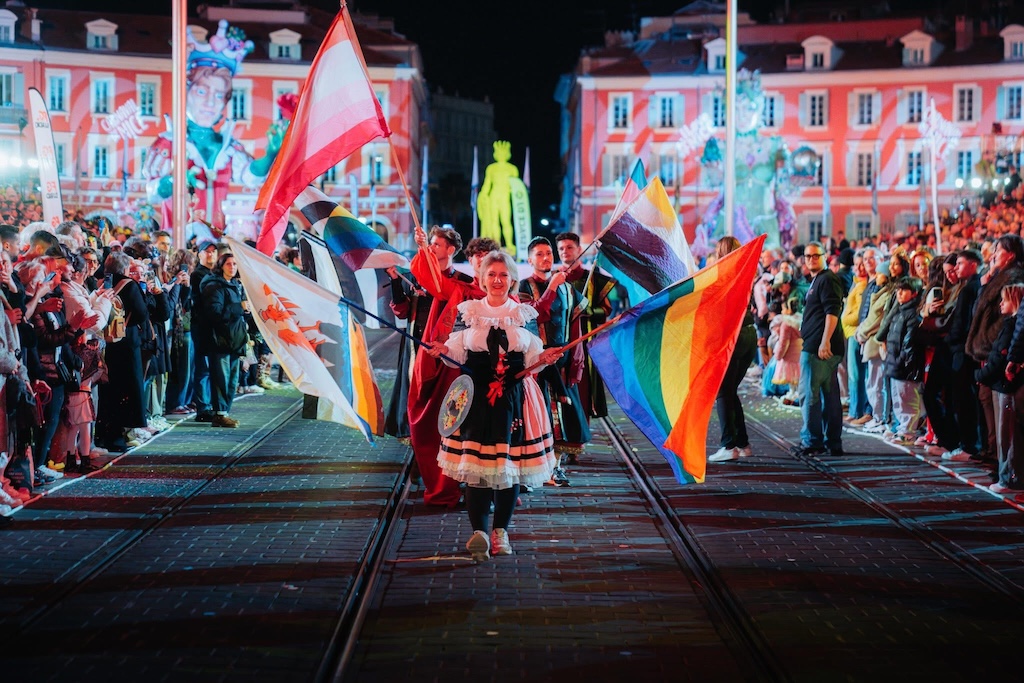
On February 27, Place Masséna in Nice became a queer epicenter. For its 11th edition, Lou Queernaval gathered 13,000 people at the heart of the official Nice Carnival. More than a celebration, the event demonstrated how LGBTQIA+ culture can occupy mainstream public space visibly, joyfully and unapologetically.
There are moments when a city subtly shifts. Nice felt different. The iconic Place Masséna, usually a postcard backdrop, transformed into a stage for queer visibility. 13,000 people gathered for Lou Queernaval, now fully embedded in the official Nice Carnival programme, one of the largest carnivals in the world.
Not on the margins. Not in a side venue. On the main square. For the organizing team, the aftermath was described as a mix of total exhaustion and absolute euphoria. Months of preparation culminated in one overwhelming image, a sea of bodies dancing under the Riviera sky.
“13,000 people on Place Masséna, 23 groups, 350 artists and volunteers… When you see that from the stage, you realize every month of preparation was worth it.”
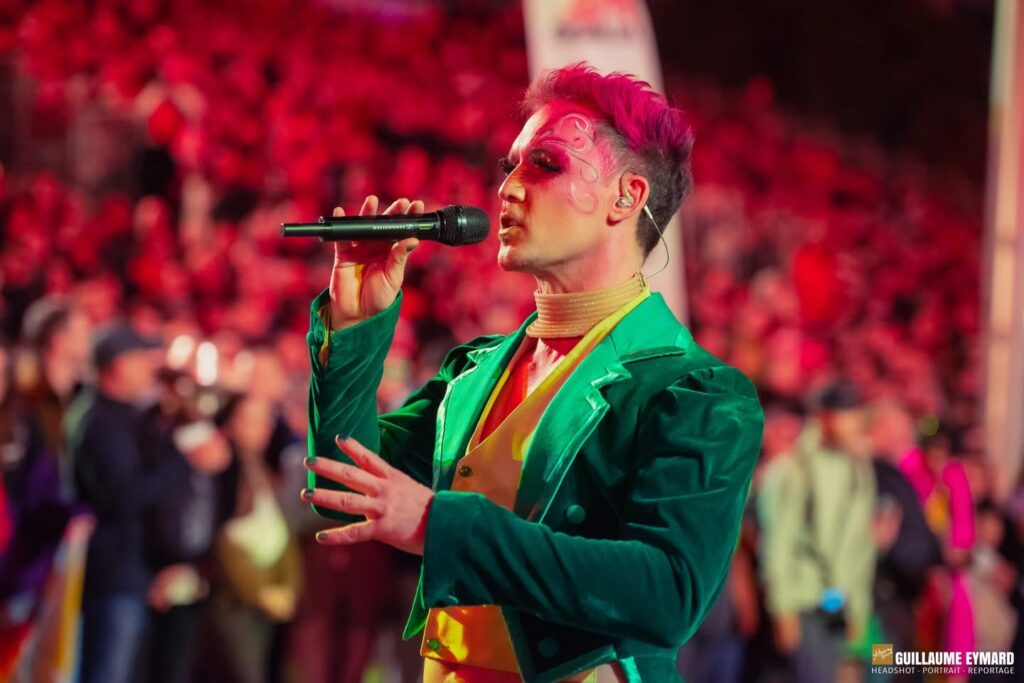
Lou Queernaval no longer needs to justify its existence. It asserts its legitimacy. This year’s theme, Vive la Reine!, was both playful and symbolic. Carnival, by nature, disrupts hierarchies and reclaims exaggeration. In 2026, femininity ruled. Queens of all kinds took over, Amazons, witches, African royalty, drag performers in towering silhouettes and sculptural makeup.
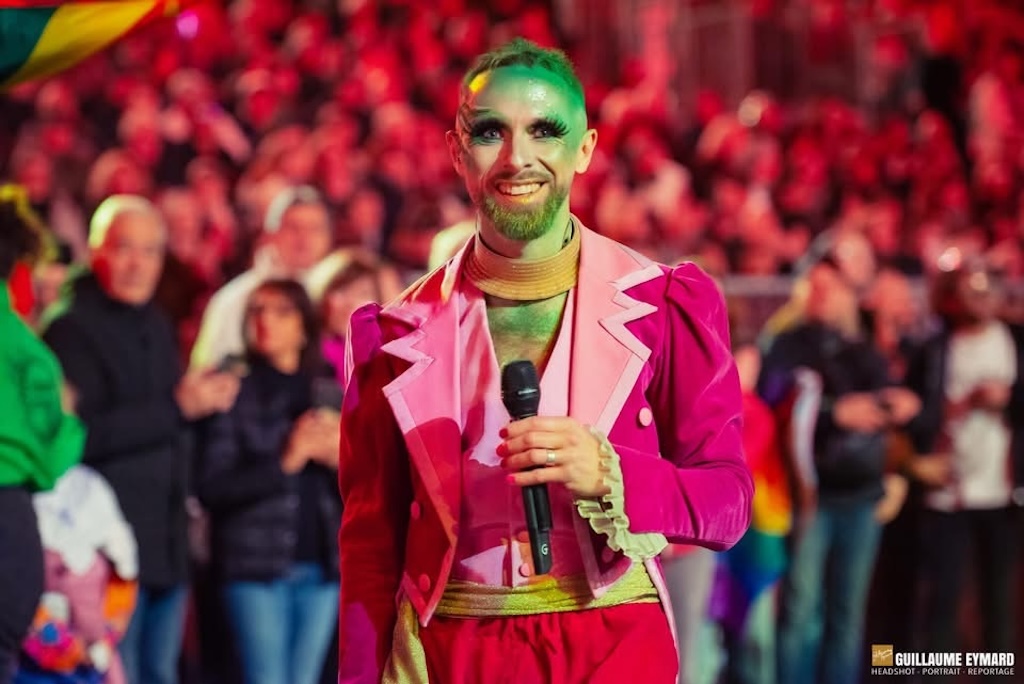
“Carnival is inherently transgressive… The theme of the Queen resonated because women are taking power, and within the LGBT+ community there has always been a strong relationship to femininity.”
The crowd did not simply watch. It embodied the theme. Costumes were elaborate, theatrical and bold. The boundary between audience and performers dissolved.
“People don’t just attend Queernaval anymore, they become part of it.”
One moment crystallized the night’s emotional charge, Dana’s coronation. A long time activist and historic organizer of Lou Queernaval, Dana was crowned Queen in a spectacular fifteen meter gown that flooded the stage in fabric and symbolism.
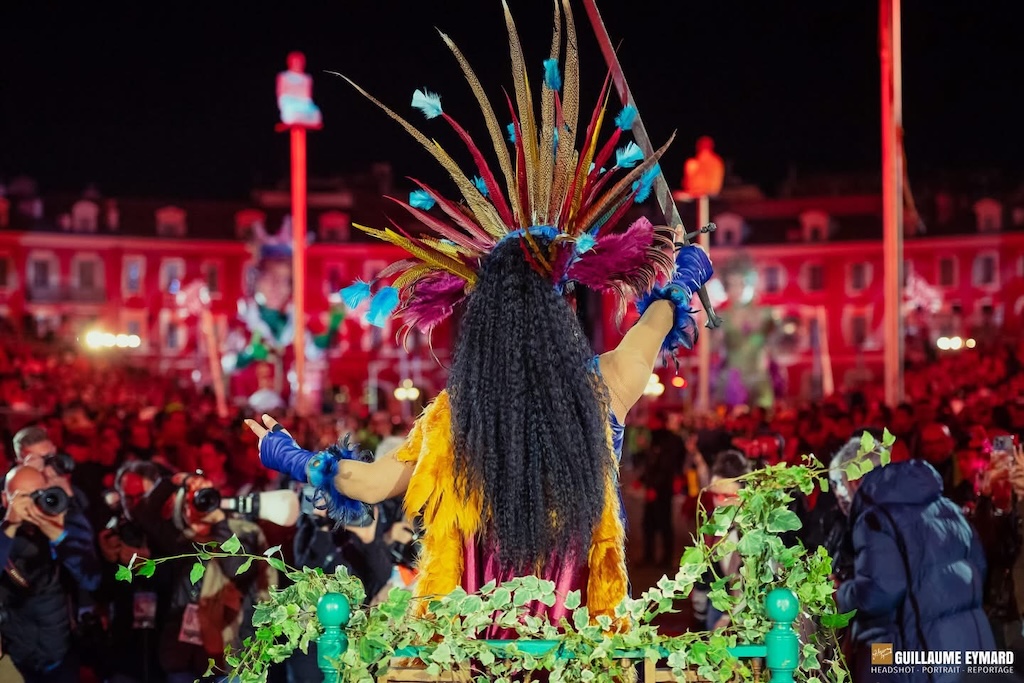
“Place Masséna held its breath and then exploded. Moments like that cannot be manufactured. They are earned. And Dana earned it.”
Beyond spectacle, it was an act of recognition. A community honoring its own. A reminder that behind glitter lies years of invisible labor, commitment and grassroots organizing.Behind the lights and sequins stood 350 artists and volunteers, supported by three local associations working for months to make the event happen. The scale is significant. So is the fact that Lou Queernaval remains free and open to all.
Lou Queernaval does not position itself as confrontation. It positions itself as coexistence.
“We don’t fight prejudice with speeches, we dissolve it through shared experiences.”
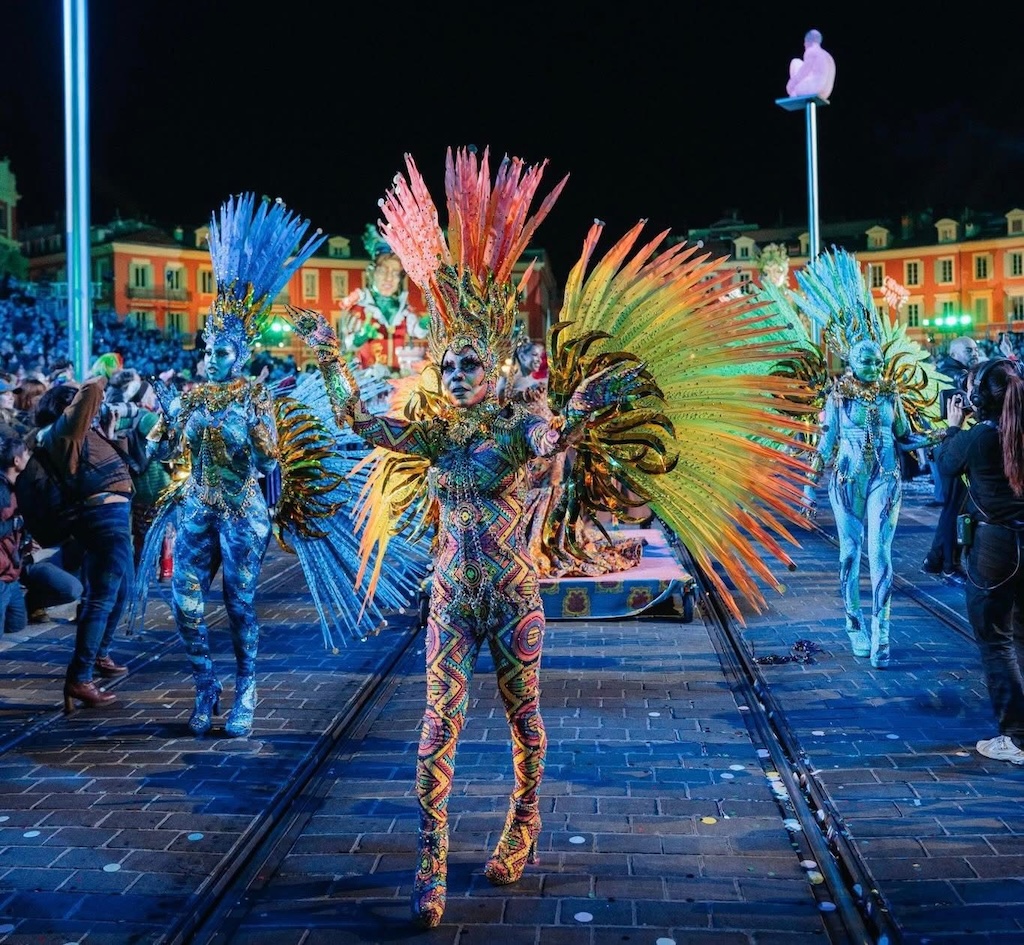
Families, tourists and locals of all backgrounds dancing together in one of France’s most traditional festive settings. That image carries weight beyond Nice. Because when queer culture occupies the heart of a major civic celebration, not as a niche add on but as an integrated highlight, it quietly redraws the boundaries of belonging.
“Lou Queernaval proves, year after year, that celebration can be a political act.”
In Nice, that political act looks like music, color, crowns and collective joy. And perhaps that is precisely why it works.
pictures by Guillaime Eymard
You may also like
-
FrancoFaune 2026: Brussels, Turn Up the Volume
From 1 to 11 October, FrancoFaune returns for its 13th edition, spreading French-language music across
-

Pink Screens Turns 25 — and Brussels’ Queer Cinema Is Still Coming Home Late
From 28 October to 7 November 2026, Pink Screens returns to Brussels for its 25th
-
Türkiye’s LGBTQIA+ Community Faces a New Wave of Pressure
LGBTQIA+ people in Türkiye are living through a sharp escalation in state pressure: Pride events
-
Fiji Declares a National HIV Emergency — and the World Must Pay Attention
Fiji has declared a national HIV emergency after a dramatic rise in diagnoses: 2,016 people
-
Circle Park Prepares One Last Summer Dancefloor in Brussels
Circle Park is bringing its summer season to a close with a two-day Closing Weekend