
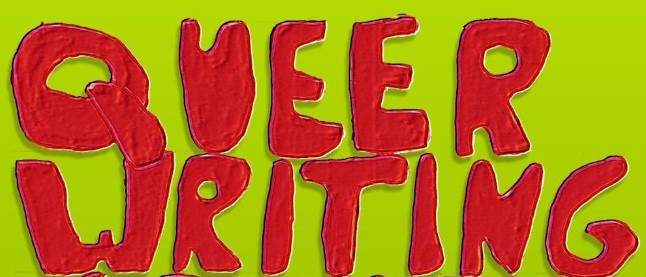
Once a month, the Queer Writing Group turns spaces like literary house Passa Porta into a low‑pressure, high‑care playground for anyone who wants to experiment with queer words on the page. No manuscripts, no hierarchies, no “proper” literature – just a safe space to write, read and mess around together, in English and any other language your stories need.
Launched by writer and researcher Pieter Delfosse, Queer Writing Group describes itself as a nomadic writing group: instead of staying in one venue, it travels between places like Passa Porta in Brussels and VONK & Zonen in Antwerp, sometimes popping up at festivals such as VERS VU. Sessions usually take place on Sundays from 11:00 to 13:00, creating a kind of queer literary brunch without the hangover – two hours where you can show up with nothing but a pen, a notebook and a bit of curiosity.
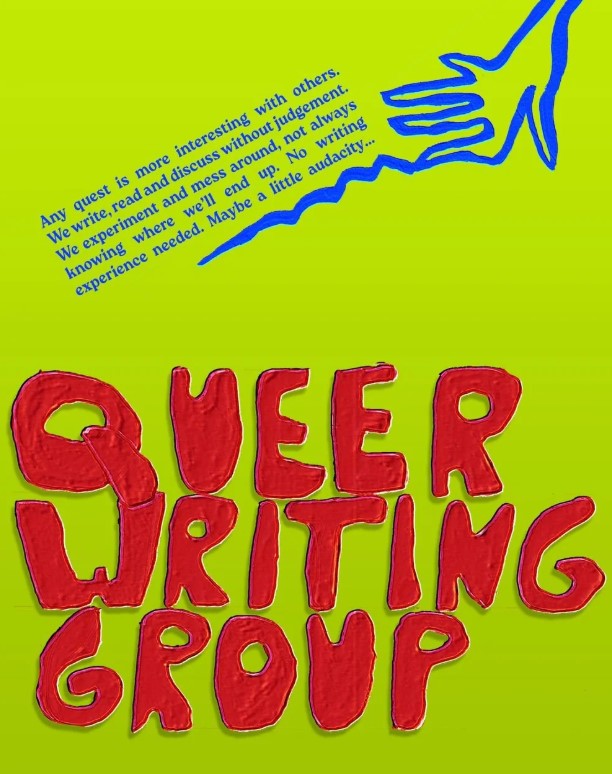
Image by Laïka Planchenault
The idea is simple: create a safe, non‑judgmental space to write and experiment with themes, forms and processes that do not always fit mainstream writing conventions. Through playful exercises – from dialogues to collage texts to things “that don’t have a name yet” – the group invites participants to push their practice into weirder, queerer territories. There is no expectation that you arrive with a finished project; in fact, a little audacity is more important than previous experience.
Crucially, Queer Writing Group is not a classic “creative writing course” and not the place to get professional feedback on your novel or poetry collection. Instead, it functions as a playground where you can mess up, start over, write badly and accidentally stumble on something that suddenly feels like your voice. Participants write together, read aloud (only if they want to) and discuss what emerges without grades, competition or the pressure to be “good enough”.
The sessions are facilitated in English, but everyone is free to write and read in whichever language feels right to them. That multilingual openness reflects the reality of Brussels’ queer communities, where tongues mix as easily as identities, friendships and references. It also means you can bring in fragments of dialect, Arabic, Dutch, French, Spanish, Wolof, Portuguese or any hybrid you live in, without having to justify or translate everything for a supposedly “neutral” readership.
In 2025–2026, Queer Writing Group is part of a broader RITCS research project called Writing queerly: Developing an authentic writing voice by playfully breaking the rules, which says a lot about its ethos. The goal is not only to offer a cosy Sunday activity, but also to think seriously about how queer writers – broadly understood – can claim space on the page by bending or ignoring the expectations of traditional literary worlds. For Brussels‑based queers who do not necessarily recognise themselves in mainstream publishing, this kind of playground can be a first step towards taking their stories seriously, together.
Useful links
– Fiche agenda visit.brussels (dates, infos pratiques, inscription)
https://www.visit.brussels/fr/visiteurs/agenda/event-detail.Queer-Writing-Group.584693
– Page officielle du Queer Writing Group (contexte, calendrier, présentation)
https://www.pieterdelfosse.be/queer-writing-group
– Page agenda RITCS (ancrage dans le projet “Writing queerly”)
https://www.ritcs.be/en/agenda/queer-writing-group
KET Magazine is a community‑driven, non‑profit magazine run by volunteers based in Brussels. Get in touch to share your thoughts or tell us about your activities. You can also promote your events on our website or support our work with a donation. Contact us at Info@ket.brussels.
You may also like
-
Endless Summer Camp: Scout Rules Meet Queer Desire at Balsamine
Summer might be over, but Sophie Guisset has other plans. From 19 to 28 November
-

Escher in Brussels: Who Said Reality Had to Behave?
Staircases refuse to play by the rules, birds become fish, and two hands draw each
-
When Nuns Go Pirate: A Queer Sacred Thriller at Varia
What happens when lesbian love, religious memory and horror theatre enter a locked convent—and refuse
-

Tels Quels Talent Show: Brussels’ Queer Voices Take the Mic
On Friday 16 October, the Tels Quels Talent Show brings live queer creativity to Les
-

CLELIA Turns Solitude Into a Shared Pop Therapy
The Brussels-based musician opens up to KET about mental health, queer visibility and her new