On 25 July, Doel Festival returns for its fifth edition and once again turns Belgium’s most famous “ghost village” into a one‑day, open‑air fever dream. At the heart of it all is not just a line‑up, but a place: Doel, a polder village almost wiped off the map by port expansion plans, now slowly coming back to life through electronic music, art and the stubborn imagination of the people who refused to let it disappear.
Doel is not your average festival site. Wedged between the Port of Antwerp and a nuclear power plant, the village lost around 98% of its inhabitants after decades of expropriations and building bans linked to harbour expansion projects. By the 2000s, its streets were lined with walled‑up houses, overgrown gardens and graffiti murals by artists like ROA and Ives, earning it the label of “Belgium’s ghost town”. For years, it looked like Doel would simply fade away – until residents, artists and activists pushed back, winning a political U‑turn that saved the village from demolition and opened the door to a different future.
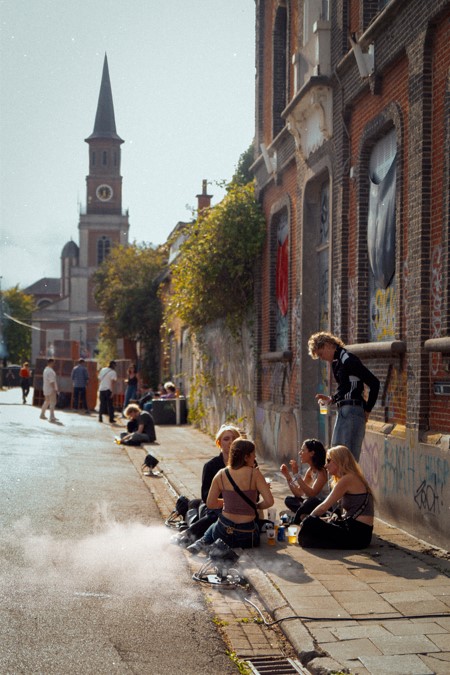
Picture : Fanny Bardin
Doel Festival was born from that turning point. From the start, the team behind it made one thing clear: this would not be just another techno party parachuted onto a “cool” industrial site, but a way to draw attention to Doel’s singular story – a story of adversity and hope, uncertainty and creativity. Each edition has deepened that link. As conversations about repopulating the village slowly re‑emerged, the festival began to imagine possible futures for Doel through scenography and installations scattered across its streets and empty spaces. For one day, the village becomes a temporary universe made of smaller worlds, a surreal landscape where nature, ruins and sound systems meet and where you can move between them as if drifting in a slow, collective dream.
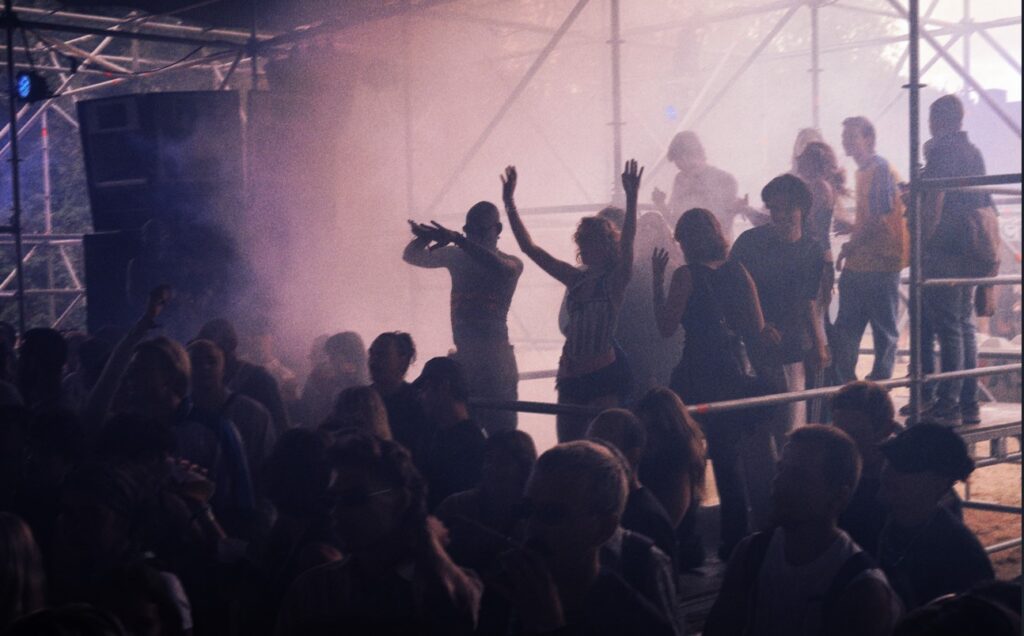
Picture : Ariane Kiks
The 2026 edition continues to stretch that imagination. The first 16 names already sketch out multiple directions: Detroit legend Kevin Saunderson joins his son Dantiez to present a rare live E‑Dancer show, bringing several generations of techno history to a village that almost fell off the map. Efdemin and nthng meet for a back‑to‑back that promises deep atmospheres and hypnotic rhythms, while Romanian key figure Rhadoo brings his patient, minimalist storytelling to the decks. On the more explosive side, BAMBII lands with her restless, bass‑heavy energy, and Sedef Adasï continues her rise with lively, genre‑jumping selections that blur house, techno, breakbeat and more. Together, they draw the first outlines of the many micro‑universes that will appear in Doel’s streets in July.
Beyond the music, Doel Festival is designed as a 14‑hour playground of encounters and small shocks. An open‑air art trail spreads across the village, responding directly to its architecture, history and layers of graffiti; a participatory market and pop‑up interventions create moments you are not likely to find on any timetable. You might move from a tunnel of sound in a former garage box to a quiet installation in front of a boarded‑up house, then turn a corner and land in a crowd losing it to a sunrise‑ready track. The village becomes “a place in rehearsal”, with no fixed script – just collective improvisation around a place that refuses to be reduced to an urban‑exploration backdrop.
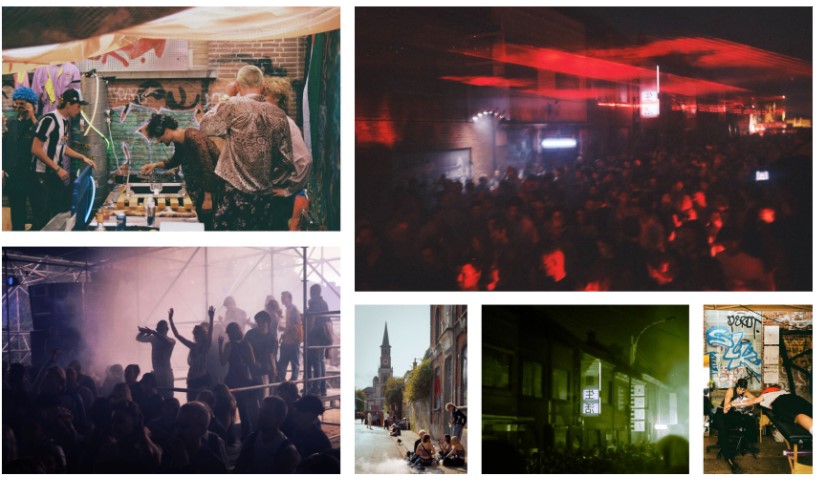
For Brussels‑based queers and clubgoers, Doel Festival sits at the crossroads of several current desires: to dance, yes, but also to get out of the city, to be in a space that feels different without flying to another country, and to support projects that take their context seriously. Doel’s story – a small community squeezed by logistics, industry and political games, yet still fighting for its right to exist – resonates with anyone who has ever had to justify their presence, their body or their joy. For one day in July, the village becomes a shared experiment: what happens when you give an almost‑abandoned place back to people, not as victims of the past, but as co‑authors of what comes next?
Useful links
– Site officiel Doel Festival (line‑up, tickets, story)
https://www.doelfestival.be
– Page “Music” et info 5e édition
https://www.doelfestival.be/music
– Contexte du village de Doel (histoire, village fantôme)
https://bruxellessecrete.com/en/doel-ghost-village-belgium/
https://www.brusselstimes.com/1652905/doel-the-village-that-refuses-to-disappear
KET Magazine is a community‑driven, non‑profit magazine run by volunteers based in Brussels. Get in touch to share your thoughts or tell us about your activities. You can also promote your events on our website or support our work with a donation. Contact us at Info@ket.brussels.
You may also like
-
Queer Writing Group: a nomadic playground for stories that don’t fit
Once a month, the Queer Writing Group turns spaces like literary house Passa Porta into
-
FLB 2026: Brussels’ book festival brings Amélie Nothomb, Sapkowski, Maïa Mazaurette & more to Tour & Taxis
FLB – la Foire du Livre de Bruxelles – is getting ready to turn Tour
-

Pink Screens turns 25: Brussels’ queer film festival that blows up the binary
For more than two decades, Brussels’ Pink Screens Film Festival has been twisting cinema into a playground
-
The Tunnels 2026: Brussels goes fully underground with Listen Festival & Hangar
Brussels is about to turn one of its busiest traffic arteries into a massive rave
-

My Own Private Idaho: the queer road movie that changed everything (and came with a dream cast)
Long before “mainstream” cinema dared to centre queer hustlers, chosen family and unrequited love between
