
While mpox (formerly “monkeypox”) seems to have disappeared from the headlines, the virus is still circulating quietly in Belgium and beyond. The overall risk for the general population remains very low, but health authorities point out that some communities – including a part of men who have sex with men (MSM) – are more exposed when a case appears. In this context, queer grassroots organisations like Ex Aequo play a crucial role in providing clear information on prevention, symptoms, testing and vaccination.
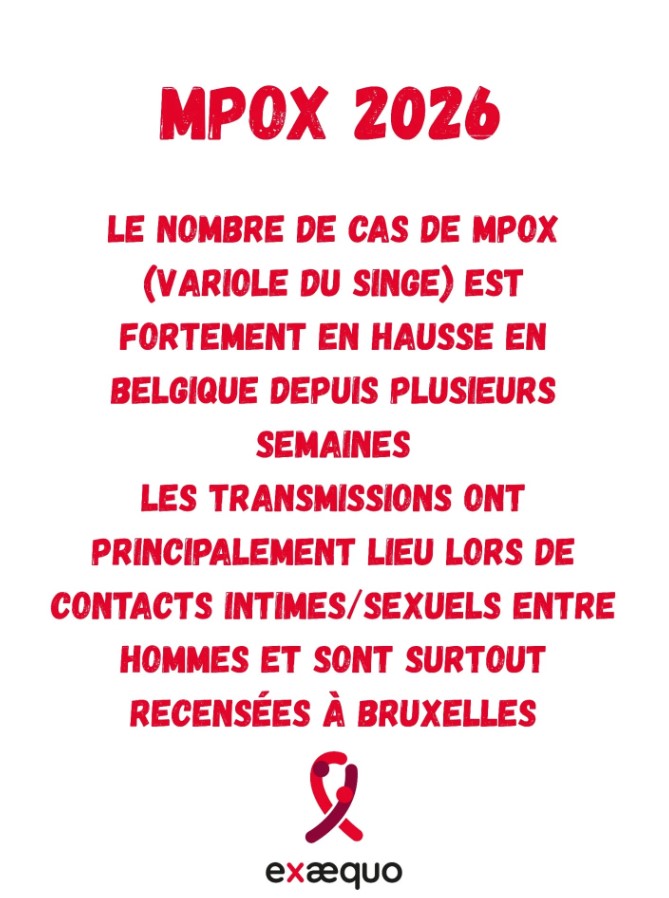
Where does mpox stand today?
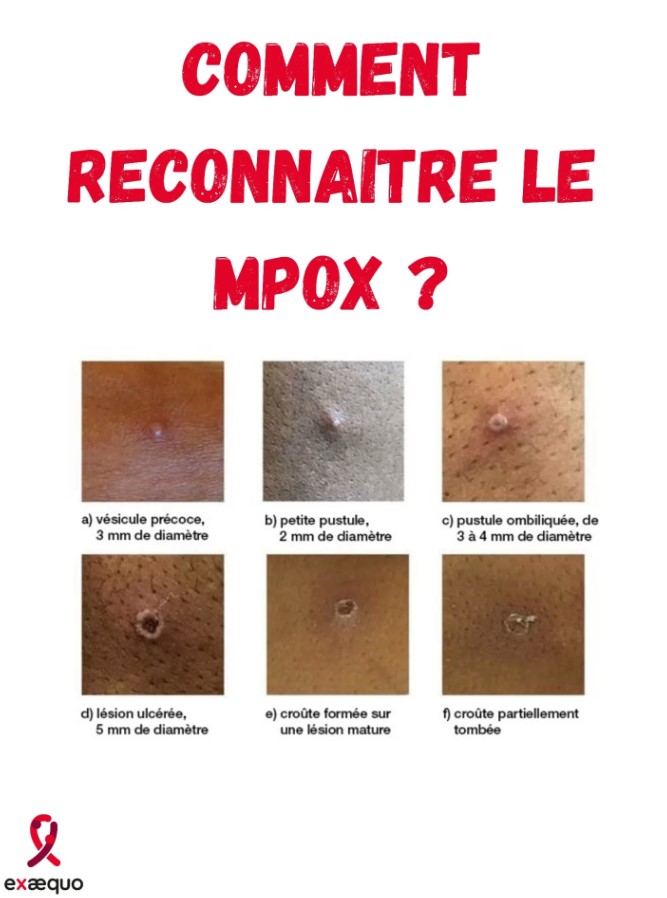
Mpox is a viral infection that usually starts with flu‑like symptoms (fever, fatigue, headaches), followed by a skin rash that often appears on the genitals, anus, face or inside the mouth. The virus is mainly transmitted through close physical contact with an infected person, including sex or prolonged skin‑to‑skin contact. Since 2023, Belgium has recorded relatively few cases, but the virus is still present and remains under close monitoring.
In 2024, a first infection with a new mpox variant (clade Ib) was detected in Belgium in a person returning from an African country where this variant is circulating, reminding everyone that importation risk is still real in a world of travel and mobility. The Belgian strategy therefore focuses on surveillance, targeted vaccination of people at higher risk, and community information rather than broad, population‑wide measures.
An infection that also affects queer communities
Even if mpox is not a “gay disease”, recent waves have disproportionately affected certain groups, in particular MSM, people with multiple partners, those who go to saunas, sex clubs or sex‑focused events, and people living with HIV or with weakened immune systems. In Brussels – a city where queer life is dense, festive and highly interconnected – a single case within a network can have wider consequences if prevention is not taken seriously.
Health authorities still emphasise a key message: the risk remains very low for the general population, and people who isolate quickly, seek medical advice and inform their partners help keep the situation under control. For the LGBTQIA+ community in Brussels, the challenge is to navigate between vigilance, solidarity and a clear refusal of stigma, as has already been the case with HIV and other STIs.
Prevention, symptoms, vaccination: what to do
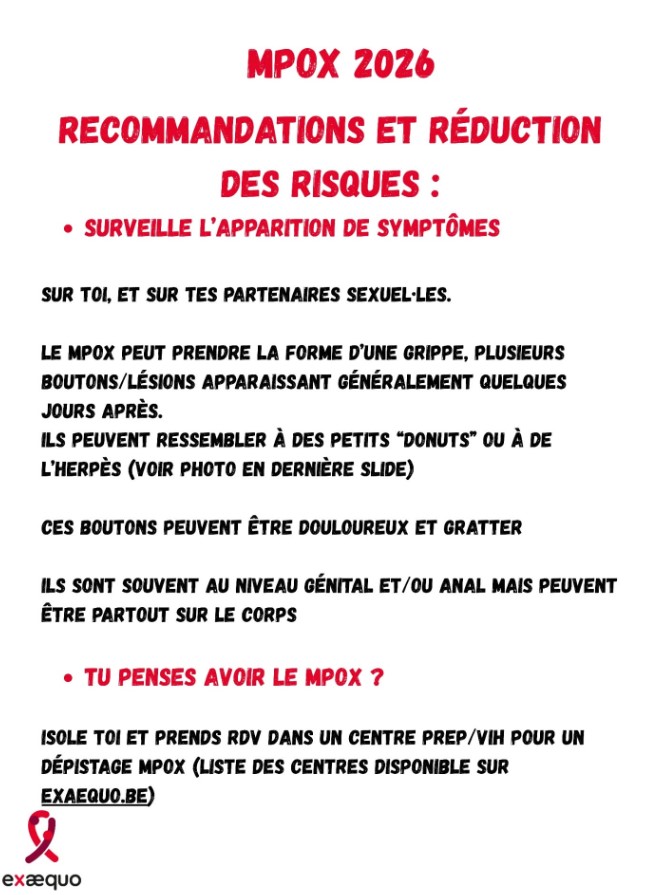
Current recommendations are pragmatic and straightforward: if you have symptoms (fever, swollen lymph nodes, fatigue, unusual skin lesions, genital or anal pain), you should isolate and contact your doctor or a specialised service, ideally by phone as a first step. Isolation and the identification of higher‑risk contacts help limit transmission while ensuring that people affected receive proper care and follow‑up.
Belgium has put in place a targeted vaccination strategy that prioritises those most exposed instead of vaccinating the entire population. In practice, this means that some people – depending on their sexual practices, health status or professional exposure – may be offered vaccination as a preventive tool or after a risky exposure. Recommendations on isolation and protection of healthcare workers remain broadly similar to those in place during the first wave in 2022.
The key role of organisations like Ex Aequo
In a context of post‑pandemic fatigue and constant media noise around every “new” virus, it is easy to downplay mpox or ignore it altogether. Yet grassroots actors like Ex Aequo continue to do quiet but essential work: sharing information about risks, safer sex, symptoms to watch for, where to get tested or supported, and how to access vaccination if you fall into a targeted group.
Their approach is community‑based, sex‑positive and non‑judgemental: it is not about shutting down queer sexualities, but about giving people the tools to make informed choices, spot problems early, protect partners and break transmission chains. In a city like Brussels, this kind of local relay is vital for circulating nuanced, on‑the‑ground information, away from alarmist headlines or overly technical messages.
Staying informed, protected and free from stigma
For the LGBTQIA+ community in Brussels, mpox is a reminder that sexual health is not just about HIV and the “usual” STIs. It means adding this virus to our safer‑sex toolbox, alongside condoms, PrEP, regular testing and vaccination. Staying informed, seeking medical advice when in doubt, talking openly with partners and relying on local community organisations are all ways of taking care of each other.
Health authorities insist that the situation is currently under control and that the risk of infection for the general public remains very low, while acknowledging that circulation of mpox in parts of Central and Southern Africa and the emergence of new variants call for long‑term vigilance. In between health‑measure fatigue, misinformation and the risk of queer bodies being stigmatised yet again, the challenge is to stay the course: no panic, no denial, and a strong sense of collective care.
Useful links
Community‑based sexual health support for LGBTQIA+ people – Ex Aequo
KET Magazine is a community‑driven, non‑profit magazine run by volunteers based in Brussels. Get in touch to share your thoughts or tell us about your activities. You can also promote your events on our website or support our work with a donation. Contact us at Info@ket.brussels.
You may also like
-

At Liège’s Queer Families Festival, Every Family Has a Story
The third edition of the Queer Families Festival takes place on 11 October at the
-

“After”: Listening to LGBTQIA+ Survivors Speak About Intimate Partner Violence
On 8 October, Tels Quels invites people to Les Grands Carmes in central Brussels for
-
Liège’s Maison Arc-en-Ciel Needs Support to Keep Its Doors Open
Maison Arc-en-Ciel de Liège, a vital LGBTQIA+ community hub in Wallonia, is facing growing financial
-
Garden Party de la Maison Arc-en-Ciel de Liège
Liège’s Maison Arc-en-Ciel is bringing back its annual Garden Party on Saturday 5 September 2026.
-
IGLYO Wants to Hear From You: Europe’s Biggest LGBTQI School Survey Is Back
IGLYO, the Brussels-based international LGBTQI youth network, has just launched the second edition of its