
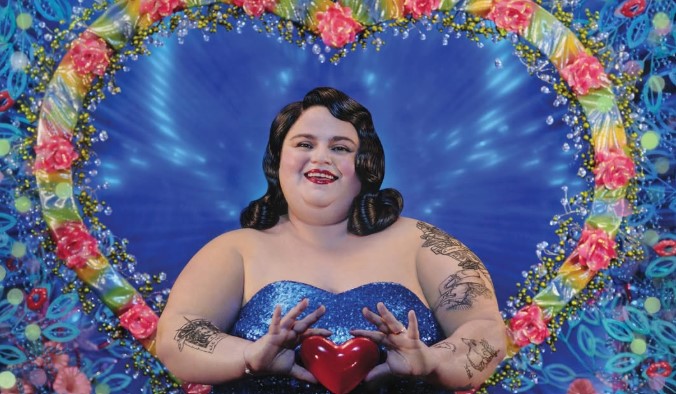
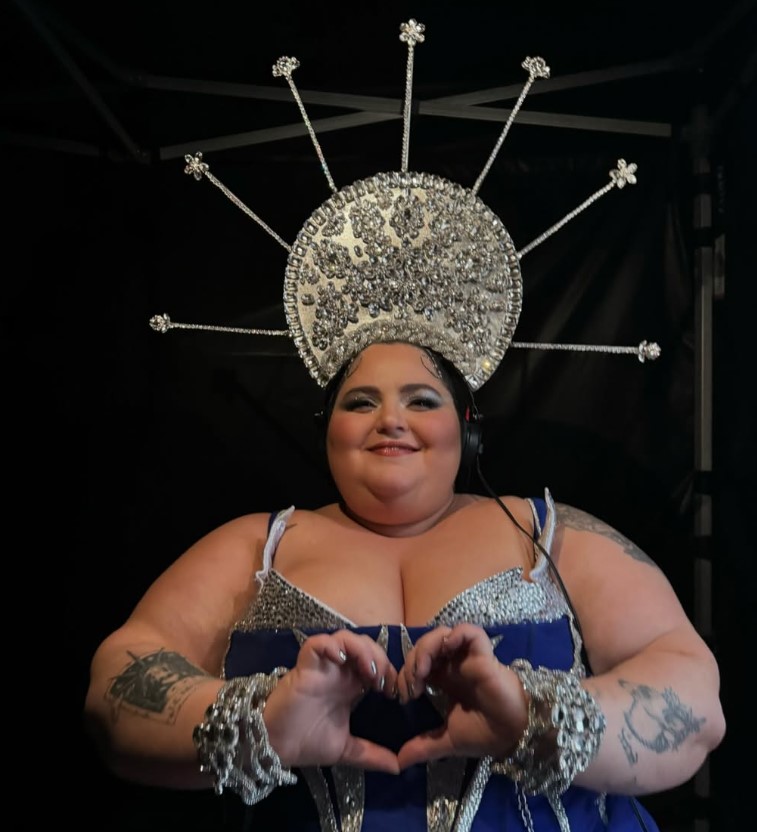
When a DJ set has to be stopped because a queer, fat, Jewish woman dared to sign a text against antisemitism, something is deeply off. What happened to Barbara Butch in Grenoble is not just “controversy”; it’s another example of how a lesbian, Jewish, fat artist becomes an easy target in a storm where actual nuance goes missing.
What happened in Grenoble
On Saturday night in Grenoble, Barbara Butch was playing at the Cabaret Frappé festival when her set was interrupted after about twenty minutes. Pro‑Palestinian activists, backed locally by La France insoumise, had been calling for a boycott of her show since May because she signed a tribune supporting the (since withdrawn) Yadan bill aimed at “fighting new forms of antisemitism”.
During the action, the city reported glass bottles and other projectiles thrown towards the stage, forcing the municipality to stop the concert “to guarantee the safety of the public, teams and everyone present”. Videos show people waving Palestinian flags, giving middle fingers and whistling while Barbara is on stage. An investigation has now been opened for “concerted obstruction of freedoms”; complaints from Barbara and city officials are in progress.
Read also : Barbara Butch: The Trailblazing DJ Who Turned the World’s Stage into a Celebration of Diversity
On Instagram, she reminded everyone why she’d signed that text: because she has been living with antisemitism “since childhood”, amplified after the Olympics, and because too many people are collapsing Israel’s policies and the fact of being Jewish into the same thing. “This way of attacking me is intolerable,” she wrote, sharing screenshots of the hate she receives.
A long line of attacks
This isn’t the first time Barbara Butch has been violently targeted. After her appearance in the Paris 2024 opening ceremony — crowning the “Festivité” tableau, on a bridge over the Seine, surrounded by drag queens, dancers and Philippe Katerine almost naked and painted blue — conservatives and far‑right figures turned her into a symbol of everything they hate: queerness, fatness, gender non‑conformity, and joy.
The scene was read by some as a parody of The Last Supper, a claim denied by artistic director Thomas Jolly but relentlessly amplified by reactionary media. What followed was a flood of sexist, lesbophobic, grossophobic and antisemitic abuse, including death threats and Nazi symbols; she filed complaints, and in November 2025, a Paris court sentenced four men, some to prison, for cyberharassment.
Barbara herself has spoken about wanting to “bury [herself] and disappear” in the middle of that storm, and about the heavy impact on her mental and physical health. Grenoble is not an isolated “incident”; it’s one more layer in a pattern where her body, identity and politics are treated as open season.
A politics of love and bodies that take space
And yet, what Barbara Butch puts into the world is the opposite of the violence she receives. As artistic director of Nuit Blanche 2026 in Paris, she placed the whole night under a giant red heart and called it a “great celebration of love”, centred on music, participation and accessibility.paris+1
“Choosing love is not being naive, it’s a deeply political choice,” she told AFP. “I’m thinking of love that is not just romance, but solidarity, encounter, care, joy. It’s an act of resistance.”
Her career is built on that resistance:
- a lesbian, fat, Jewish DJ and producer who has become a central figure of Parisian queer nights, from Rosa Bonheur to major festivals in Montreux and Sziget.
- a feminist activist who posed nude on the cover of Télérama in 2020 to denounce fatphobia, and again for Jean Paul Gaultier in 2021, her body partially covered in flowers.
- a newly named Chevalière de l’Ordre des Arts et des Lettres in 2025, writing: “Despite the difficulty, despite insults, harassment, I am here. Still fat, still Jewish, still lesbian — but more than ever proud.”
Her fight, as she sums it up, is “to unite all of us with our differences on a dancefloor that is free, joyful and full of love”.
Why this matters for us
For queer communities in Brussels and beyond, the Grenoble attack raises hard questions. It is absolutely possible — and necessary — to stand with Palestinians, oppose colonial violence and criticise Israeli policy without targeting individual Jewish artists with harassment, boycotts and physical intimidation. When the focus shifts from states and power structures to an artist whose work is about inclusion and care, lines are being crossed.
It’s also a reminder that antisemitism, fatphobia, lesbophobia and misogyny are never far apart. The same body that was attacked by the far right for “perverting” the Olympic ceremony is now being pushed out of a festival by parts of the left. In both cases, a woman who is fat, queer and Jewish pays the price.
Supporting Barbara Butch here doesn’t mean agreeing with all her political choices; it means drawing a line at personal harassment, intimidation and silencing as tools of “debate”. Queer spaces and festivals should be places where disagreements can exist without replicating the violences we claim to be fighting.
Standing with Barbara
Barbara Butch has spent her career building nights where people who are too often shamed off the dancefloor — fat bodies, trans bodies, disabled bodies, racialised bodies, poor bodies — can feel beautiful and loud. She’s taken that ethos from club basements to the Seine, to City Hall, to Nuit Blanche, and now she’s paying a heavy price for being visible in all those places.
From Brussels, we can:
- name the harassment and intimidation she faces for what it is
- refuse antisemitic shortcuts that conflate Jewishness with state policy
- hold on to the idea that love, care and dancefloors can be political acts without being naïve.
If you’ve ever felt saved, even for one night, by a fat lesbian DJ who played the right song at the right time and made you feel you belonged on that floor, you already understand why Barbara’s fight matters — and why she shouldn’t be standing in it alone.
KET Magazine is a community‑driven, non‑profit magazine run by volunteers and based in Brussels. You can find our other music and nightlife stories on ket.brussels, and you can always write to us to share your projects or pitch a story: info@ket.brussels
You may also like
-

Tels Quels Talent Show: Brussels’ Queer Voices Take the Mic
On Friday 16 October, the Tels Quels Talent Show brings live queer creativity to Les
-

CLELIA Turns Solitude Into a Shared Pop Therapy
The Brussels-based musician opens up to KET about mental health, queer visibility and her new
-

At Liège’s Queer Families Festival, Every Family Has a Story
The third edition of the Queer Families Festival takes place on 11 October at the
-
Stanislawa: Building a Queer Future from Belgium’s Clubbing Past
Between Brussels and Amsterdam, DJ and producer Stanislawa turns 1990s trance, sensual techno and progressive-house
-

“After”: Listening to LGBTQIA+ Survivors Speak About Intimate Partner Violence
On 8 October, Tels Quels invites people to Les Grands Carmes in central Brussels for