Dolly Parton has died at the age of 80, leaving behind an immense catalogue of country songs, films, philanthropy — and a legacy of radical kindness that reached far beyond Nashville. For generations of LGBTQIA+ people, she was more than the woman behind Jolene, 9 to 5 and I Will Always Love You: she was proof that someone could come from the conservative, religious American South, wear all the glitter, make all the jokes, and still choose love over judgement. Dolly did not merely become a queer icon by accident. She consistently made it clear that queer people belonged in her idea of family.
The girl from the Smoky Mountains
Dolly Rebecca Parton was born on 19 January 1946 in Sevier County, Tennessee, one of twelve children in a family living in deep poverty in the Great Smoky Mountains. Her father, Robert Lee Parton, worked as a farmer and construction worker; her mother Avie Lee Parton raised the family and filled their home with songs, stories and music.
Dolly’s early life was marked by material hardship, but also by a fierce belief in possibility. She began singing as a child, appeared on local radio and television, and moved to Nashville immediately after graduating from high school in 1964. There, she fought for a place in a country-music industry that often expected women to be decorative, compliant and grateful for whatever they were offered.
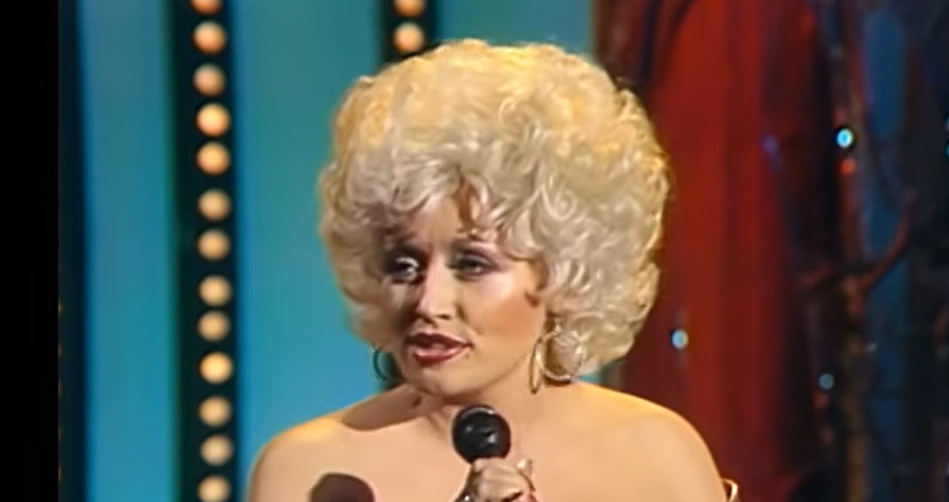
She did not become small to fit the room. She became bigger: a songwriter, singer, performer, actor, businesswoman and storyteller with an unmistakable look — huge blonde hair, rhinestones, nails, heels, curves and a smile sharp enough to puncture a sexist joke before anyone else could use it against her.
Her glamour was never empty. It was a form of self-invention.
A diva with a drag heart
Dolly Parton understood something that drag artists have always known: exaggeration can be truth-telling. The hair can be higher, the dress tighter, the make-up brighter — not because femininity is a joke, but because performance can expose the narrow rules people impose on gender.
She loved the connection. In 2012, Parton recalled slipping anonymously into a drag competition for Dolly Parton impersonators. She wore her own flashy outfit, walked on stage and lost. “They just thought I was some little gay guy,” she laughed, saying she received the least applause. Her response was not defensiveness, but delight.
She later joked that if she had not been born a woman, she would probably have been a drag queen. In 2019, she playfully reworked Jolene into “Drag queen, drag queen” during a television appearance. It was classic Dolly: never treating drag as a gimmick, never placing herself above the people who honoured her through their art.
For drag performers, the affinity made sense. Dolly’s image has always been camp in the richest sense of the word: spectacular, knowingly artificial, funny, emotional, excessive and completely sincere. She was glamorous without asking anyone to take glamour too seriously.
“Some are preachers, some are gay”
Dolly’s status as a queer icon was not only built on wigs, sequins and good one-liners. It was grounded in explicit support.
In 1991, during the AIDS crisis — when LGBTQIA+ communities in the United States were being devastated by loss and targeted with stigma — Parton released the song Family on her album Eagle When She Flies. The lyrics include a remarkably clear statement for a mainstream country star of that era:
Some are preachers, some are gay / Some are addicts, drunks and strays / But not a one is turned away when it’s family.
The language reflects its time, but the point was unmistakable: gay people belonged. Not conditionally, not after changing themselves, but as part of the family.
That message carried particular weight because of who was delivering it. Dolly was beloved in parts of America where queer people have often faced family rejection, religious condemnation and political hostility. She did not speak from a distant cultural bubble. She spoke in the language of home, faith and kinship that conservative communities understood.
Faith without judgement
Parton’s support for LGBTQIA+ people was closely linked to her Christian upbringing. Her grandfather was a Pentecostal preacher, and religion deeply shaped her early life. But she used that background to argue for compassion, not exclusion.
When asked about LGBTQIA+ rights, Dolly repeatedly returned to a simple principle: she was not God and she was not there to judge other people. “People are people,” she said. “We’re supposed to love one another for who and what we are.”
This made her an especially meaningful ally for queer people who grew up in religious environments. In many families, faith has been wielded as a weapon against LGBTQIA+ identities. Dolly offered another possibility: a faith rooted in generosity, humility and the conviction that love should not be rationed out according to gender or sexuality.
Her politics were often cautious, and she generally avoided attaching herself to party labels. That does not make every silence irrelevant. But her repeated public support, especially in a genre and region where speaking up could have cost her part of her audience, was real. She used her enormous popularity to say that queer people deserved dignity.
From country music to queer family
Dolly’s songs often centred people who felt underestimated, overworked, heartbroken or left behind. Coat of Many Colors turned childhood poverty into a story of pride and imagination. 9 to 5 gave working women an anthem against exploitation. Jolene made jealousy sound tender, desperate and almost mythic. I Will Always Love You became one of the great songs of letting go.
This is one reason her music travelled so strongly into queer life. LGBTQIA+ audiences have always recognised themselves in artists who transform pain into spectacle, vulnerability into survival, and rejection into a reason to keep going.
At gay bars, drag brunches, Pride stages and living-room lip-sync sessions, Dolly songs offered more than nostalgia. They made room for melodrama, humour and heartbreak — all the feelings that queer communities have had to turn into art in order to survive.
In 2023, she also spoke against attempts to restrict drag performances and anti-trans legislation, saying she wanted everyone to be treated well. Her words mattered because anti-drag panic was again being used to target queer and trans people in the United States.
A life of giving back
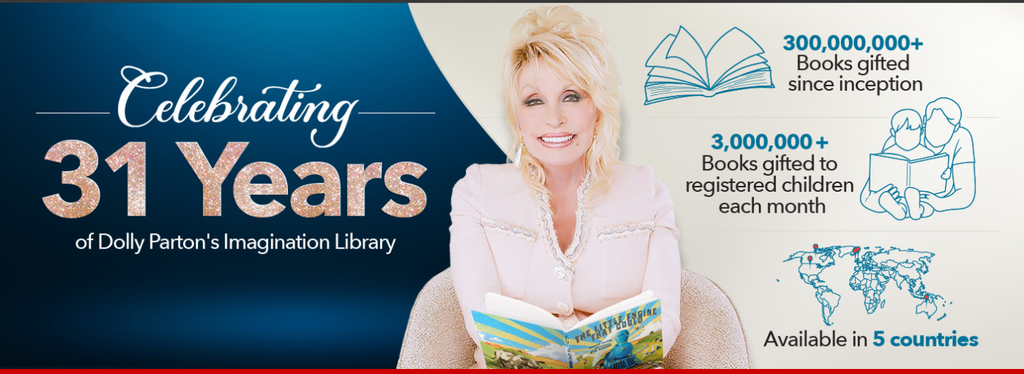
Dolly Parton’s public generosity was not limited to her music or advocacy. In 1995, through the Dollywood Foundation, she created Dolly Parton’s Imagination Library, a free-book programme inspired by her father’s inability to read and write. The initiative sends a book each month to enrolled children from birth until age five.
It is a very Dolly kind of legacy: personal experience turned into practical support for others. Her philanthropy reflected the same belief that runs through Family: people deserve access to possibility, care and imagination, whatever their background.
She also built Dollywood in Pigeon Forge, Tennessee, becoming a rare global star who invested in the region she came from rather than treating it as something to escape. That decision complicated easy stereotypes about the rural South. Dolly showed that you could love a place while still insisting it must become more generous, more creative and more welcoming.
Why Dolly still matters
Dolly Parton was not a perfect political figure, and she never claimed to be one. Her strength was not ideological purity. It was the extraordinary consistency of her empathy.
For LGBTQIA+ people, particularly those raised in conservative, rural or religious settings, her life offered a liberating contradiction. You could be Southern and queer. You could be Christian and affirming. You could love country music, glitter, softness, ambition, big feelings and big hair. You did not have to choose between your roots and your right to exist.
Her passing has been felt especially sharply in queer communities across the United States. At a gay bar in Washington, D.C., 28-year-old Cameron Austin — from Tennessee, like Dolly — wore a cowboy hat and boots in tribute. He told AFP that she had been with him from the beginning, and that her example offered hope to people whose families may not always have accepted them.
Dolly once said that she had always been accepted by the gay community because she accepted it first. The truth may be even warmer than that: queer people loved her because she saw us as family.
Practical information
Dolly Parton: Singer-songwriter, performer, actor, entrepreneur and philanthropist Born: 19 January 1946, Sevier County, Tennessee, United States Died: 25 August 2026, aged 80, in Nashville, Tennessee, after a brief battle with cancer, according to her representatives.cbc+1 Queer legacy: A long-standing LGBTQIA+ ally, drag inspiration and outspoken advocate for acceptance, remembered in particular for Family (1991) and its call not to turn gay people away from family.france24+1 Enduring projects: Dolly Parton’s Imagination Library continues its literacy work, distributing books to young children through its local partner network.tennesseelookout+1
Dolly may be gone, but the message remains gloriously intact: wear the rhinestones, tell the truth, love people as they are — and never let anybody make you feel too much.
KET Magazine is a community‑driven, non‑profit magazine run by volunteers and based in Brussels. You can find our other music and nightlife stories on ket.brussels, and you can always write to us to share your projects or pitch a story: info@ket.brussels