
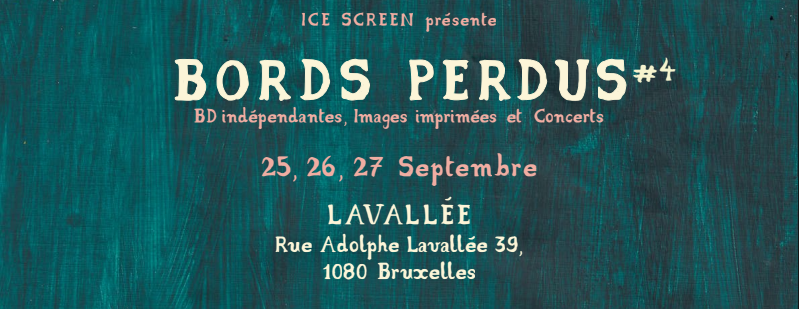
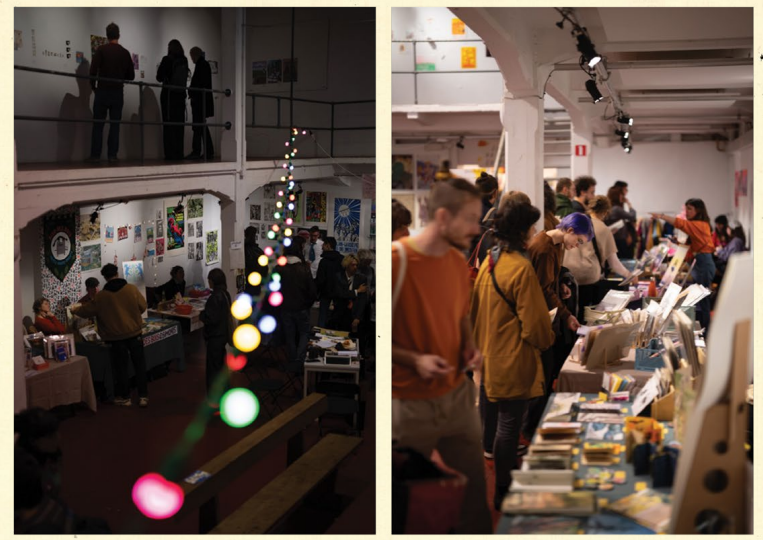
From 25 to 27 September, LaVallée in Molenbeek becomes a three-day home for independent comics, self-publishing, printed images and abrasive live music. Bords Perdus returns for its fourth edition at a moment when Brussels’ cultural landscape is losing funding, festivals and independent breathing space. With more than 60 artists and publishers, six exhibitions, talks, workshops and nine concerts — all on a pay-what-you-can basis — the festival makes a strong case for the margins as a place where new worlds are made.
When the margins become the main event
Bords Perdus is not interested in polished cultural consumption. It is a festival for people who love ink-stained fingers, zines passed hand to hand, badly filed ideas, loud gigs, strange images and projects that do not fit neatly into a marketable category.
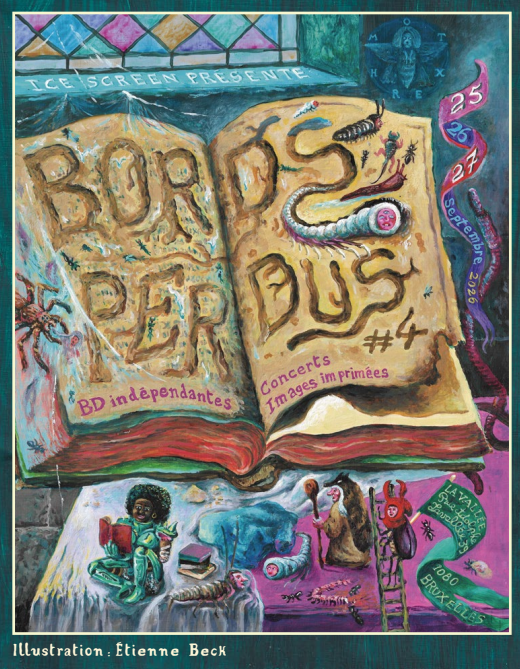
The festival is organised by ICE SCREEN, a Brussels collective active for more than a decade in screen printing, independent publishing and graphic creation. Its fourth edition brings together authors, illustrators, micro-publishers, printers, musicians, collectives and curious audiences at LaVallée, in Molenbeek.
This year carries a particular urgency. Bords Perdus originally grew alongside the Brussels Comic Strip Festival, creating visibility for independent publishing and the makers working outside mainstream comic-book circuits. Following the cancellation of the official festival, Bords Perdus has expanded its role in collaboration with part of the independent scene that previously found a platform there.
It is not trying to replace what has disappeared. Its ambition is more practical and more hopeful: keep a place alive where people can experiment, make, exchange, learn and imagine together.
Comics, zines and printed rebellion
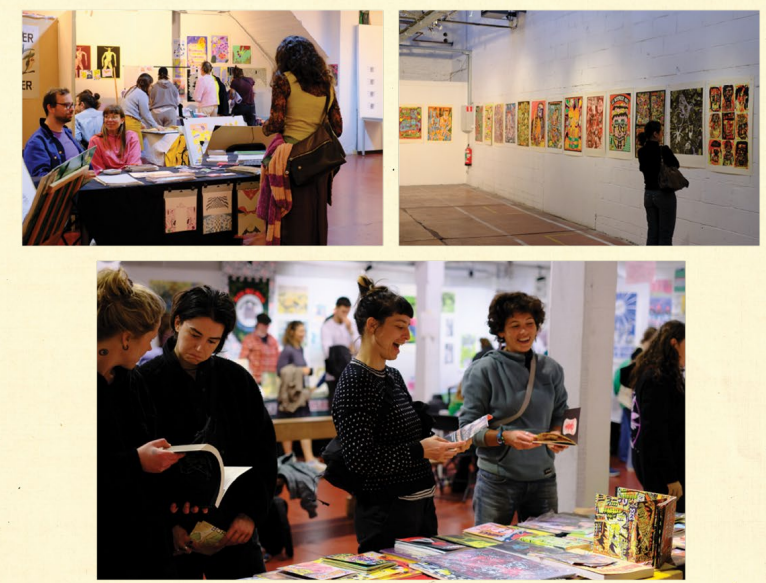
At the centre of Bords Perdus is a large independent publishing fair, bringing together more than 60 artists, collectives and publishers. The line-up includes Brussels names and international guests working across comics, illustration, graphic design, risograph printing, screen printing, experimental publishing and artist books.
Among the participants are L’Employé du Moi, Les Requins Marteaux, FRMK, Atelier Sabordage, Animal Press, Cata — Les Ateliers de la Survie, Les Succubes, Or.dure Éditions, Riso des Bois, Super Loto Édition, ICE SCREEN and many more.
The festival’s focus on micro-edition matters because small-run publications have long been a queer tool. Zines, comics, pamphlets and DIY print have offered ways to circulate stories when traditional media, galleries and publishers were unwilling to make room. They can be cheap to produce, personal in tone, politically direct and passed through communities without asking for permission.
Bords Perdus is not branded as a specifically queer festival. But its commitment to independent voices, marginal practices, collective making and aesthetic diversity creates fertile ground for queer audiences, artists and allies. It recognises that cultural freedom is not only about who is represented on a poster; it is also about who has the tools, time, money and space to tell their own story.
Exhibitions with something to say
The festival’s six exhibitions move between surrealism, queer irreverence, migration stories, hospital corridors and a tribute to a key figure in French-language graphzine culture.
Fungirl: chaos, feminism and queer absurdity
One major highlight is Elizabeth Pich’s Fungirl*. Pich’s infamous anti-heroine is described as a gloriously chaotic mix of slapstick, trash humour, feminist energy and queer irreverence. After the first Fungirl book and several side adventures, this new instalment follows the lanky, accident-prone protagonist as she tries to help her former boss, Adam, while becoming caught up in an absurd turtle-racing mafia plot.
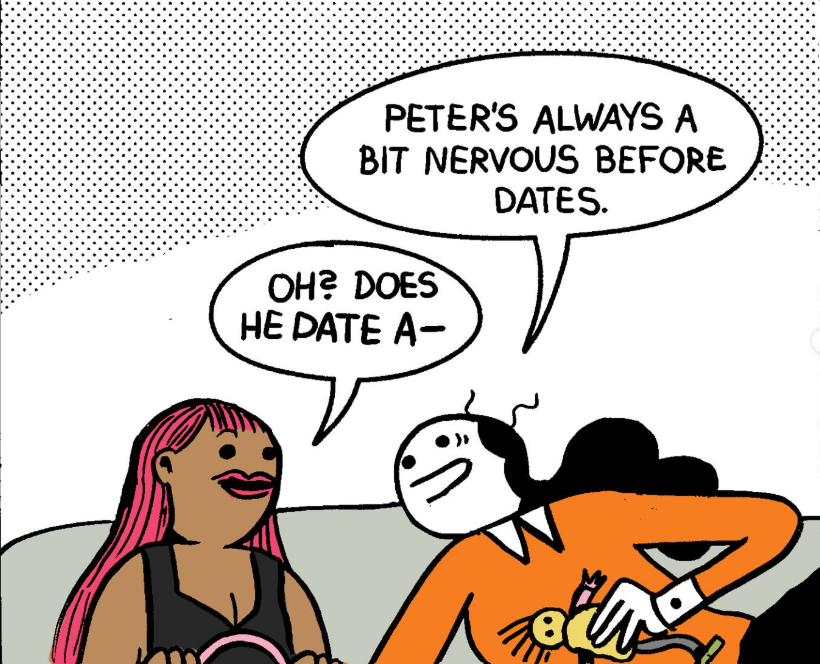
The work is a welcome antidote to respectability. Fungirl is messy, excessive and often ridiculous — precisely the qualities that can make queer and feminist art feel freeing. It refuses the demand that marginalised characters must always be morally exemplary in order to deserve space.
ID. Noires: drawing exile together
With Baraka Grafika’s ID. Noires*, Bords Perdus shifts into a different register. The exhibition presents 72 illustrated pages made collectively by eight people, including artists involved in Brussels’ undocumented-migrants movement, La Voix des Sans-Papiers.
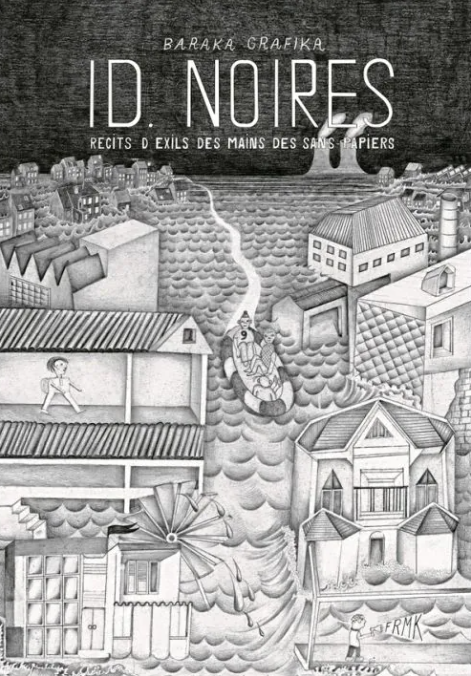
The project began in 2020, when four emerging artists and four asylum seekers came together to exchange stories, images, anger, humour and lived experience. The result is neither a simplified “migration story” nor an external gaze on exile. It is a shared graphic language about administrative violence, precarity, borders, waiting, resistance and the right to tell one’s own story.
That approach is especially important in Brussels, where migration is often discussed through numbers, files and political slogans. ID. Noires brings back what bureaucratic language routinely erases: the emotional cost of uncertainty, the exhausting repetition of procedures and the lives unfolding in between.
A public conversation around the project will take place on Sunday, offering space to discuss collective creation, testimony and comics as a practice of resistance.
Other worlds on paper
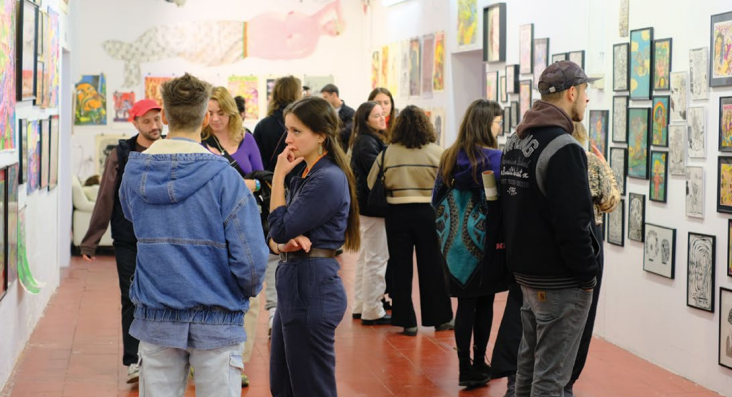
Other exhibitions include:
- Margaux Meissonnier’s Le Parc Saint-Rien*, a surreal and gently absurd story of work, hierarchy, gardens and emancipation.
- Mathis Besson’s Les Couloirs*, created from his time as a hospital porter, combining daily drawings and writing on illness, care, waiting, pain and tenderness.
- Le Jardin des Bords Perdus by Étienne Beck and Valfret, a collaborative large-scale painted installation born from a long-distance, four-handed process.
- Hommage, a tribute to Olivier Allemane, the painter, screen printer and publisher who died in February. His table, books and a small altar of printed works will honour a singular figure of the francophone graphzine scene.
Nine concerts, no genre police
Bords Perdus also becomes a noisy, unruly music festival after the print tables close. Across Friday and Saturday, the programme brings together nine concerts and live performances ranging from improvised experimental techno to noise, post-industrial club music, distorted dancehall, folk-rock, spoken word and raw electronic sets.
OJOO, the Morocco-born and Brussels-based DJ formerly known as OJOO GYAL, brings sets that move through old-school dancehall, dub, reggaeton, dembow, grime and more abrasive sonic territories. Elaina Vierce, active in underground scenes from Argentina to Brussels and co-founder of feminist duo Savvat, works with industrial textures, noise, distortion and constantly shifting rhythms.
Saturday includes Summer Satana, whose live practice turns ecocide anxiety, queer anger, empowerment and dystopian imagery into a cathartic collision of voice, analogue machines, distorted percussion and sci-fi-goth club energy. The line-up also features Les Françoises, a DIY techno trio blending stories, altered voices, modified toys, 8-bit sounds, hardcore kicks and absurd humour.
Elsewhere, Leya Touch presents a hypnotic live set built around voice, percussion samples, analogue layers and deep bass. Her new performance imagines the party as a collective zone of suspension, resistance and reinvention — a place where bodies can release and vibrate together.
For queer people, these kinds of hybrid line-ups can feel especially at home. They reject the idea that a cultural event must stay in one lane — “comics over here, music over there, politics somewhere else”. At Bords Perdus, a printed zine, an archive of migration stories and a noisy club set can all belong to the same ecosystem.
Making culture without pretending it is easy
There is a political reality behind the festival’s joy. Brussels’ independent cultural spaces are under pressure: public funding is tightening, large events are disappearing and projects that are not designed to generate profit remain vulnerable.
Bords Perdus addresses this without turning its programme into a funeral for what has been lost. Its answer is to make something collective and concrete: support artists and micro-publishers, pay contributors fairly, create encounters between established and emerging makers, and keep access open through a pay-what-you-can entry model.
The organisers expect more than 2,000 visitors across the weekend. But the meaningful number may be the 64 artists and publishers who will have a place to show, sell, exchange and connect — alongside the many visitors who may discover that the cultural margins are not peripheral at all.
Practical information
What? Bords Perdus, a multidisciplinary festival of independent comics, printed images, micro-publishing and alternative music
When? Friday 25 to Sunday 27 September 2026
Where? LaVallée, Molenbeek-Saint-Jean, Brussels
Programme: Independent publishing fair, six exhibitions, four talks and performances, participatory workshops and nine concerts
Highlights: Elizabeth Pich’s Fungirl; Baraka Grafika’s ID. Noires; Le Parc Saint-Rien by Margaux Meissonnier; concerts by OJOO, Elaina Vierce, Summer Satana, Leya Touch, Les Françoises and more
Admission: Pay what you can
Scale: Fourth edition; more than 60 artists and publishers; over 2,000 expected visitors
Accessibility: The organisers present Bords Perdus as an accessible and inclusive event. Check LaVallée’s venue information directly for detailed access needs before attending.
Bords Perdus is a reminder that culture does not only survive in the spotlight. Sometimes it begins with a folded sheet of paper, a badly behaved drawing, a borrowed table — and enough people willing to make room for one another.
KET Magazine is a community‑driven, non‑profit magazine run by volunteers and based in Brussels. You can find our other music and nightlife stories on ket.brussels, and you can always write to us to share your projects or pitch a story: info@ket.brussels
You may also like
-
Endless Summer Camp: Scout Rules Meet Queer Desire at Balsamine
Summer might be over, but Sophie Guisset has other plans. From 19 to 28 November
-
Escher in Brussels: Who Said Reality Had to Behave?
Staircases refuse to play by the rules, birds become fish, and two hands draw each
-
When Nuns Go Pirate: A Queer Sacred Thriller at Varia
What happens when lesbian love, religious memory and horror theatre enter a locked convent—and refuse
-
KET in Paris — Le Hasard Ludique, Where the Tracks Lead to Music
For this stop in our KET in Paris series, we visited Le Hasard Ludique, a
-
At Liège’s Queer Families Festival, Every Family Has a Story
The third edition of the Queer Families Festival takes place on 11 October at the