

The Brussels-based musician opens up to KET about mental health, queer visibility and her new EP, Forfait Solitude.
CLELIA does not make music to fit neatly into one box. Her sound moves between pop, electro, hip-hop and the many influences that have shaped her. There are traces of her Algerian heritage, danceable beats, intimate lyrics and a deep affection for nostalgia.
She calls it nouvelle pop. For her, the term feels freeing.
“It is reassuring for people like me who struggle to put labels on what they do,” she says. “There are no borders. You can do what you want.”
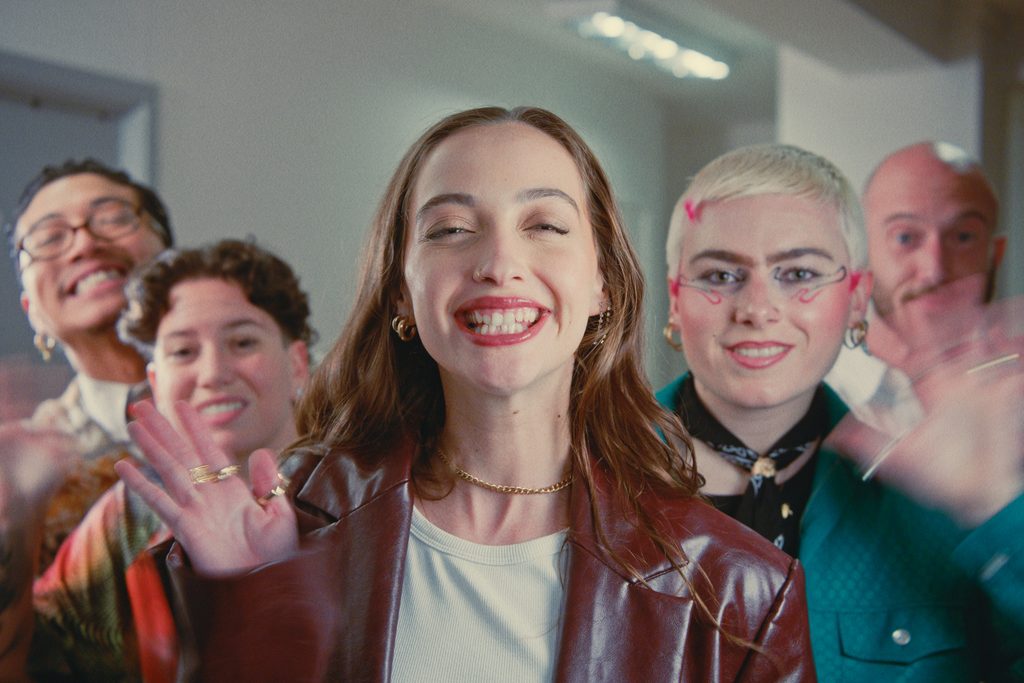
That freedom is at the centre of Forfait Solitude, her new six-track EP. It is a project about mental health, but it never becomes heavy for the sake of it. CLELIA uses movement, humour and bright production to hold more difficult feelings. You can dance first, then realise the song has been speaking about something much deeper.
Dancing Through the Hard Parts
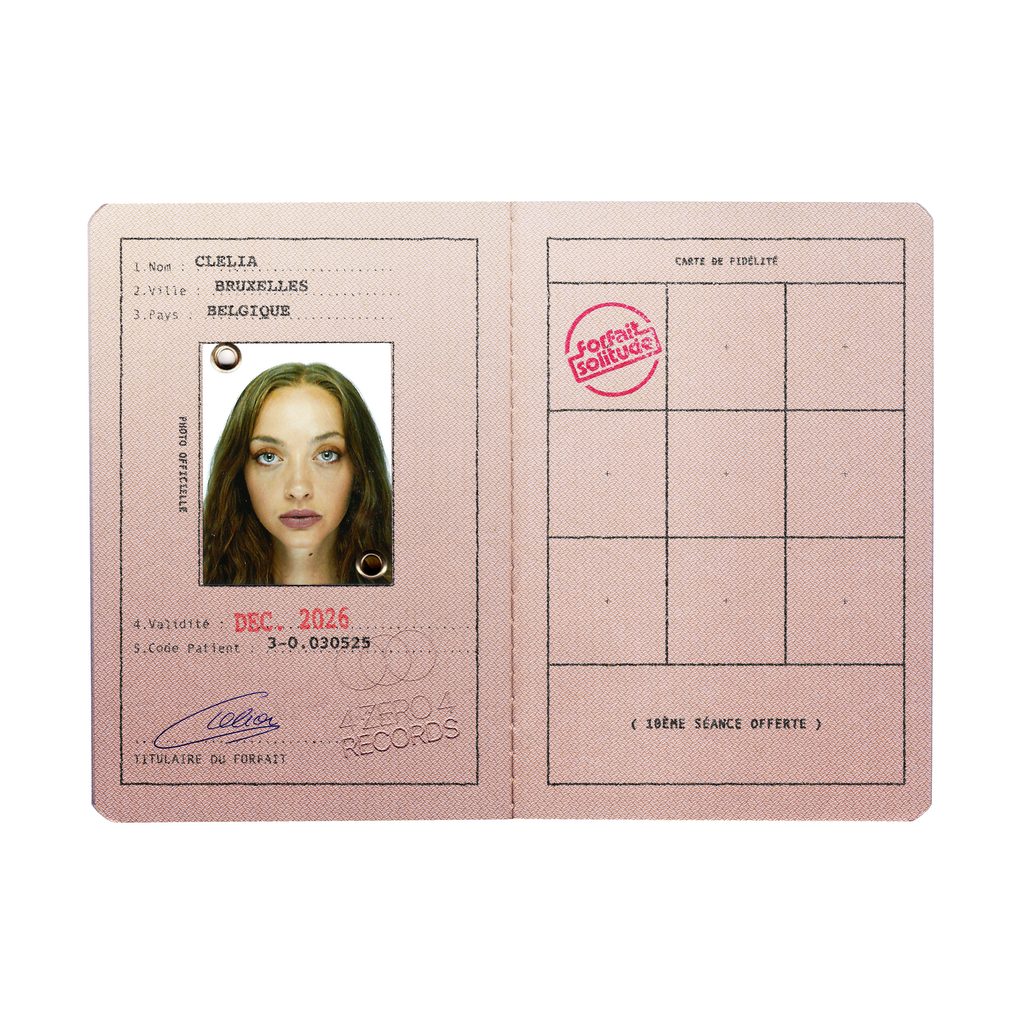
The project began during a difficult period. CLELIA was diagnosed with ADHD later in life, a discovery that led her to reconsider many of her habits and coping mechanisms. Her earlier single, TDA, became the first song in which she addressed that experience directly. It now returns as a bonus track on the EP. A year ago, CLELIA also experienced, as many of us do, depression. The title track, Forfait Solitude, came from that moment. At first, it was not meant to be released. It was simply an outlet: a way to understand how she had ended up in a therapist’s office without seeing the crash coming.
“I did not want what I was living through to define me,” she explains. “I kept telling myself: it will get better.”
From there, the EP became a kind of therapy in real time. Each release maps a different stage of the process. There are setbacks, small breakthroughs, fears returning and moments when joy feels unexpectedly close again.
The order matters. Forfait Solitude begins in confusion. La Machine looks at the routines and pressures surrounding her. Entre deux larmes lets happiness return, but carefully. Virus opens the story outward, asking whether these struggles are shared by more people than we think. The final track lands on a simple but powerful thought: “Tout ce que je sais c’est que je n’en sais rien” (“All I know is that I know nothing”). It is CLELIA’s version of letting go. Better days, she suggests, may begin when we stop demanding certainty from ourselves.
Vulnerability Is Not Failure
Releasing a song every seven weeks did not leave much time to overthink. For an artist who admits she questions everything, that was a challenge.
“There are songs I am not sure I would have released if I had given myself more time to think,” she says. “But I decided to let go and be authentic about the process.”
That decision changed how she sees vulnerability. CLELIA says she once felt pressure to be sunny all the time, both as a person and as an artist. Even her danceable productions may have been part of that instinct: the wish to make people feel good, even when she was not doing well herself.
But Forfait Solitude makes room for every emotion. Sadness. Anger. Fear. Relief. Hope.
“We have the right to feel all those things,” she says. “The first step towards feeling better is to recognise and accept them.”
It is a gentle message, but an important one. The EP does not promise a perfect recovery. Instead, it offers something more believable: a process. Not linear, not glamorous, but possible.
CLELIA on Finding Community in Brussels
The personal becomes collective in CLELIA’s music. What begins as solitude gradually opens towards community, a shift that also reflects her relationship with Brussels. For CLELIA, the city’s diversity matters. It offers places where queer people can gather, create, and feel less alone. She mentions spaces such as The Agenda and The Crazy Circle as examples of the communities that make a real difference.
“It feels good to remember that we have a place we belong to,” she says.
She is openly queer and has explored relationships with women in her music, including the video for Repas du soir. Still, visibility can feel complicated. Being on stage means being seen, but it does not always mean feeling fully safe. A scroll through social media is enough to remind her that queer rights and safety remain fragile in many places.
Brussels is not perfect, but it gives her room to grow. “With time, I think I will dare to embrace every part of myself even more,” she says.
That is also the quiet strength of Forfait Solitude. It does not turn pain into a brand or pretend that being vulnerable is easy. Instead, it takes a difficult chapter and makes it useful. It becomes a song for anyone who has been afraid, overwhelmed, isolated or unsure of what comes next. CLELIA’s answer is not to have everything figured out. It is to keep moving, keep creating, and keep finding the people who make the process feel possible.
Forfait Solitude is available now. The EP was released on 18 September 2026 and contains six tracks, including Forfait Solitude, La Machine, Entre deux larmes, Virus, and the bonus track TDA.
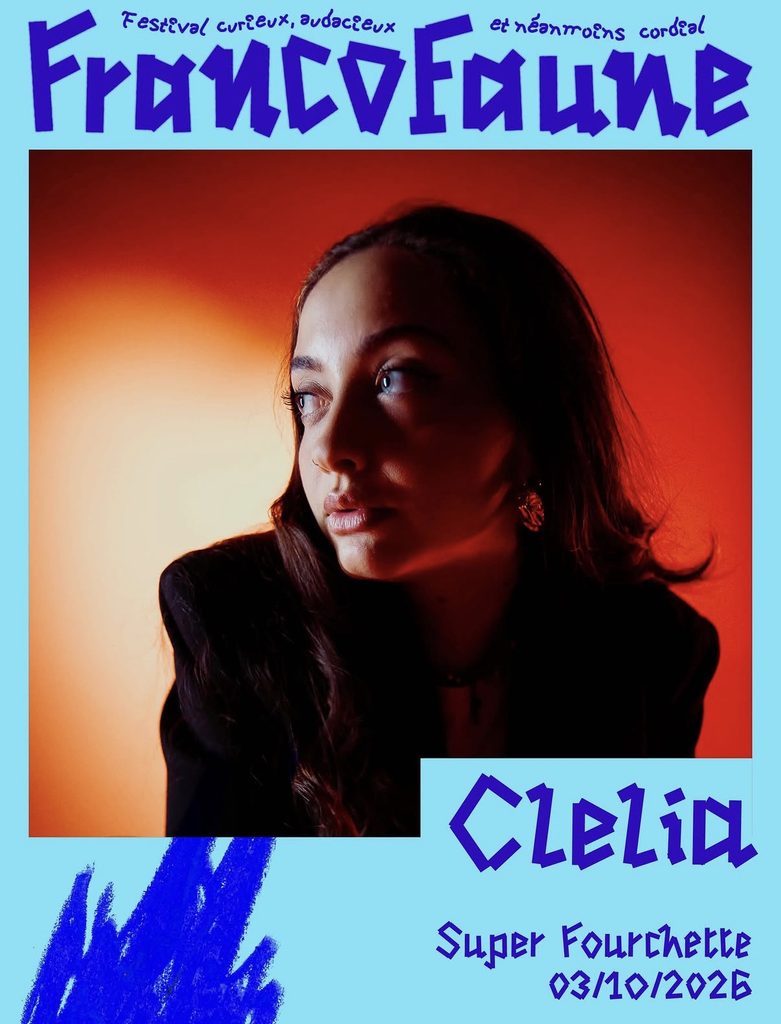
Catch CLELIA live on Saturday, October 3rd, at Super Fourchette in Brussels as part of the FrancoFaune festival line-up!
KET Magazine is a community‑driven, non‑profit magazine run by volunteers and based in Brussels. You can find our other music and nightlife stories on ket.brussels, and you can always write to us to share your projects or pitch a story: info@ket.brussels
You may also like
-
Africa Legacy: a different way to look at art history in Brussels
More than 250 works, 22 countries and a conversation across centuries: Africa Legacy – Berceau
-
Two nights, different gears: Rave Rebels turns up the volume in Brussels
Rave Rebels returns to Brussels’ ING Arena on 6 and 7 November 2026, bringing Faithless,
-

Adam La Nuit: Making Music Between Worlds
For Adam La Nuit, belonging doesn’t mean choosing one world over another. The Belgian-Congolese artist
-
NAYA brings soul, soft edges and a little “Bagarre” to Café Flora
Brussels-based singer-songwriter NAYA releases her debut EP, Bagarre, on 30 October 2026, with a release
-

Tels Quels Talent Show: Brussels’ Queer Voices Take the Mic
On Friday 16 October, the Tels Quels Talent Show brings live queer creativity to Les