
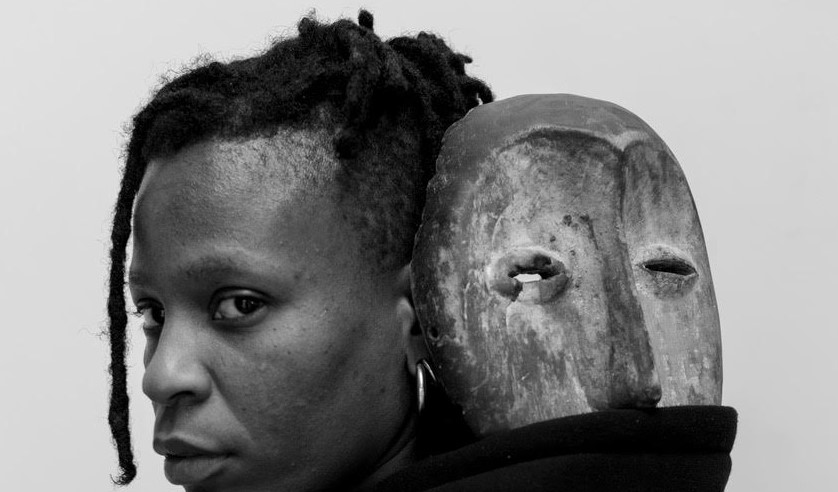
Born in Kinshasa in a lively multigenerational home, they migrated first to Paris, then to Brussels at sixteen. “When I arrived here, I had to unlearn what the West had taught me about my own history.” Brussels didn’t just welcome them; it reshaped them. Its chaos, its diasporas, its mix of light and contradiction became the ground where they built both their artistic and political voice.
Their first artistic identity, Zoulou Choco, was inspired by the figure of Shaka Zulu. But today, they choose Kongi, the name of their paternal grandmother: “The name is a bridge between the living and the ancestors.” Their performances, presence, and politics are inseparable. Not because they seek institutional politics, but because their body, their history, and their art are already political. “My very existence is a statement.” Whether in nightlife or on performance stages, they reclaim memory, rewrite narratives, and turn beauty into resistance.
Working with their partner has deepened this artistic language. It strengthens their bond and builds an Afro-Arab solidarity they cultivate together. Collaboration allows them to question political relations, deconstruct prejudices, and create a space where their two bodies—already politicized—meet in tenderness, power, and art. Their practices interrogate colonization. Together, they transform all of this into gestures, images, and presence. They want to show that love and art are not separate: they can nourish, elevate, and heal each other. And above all: it’s possible to create a shared language where intimacy becomes political.
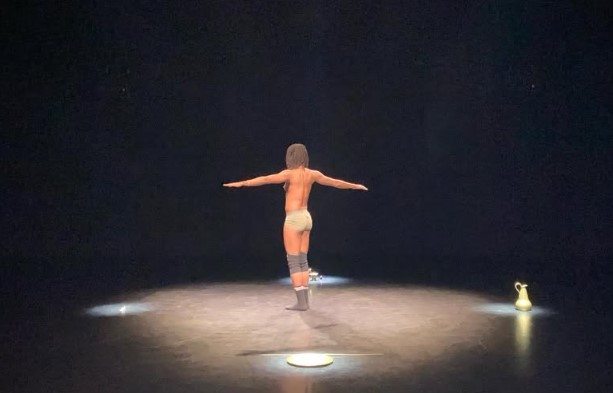
Kongi’s inspiration also comes from a constellation of artist friends whose strength and political engagement push them further. “I think of Nancy Naser Al Deen, Precy Numbi, Gwen Tatoué, Temitayo, Astan KA. Their work nourishes me, challenges me, and pushes me further.” 2025 marked a turning point with Demonstratio by Milo Slayers, a project that reshaped their relationship to movement and presence.
Now they step into 2026 with new visions: two short films, Abyss of Blood and Mino, and Mayii, a performance created with Nancy Naser Al Deen and Yang Cheng exploring Afro-Arab-Asian solidarities. In all their work, Kongi activates ancestral memory, honours erased women like the Mino warriors and Kimpa Vita, and brings forward a spiritual, political, and deeply human art. Their journey reminds us that identity is not a destination, but a becoming, and a collective one.
KET Magazine is a community‑driven, non‑profit magazine run by volunteers based in Brussels. Get in touch to share your thoughts or tell us about your activities. You can also promote your events on our website or support our work with a donation. Contact us at Info@ket.brussels.
You may also like
-

Adam La Nuit: Making Music Between Worlds
For Adam La Nuit, belonging doesn’t mean choosing one world over another. The Belgian-Congolese artist
-

NAYA brings soul, soft edges and a little “Bagarre” to Café Flora
Brussels-based singer-songwriter NAYA releases her debut EP, Bagarre, on 30 October 2026, with a release
-

Endless Summer Camp: Scout Rules Meet Queer Desire at Balsamine
Summer might be over, but Sophie Guisset has other plans. From 19 to 28 November
-
Escher in Brussels: Who Said Reality Had to Behave?
Staircases refuse to play by the rules, birds become fish, and two hands draw each
-
When Nuns Go Pirate: A Queer Sacred Thriller at Varia
What happens when lesbian love, religious memory and horror theatre enter a locked convent—and refuse